Dear Zazie, Today’s Lovers’ Chronicle from Mac Tag to his muse. Visit us on twitter @cowboycoleridge. How are ya’ Z? All is well with me. Still workin’ out. Cattle business is still challengin’. Still have some pretty girls who will give me shelter from the storms. Like Mac Tag says: Still tryin’ to keep myself somewhere between the bar ditches and my far flung wishes. Ciao, Rhett
The Lovers’ Chronicle
Dear Muse,
this was originally conceived to be a song
but all i had was lyrics, i do not hear melody
“That’s a great country or blues song line”
it is about a guy, i may have once resembled,
who has some fine wishes but no direction
and he keeps gittin’ stuck in bar ditches
from his poor choices, so all he can do is try
to keep himself somewhere between the two
”Been awhile since you were that guy”
yes, certainly not since you, guess i should
write one about my comin’ true wishes

© copyright 2023.2024 mac tag/cowboycoleridge all rights reserved
that about describes the current coordinates; most of the time in one, sometimes thought to be in the other only to find, sadly mistaken; these words dashed, clarity sought and found, just keep that in sight and the present course, enough time perhaps to matter, to make it
© copyright 2022.2023 mac tag/cowboycoleridge all rights reserved
whatever happens for this, our bodies
tender, delicate our lovemakin’, curled
together afterwards the innocence
and wisdom of the place found here—
the live, insatiate dance of our touch
firm, protective, searchin’, reachin’
where we had been waitin’ years
© copyright 2021.2023 mac tag/cowboycoleridge all rights reserved
Pale Love, Pale Rider
for myself,
the conscious
and recollected years
lived to this day
as much as possible
of mind and spirit, spent
in the effort to grasp
the meanin’ of these words
to trace them to their source
and to understand the wonder
this i find again
when the ruins are cleared
somewhere between
***
you know
i never expected
to feel this way again
i always knew
i cared more
i will not ask for more
“Why did this happen?”
i do not ask those questions
© copyright 2020 mac tag/cowboy coleridge all rights reserved
somewhere between…
the verse binds us
nothin’ else can keep
from the faraway
nothin’ takes us,
not longin’,
not promise
what will be done
in the long
nights without
always here
from the start
among the wild
horses on the plains
what will we do
between
© copyright 2019 mac tag/cowboy coleridge all rights reserved
somewhere
between the bar ditches
and these far flung wishes
somewhere between alone and you
© copyright 2018 mac tag/cowboy coleridge all rights reserved
way out on the High Plains
a vast Cathedral, where no foot
treads and no other face is seen
kneelin’, reflectin’ on the trail ahead
from my better self
too long parted
chasin’
what could not be
now
finally
an end in sight
needed solitude
awaits
and hopefully
myself
© copyright 2017 mac tag/cowboy coleridge all rights reserved
From my front porch just now;
the sound of bagpipes
from a funeral service.
Takes me back to the many
funerals I have attended
Puts me in a funereal kinda mood.
So anticipated for myself,
perhaps to poetize it,
a hopeless love
Now, nearer the moment
approaches when I should
have nothin’ more to hope
Should have been born
in the 19th
century in
Paris. And live
on the Rue de
Provence. And have
an affair with
a courtesan,
one quite lovely
© copyright 2015 mac tag/cowboy coleridge all rights reserved
Tryin’ to keep myself somewhere
between the bar ditches
and my far flung wishes
Somewhere between alone and you
Somewhere between the bottle and sober
But right now is bar ditch time
play some Hank and pass the Jack
and hope for days of far flung wishes
© Copyright 2013 Mac tag/cowboy Coleridge all rights reserved
Today is the birthday of Laura Wheeler Waring (Hartford, Connecticut; May 16, 1887 – February 3, 1948 Philadelphia); artist and educator, best known her paintings of prominent African Americans that she made during the Harlem Renaissance. She taught art for more than 30 years at Cheyney University in Pennsylvania.
Wheeler married Walter Waring on June 23, 1927. He was from Philadelphia and worked in the public school system as a teacher. When they first married, money was scarce, so they delayed their honeymoon for two years. In 1929, the newlyweds traveled to France, spending more than two months there. They had no children. Wheeler was known to shun publicity.
Gallery

Mother and Daughter, 1927
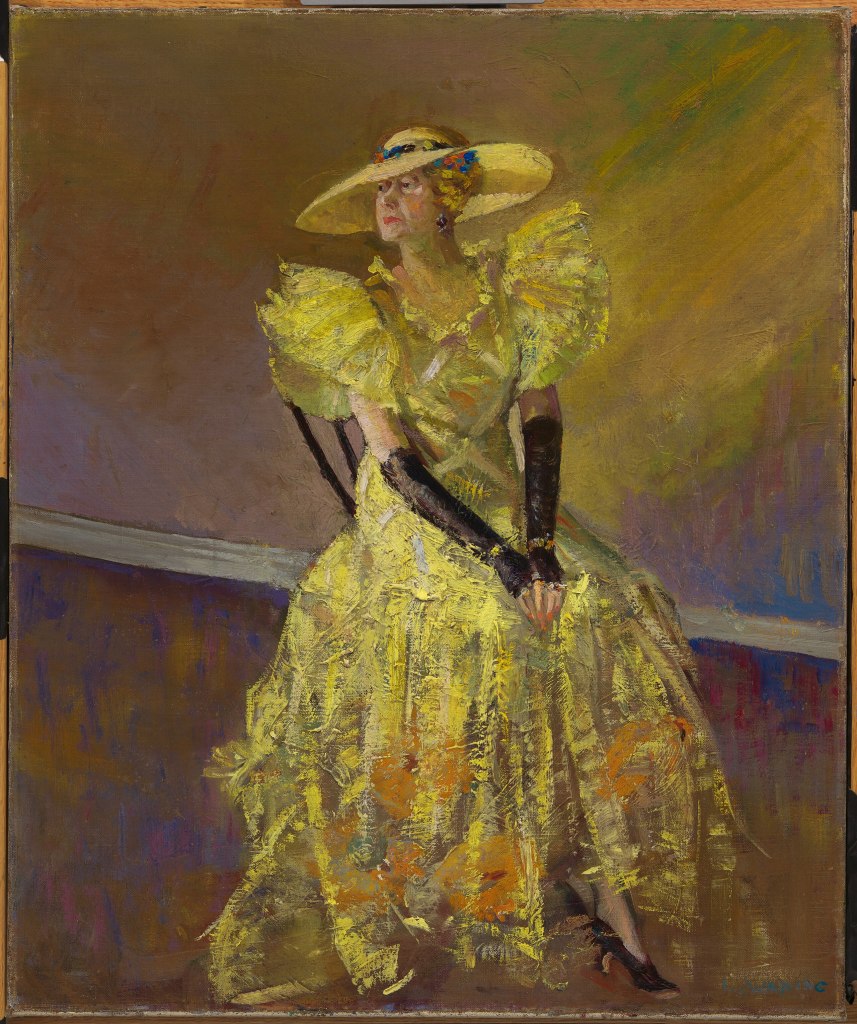
Alice Dunbar nelson

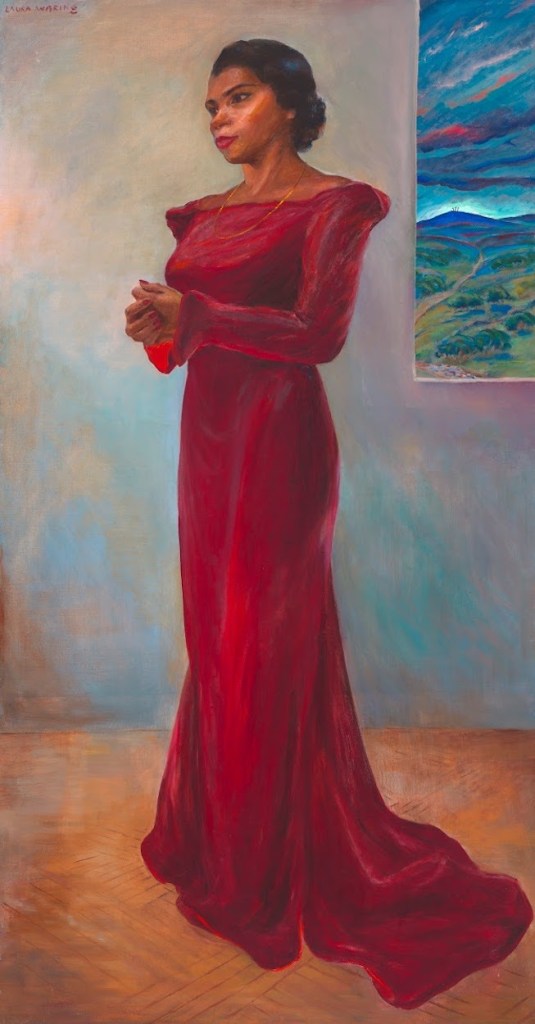
Marian Anderson 1944
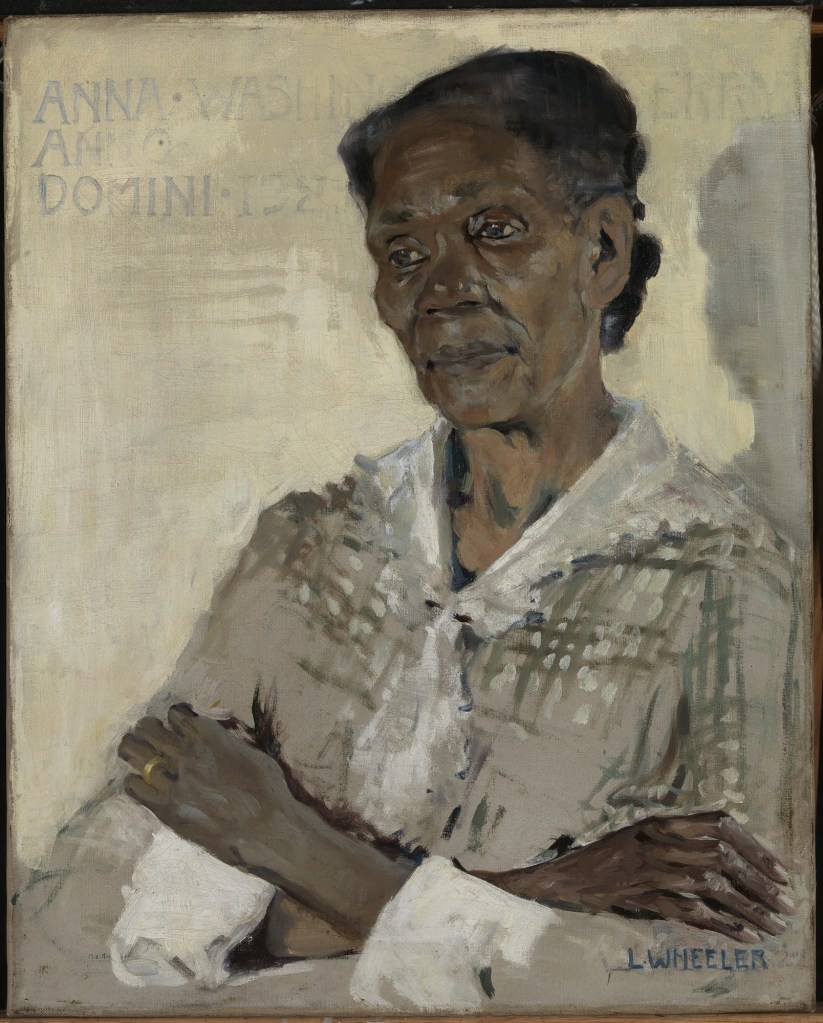
Anna Washington Derry
 woman with bouquet, ca. 1940
| Tamara de Lempicka | |
|---|---|
 | |
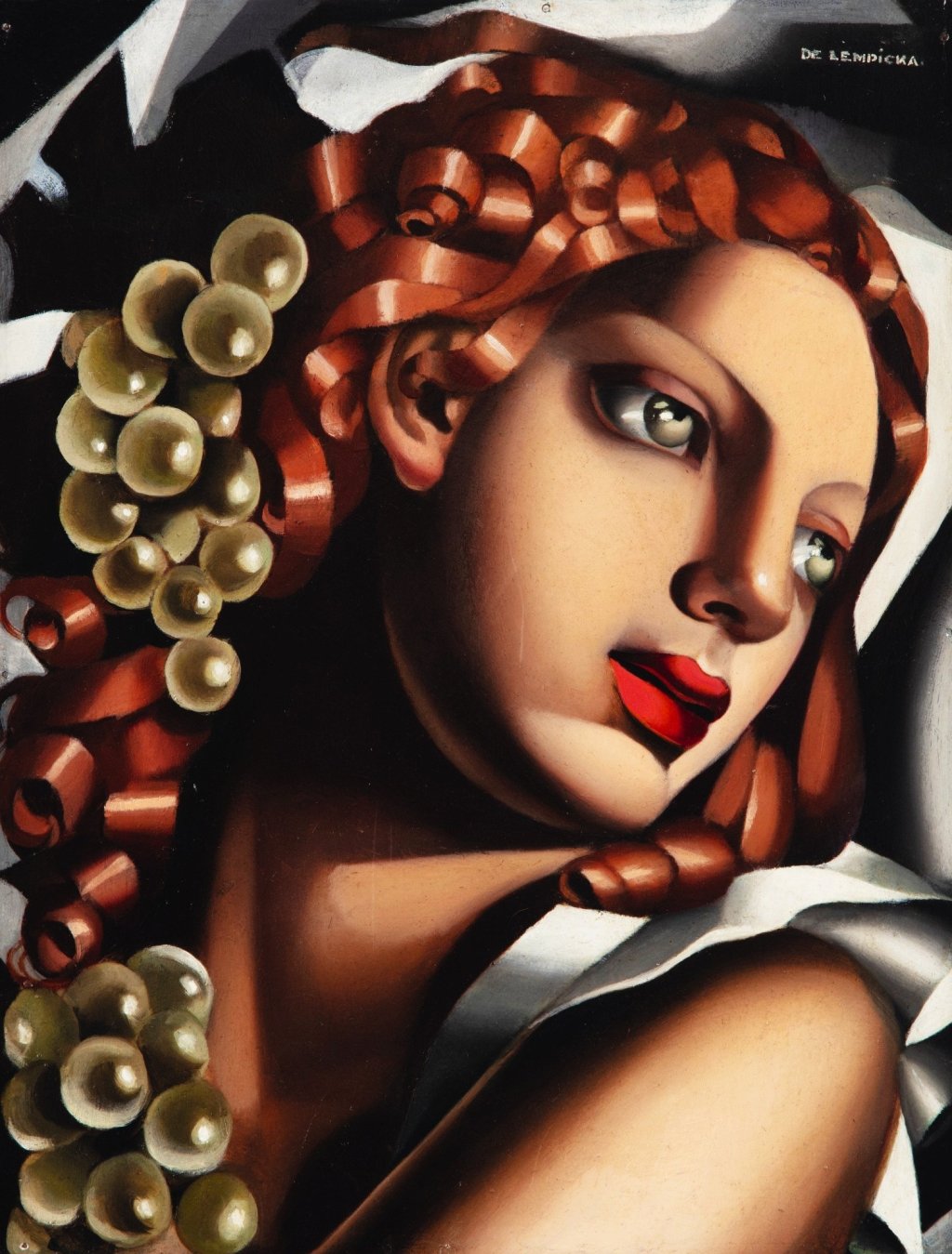
Today is the birthday of artist Tamara Łempicka (born Maria Górska, Warsaw; 16 May 1898 – 18 March 1980 Cuernavaca, Mexico), also known as Tamara de Lempicka; painter active in the 1920s and 1930s, who spent her working life in France and the United States. Perhaps best known for her polished Art-Deco portraits of aristocrats and the wealthy, and for her highly stylized paintings of nudes.
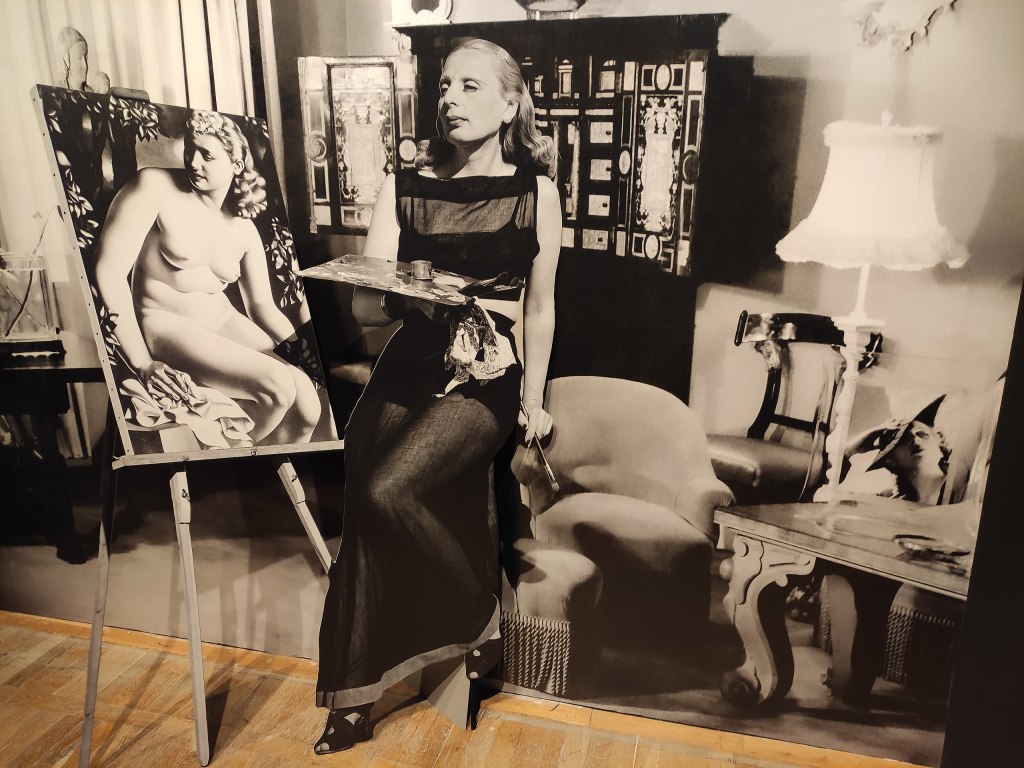
Born in Warsaw, Lempicka briefly moved to Saint Petersburg where she married a prominent Polish lawyer, then travelled to Paris. Her style was a blend of late, refined cubism and the neoclassical style, particularly inspired by the work of Jean-Dominique Ingres. She was an active participant in the artistic and social life of Paris between the Wars. In 1928 she became the mistress of wealthy art collector from the Austro-Hungarian Empire, Baron Raoul Kuffner. After the death of his wife in 1933, the Baron married Lempicka in 1934, and thereafter she became known in the press as “The Baroness with a Brush”.

Following the outbreak of World War II in 1939, she and her husband moved to the United States and she painted celebrity portraits, as well as still lifes and, in the 1960s, some abstract paintings. Her work was out of fashion after World War II, but made a comeback in the late 1960s, with the rediscovery of Art Deco.
In Paris, the Łempickis lived for a while from the sale of family jewels. Tadeusz proved unwilling or unable to find suitable work. Their daughter, Kizette, was born, adding to their financial needs. Her first paintings were still lifes and portraits of her daughter Kizette and her neighbor.
Her breakthrough came in 1925, with the International Exhibition of Modern Decorative and Industrial Arts which later gave its name to the style Art Deco. She exhibited her paintings in two of the major venues, the Salon des Tuileries and the Salon des femmes peintres. In the same year, she had her first major exposition in Italy, in Milan, organized for her by Count Emmanuele Castelbarco. For this show Lempicka painted 28 new works in six months. During her Italian tour, she took a new lover, the Marquis Sommi Picenardi. She was also invited to meet the famous Italian poet and playwright, Gabriele d’Annunzio. She visited him twice at his villa on Lake Garda, seeking to paint his portrait; he in turn was set on seduction. After her unsuccessful attempts to secure the commission, she went away angry, while d’Annunzio also remained unsatisfied.
In 1928, she was divorced from Lempicki. The same year she met Raoul Kuffner, a Baron of the former Austro-Hungarian Empire and art collector. He commissioned her to paint his mistress, the Spanish dancer Nana de Herrera. Lempicka finished the portrait (which was not very flattering to the de Herrera) and took the place of de Herrera as the mistress of the Baron. She bought an apartment on rue Méchain in Paris, and had it decorated by the modernist architect Robert Mallet-Stevens.
In 1929, Lempicka painted one of her best-known works, Autoportrait (Tamara in a Green Bugatti), for the cover of the German fashion magazine Die Dame. This showed her at the wheel of a Bugatti racing car, wearing a leather helmet and gloves and wrapped in a gray scarf, a portrait of cold beauty, independence, wealth and inaccessibility. In fact she did not own a Bugatti automobile; her own car was a small yellow Renault, which was stolen one night when she and her friends were celebrating at La Rotonde in Montparnasse.
She travelled to the United States for the first time in 1929 to paint a portrait of the fiancée of the American oilman Rufus T. Bush and to arrange a show of her work at the Carnegie Institute in Pittsburgh. Lempicka’s career reached a peak during the 1930s. She painted portraits of King Alfonso XIII of Spain and Queen Elizabeth of Greece. Museums began to collect her works. In 1933 she traveled to Chicago where her pictures were shown alongside of those of Georgia O’Keeffe, Santiago Martínez Delgado and Willem de Kooning.
The wife of Baron Kuffner died in 1933. De Lempicka married him on 3 February 1934 in Zurich. She was alarmed by the rise of the Nazis, and persuaded her husband to sell most of his properties in Hungary and to move his fortune and his belongings to Switzerland.
In the winter of 1939, following the outbreak of World War II, Lempicka and her husband moved to the United States. They settled first in Los Angeles. The Paul Reinhard Gallery organized a show of her work, and they moved to Beverly Hills, settling into the former residence of the film director King Vidor. In 1943, Baron Kuffner and de Lempicka relocated to New York City.
In the postwar years, she continued a frenetic social life, but she had fewer commissions for society portraits. Her art deco style looked anachronistic in the period of postwar modernism and abstract expressionism. She expanded her subject matter to include still lives, and in 1960 she began to paint abstract works and to use a palette knife instead of her smooth earlier brushwork. She sometimes reworked earlier pieces in her new style.
Baron Kuffner died of a heart attack on November 1961 on the ocean liner Liberté en route to New York. Following his death, Lempicka sold many of her possessions and made three around-the-world trips by ship. In 1963 Lempicka moved to Houston, Texas to be with Kizette and her family. She continued to repaint her earlier works. She repainted her well-known Autoportrait (1929) twice between 1974 and 1979; Autoportrait III was sold, though she hung Autoportrait II in her retirement apartments, where it would remain until her death. The last work she painted was the fourth copy of her painting of St. Anthony.
In 1974 she decided to move to Cuernavaca, Mexico. De Lempicka died in her sleep. Following her wishes, her ashes were scattered over the volcano of Popocatepetl.
Gallery
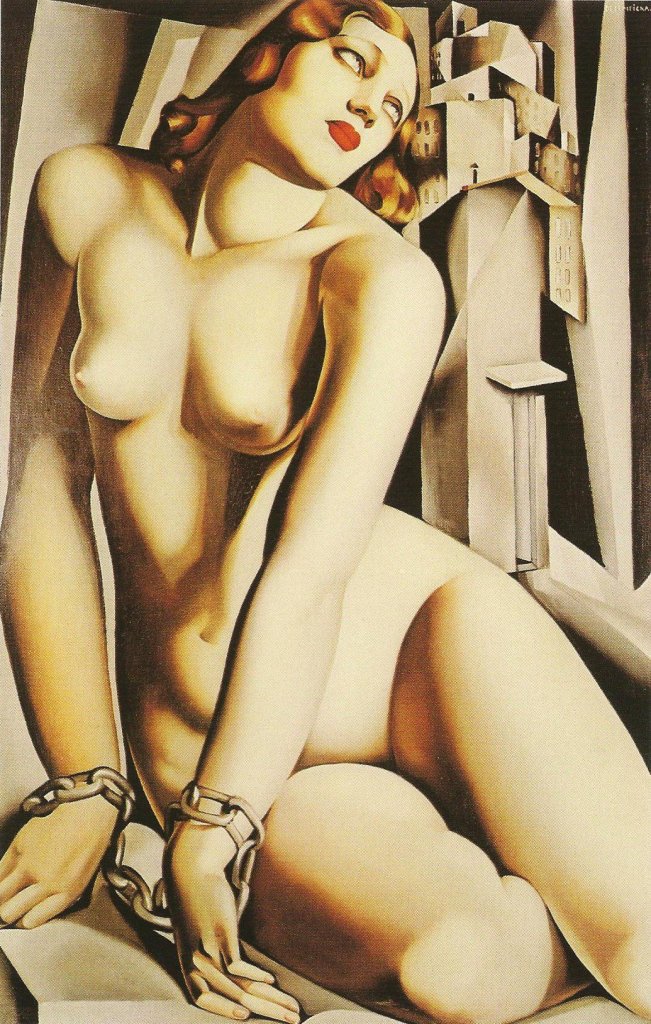
andromeda

Femme aux bras croisés (1939)


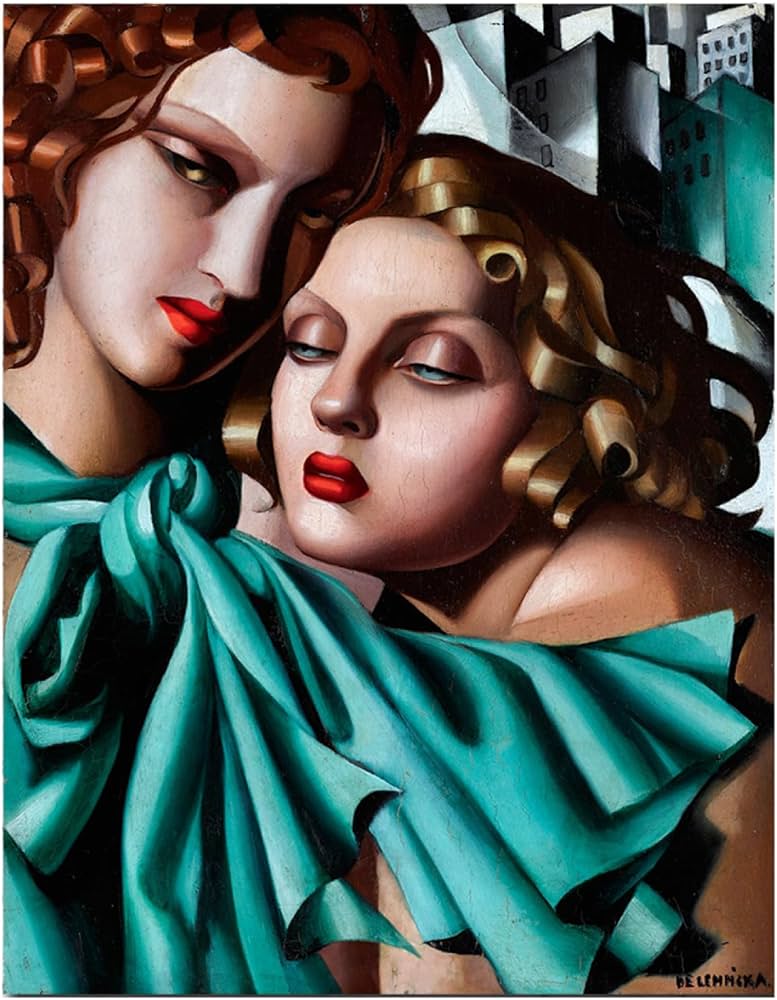
The Young Girls (1930)

Four nudes
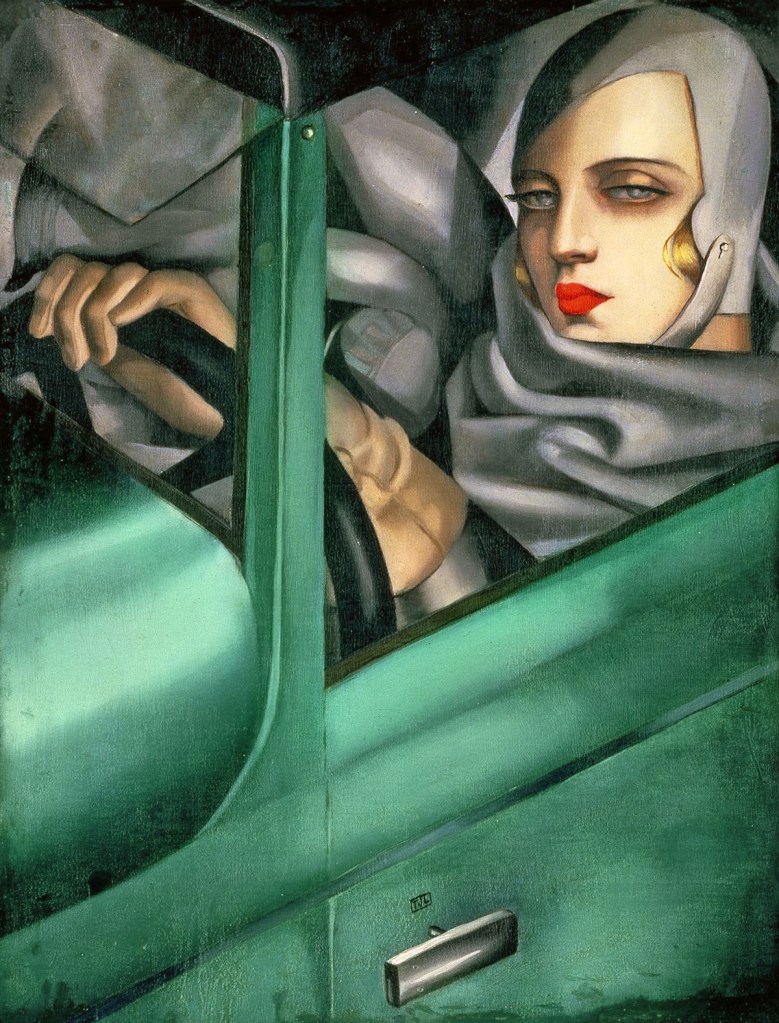
Self-portrait, Tamara in a Green Car
 Perspective
 young woman in a blue dress
 strawhat

today is the birthday of Adrienne Rich (Adrienne Cecile Rich; Baltimore, Maryland; May 16, 1929 – March 27, 2012, Santa Cruz, California); poet, essayist and feminist. i believe, one of the most widely read and influential poets of the second half of the 20th century, who brought the oppression of women and lesbians to the forefront of poetic discourse. Rich criticized rigid forms of feminist identities, and valorized what she coined the “lesbian continuum”, which is a female continuum of solidarity and creativity that impacts and fills women’s lives.
In 1953, Rich married Alfred Haskell Conrad, an economics professor at Harvard University she had met as an undergraduate. She said of the match: “I married in part because I knew no better way to disconnect from my first family. I wanted what I saw as a full woman’s life, whatever was possible.” They settled in Cambridge, Massachusetts, and had three sons. In 1955, she published her second volume, The Diamond Cutters, a collection she said she wished had not been published, saying “a lot of the poems are incredibly derivative,” and citing a “pressure to produce again… to make sure I was still a poet.” That year she also received the Ridgely Torrence Memorial Award from the Poetry Society of America.
Rich and Conrad hosted anti-war and Black Panther fundraising parties at their apartment. Rising tensions began to split the marriage, and Rich moved out in mid-1970, getting herself a small studio apartment nearby. Shortly afterward, in October, Conrad drove into the woods and shot himself, widowing Rich.
In 1976, Rich began her partnership with Jamaican-born novelist and editor Michelle Cliff, which lasted until her death.
Verse
Whatever happens with us, your body
will haunt mine—tender, delicate
your lovemaking, like the half-curled frond
of the fiddlehead fern in forests
just washed by sun. Your traveled, generous thighs
between which my whole face has come and come—
the innocence and wisdom of the place my tongue has found there—
the live, insatiate dance of your nipples in my mouth—
your touch on me, firm, protective, searching
me out, your strong tongue and slender fingers
reaching where I had been waiting years for you
in my rose-wet cave—whatever happens, this is.
Floating Poem, Unnumbered” from “Twenty-One Love Poems,” from The Dream of a Common Language: Poems 1974-1977 by Adrienne Rich. Copyright © 1978 by W. W. Norton & Company, Inc. Used by permission of W. W. Norton & Company, Inc
We are, I am, you are
by cowardice or courage
the one who find our way
back to this scene
carrying a knife, a camera
a book of myths
in which
our names do not appear.
—From “Diving into the Wreck”
Diving into the Wreck: Poems 1971–1972(1973)

And on this day in 1956; the premiere of, While the City Sleeps an American film noir directed by Fritz Lang and starring Dana Andrews, Rhonda Fleming, George Sanders, Howard Duff, Thomas Mitchell, Vincent Price, John Drew Barrymore and Ida Lupino. Written by Casey Robinson, the newspaper drama was based on The Bloody Spur by Charles Einstein, which was inspired by the case of Chicago serial killer William Heirens (a.k.a. the “Lipstick Killer”).
thanks for stoppin’ by y’all
Mac Tag
I want to love somebody because I want to be loved. – Sylvia Plath
 The Lovers’ Chronicle
Leave a comment