
Dear Zazie,
Here is today’s Lovers’ Chronicle from Mac Tag. Rhett
The Lovers’ Chronicle
Dear Muse,
a streetcar named dream…
-Aroused from sleep, he and the awesome redhead, find themselves walking down the street in front of their apartment;
Where is this dream going my love, she asks
no idea, the dream goddess has options, today is a busy day in history,
she might send us down the road less traveled by, with Frost,
or, numerous different directions in Tennessee’s menagerie,
could be goin’ to San Francisco to hang with Corso and the Beats,
or, headed to this side of paradise with Scott and Zelda
I vote not with the Fitzgeralds, she says, even in a dream, not sure our livers could survive that
ha right, well i know what i want, he says
-They stop at the end of the street as a streetcar pulls up;
Hey, there are no streetcars in Avondale, she says
look at the name of this one, he points
Oh it is Desire
yes, headed to New Orleans, baby
We had so much fun when we were there, she says, but can we steer clear of Stella and Stanley
oh yes, way too much drama, and we do not have to rely on the kindness of strangers or Blanche
Ok good, where should we go first, she says as they take their seats
lets go to Antoine’s, i love their French inspired Cajun menu
You know I was thinking how the dream fits the theme, she says
how we are neither here nor there
But we are together
that is all that matters

© copyright 2024 mac tag/cowboycoleridge all rights reserved
not sure the genesis of this one
“A lot going on this day with
Frost, Tennessee, Corso,
and This Side of Paradise“
right, coulda come from
somethin’ i was readin’
but i think it is about
my long lost feelin’s
“You were a long time
in a wilderness”
if it is a question,
now i know the answer
“And it is”
right here
where we belong
© copyright 2023 mac tag/cowboycoleridge all rights reserved
though not often noticed yet, somehow planned you spend time there for somethin’ you did, you sit here, breathin’ while time measures your penance, but you believe while you are here because you are on your way to somewhere and if asked just say, neither one cares
© copyright 2022 mac tag/cowboycoleridge all rights reserved
should i
astound you
take you to movies
and cemeteries
tell you about this vision
then desire you and kiss you
and all the preliminaries
sayin’, it is beautiful to be
and you understandin’ why
take you in my arms
to woo the entire night
how else to feel other than i am
© copyright 2021 mac tag/cowboy coleridge all rights reserved
Pale Love, Pale Rider
her pleasure will not let me go
she talks and i am fain to list
if there is anything earned
or deserved, this is mine
the beauty she sees,
she has an eye for
and needs
not reason why
it is not vain to tell her so,
that for her, i am made better
© copyright 2020 mac tag/cowboy coleridge all rights reserved
an orison
for those not kept
more and more
time spent
in the pleasant
disguise of illusion
where the scene
through the rear view
comes with music
and the past
can be controlled
so it cannot turn
© copyright 2019 mac tag/cowboy coleridge all rights reserved
neither
an idea
nor a clue
in the rear view
searchin’ without knowin’
what the search was for
lookin’ in all the wrong faces
‘spect you can trace the way back
by the trail of broken hearts
here
a solitary man
amidst voices
from the past
a fascination
borne of time spent
walkin’ marble halls
of forever
this was fought hard for
sacrifices were made
and the pull is strong
there is certainty
and comfort
on this trail
there
you
us
does ever after exist
is there such a thing
is the effort worth the all
© copyright 2018 mac tag/cowboy coleridge all rights reserved
well,
i might be mistaken
but i only obey
one urge,
the urge of the verse
© copyright 2017 mac tag/cowboy coleridge all rights reserved
Neither Here Nor There
nowhere
though not often noticed
yet, someone planned it
you spend time there
for somethin’ you did
you sit there, breathin’
while time measures
your penance
but you believe in it
while you are there
because
you are on your way
to somewhere
© Copyright 2016 mac tag/cowboy Coleridge all rights reserved
Sure glad, I am,
that I buried
those pesky dang
feelin’s. At this
point, they would be
one helluva
dead weight to be
draggin’ around
***
You looked so beautiful
And I kept hopin’ the world
Would stop spinnin’ for us
And that night would never end
***
Fatigued. Drained. The
will to write, still
there, but the words,
just out of reach
Fadin’ away
Ephemeral
If only I …..
***
Outta luck and
runnin’ outta
time. Whatever
good I knew or
had, now gone with
the High Plains wind
© Copyright 2015 mac tag/cowboy Coleridge all rights reserved
Today is the birthday of Julius Schnorr von Carolsfeld (Leipzig, Kingdom of Saxony, Holy Roman Empire 26 March 1794 – 24 May 1872 Dresden, Kingdom of Saxony, German Empire); painter, chiefly of Biblical subjects. As a young man he associated with the painters of the Nazarene movement who revived the florid Renaissance style in religious art. He is remembered for his extensive Picture Bible, and his designs for stained glass windows in cathedrals.

by Leonhard Gey
Schnorr married Maria Heller, the stepdaughter of Ferdinand Olivier, in 1827. Their son Ludwig Schnorr von Carolsfeld was an operatic tenor who died at the age of 29. He had just begun to gain renown as the first to sing Wagner’s Tristan. Schnorr’s brother, Ludwig Ferdinand (1788–1853) was also a painter.
Gallery

Female back

female nude

Female nude

Portrait of Klara Bianka von Quandt (1820)
| Robert Frost | |
|---|---|
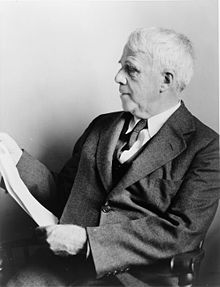 | |
Today is the birthday of Robert Frost (Robert Lee Frost; San Francisco; March 26, 1874 – January 29, 1963 Boston); poet. Perhaps best known for his realistic depictions of rural life and his command of American colloquial speech. His work frequently employed settings from rural life in New England in the early twentieth century, using them to examine complex social and philosophical themes. In my opinion, he is one of the most popular and critically respected American poets of the twentieth century. Frost was honored frequently during his lifetime, receiving four Pulitzer Prizes for Poetry. He was awarded the Congressional Gold Medal in 1960 for his poetic works.
Frost’s personal life was plagued by grief and loss. In 1885, when he was 11, his father died of tuberculosis, leaving the family with just eight dollars. Frost’s mother died of cancer in 1900. In 1920, he had to commit his younger sister Jeanie to a mental hospital, where she died nine years later. Mental illness apparently ran in Frost’s family, as both he and his mother suffered from depression, and his daughter Irma was committed to a mental hospital in 1947. Frost’s wife, Elinor, also experienced bouts of depression.
Elinor and Robert Frost had six children: son Elliott (1896–1900, died of cholera); daughter Lesley Frost Ballantine (1899–1983); son Carol (1902–1940); daughter Irma (1903–1967); daughter Marjorie (1905–1934, died as a result of puerperal fever after childbirth); and daughter Elinor Bettina (died just one day after her birth in 1907). Only Lesley and Irma outlived their father. Elinor, who had heart problems throughout her life, developed breast cancer in 1937 and died of heart failure in 1938.
Frost died at Peter Bent Brigham Hospital, at the age of 88. He was interred in the Old Bennington Cemetery in Bennington, Vermont. His epitaph, from the last line of his poem “The Lesson for Today” (1942), is: “I had a lover’s quarrel with the world.”
Verse
I shall be telling this with a sigh
Somewhere ages and ages hence:
Two roads diverged in a wood, and I —
I took the one less traveled by,
And that has made all the difference.
- “The Road Not Taken”, st. 4 (1916).
Some say the world will end in fire,
Some say in ice.
From what I’ve tasted of desire
I hold with those who favor fire.
- “Fire and Ice” (1923).
- I stopped my song and almost heart,
For any eye is an evil eye
That looks in onto a mood apart.- “A Mood Apart” (1947).
- All those who try to go it sole alone,
Too proud to be beholden for relief,
Are absolutely sure to come to grief.- “Haec Fabula Docet” (1947).
- Courage is of the heart by derivation,
And great it is. But fear is of the soul.- A Masque of Mercy (1947).
Unless I’m wrong
I but obey
The urge of a song:
I’m—bound—away!
And I may return
If dissatisfied
With what I learn
From having died.
- “Away!, st. 5,6 (1962).
My November Guest (1915)
The third poem from the 1915 republished A Boy’s Will
- My Sorrow, when she’s here with me,
Thinks these dark days of autumn rain
Are beautiful as days can be;
She loves the bare, the withered tree;
She walks the sodden pasture lane. - Her pleasure will not let me stay.
She talks and I am fain to list:
She’s glad the birds are gone away,
She’s glad her simple worsted gray
Is silver now with clinging mist. - The desolate, deserted trees,
The faded earth, the heavy sky,
The beauties she so truly sees,
She thinks I have no eye for these,
And vexes me for reason why. - Not yesterday I learned to know
The love of bare November days
Before the coming of the snow,
But it were vain to tell her so,
And they are better for her praise.
Stopping by Woods on a Snowy Evening (1923)
- Whose woods these are I think I know.
His house is in the village, though;
He will not see me stopping here
To watch his woods fill up with snow.- St. 1.
- My little horse must think it queer
To stop without a farmhouse near
Between the woods and frozen lake
The darkest evening of the year.- St. 2.
- He gives his harness bells a shake
To ask if there is some mistake.
The only other sound’s the sweep
Of easy wind and downy flake.- St. 3.
- The woods are lovely, dark and deep,
But I have promises to keep,
And miles to go before I sleep,
And miles to go before I sleep.- St. 4.

Today is the birthday of Tennessee Williams (Thomas Lanier Williams; Columbus, Mississippi (26 March 1911 – 25 February 1983 Manhattan); author of more than 24 full-length plays, including Pulitzer Prize-winners A Streetcar Named Desire (1947) and Cat on a Hot Tin Roof (1955).
At age 33, after years of obscurity, Williams suddenly became famous with the success of The Glass Menagerie (1944) in New York City. He introduced “plastic theatre” in this play and it closely reflected his own unhappy family background. It was the first of a string of successes, including A Streetcar Named Desire (1947), Cat on a Hot Tin Roof (1955), Sweet Bird of Youth (1959), and The Night of the Iguana (1961). With his later work, Williams attempted a new style that did not appeal as widely to audiences.
Much of Williams’s most acclaimed work has been adapted for the cinema. He also wrote short stories, poetry, essays, and a volume of memoirs. In 1979, four years before his death, Williams was inducted into the American Theater Hall of Fame.
Throughout his life, Williams remained close to his sister, Rose, who was diagnosed with schizophrenia as a young woman. In 1943, as her behavior became increasingly disturbing, she was subjected to a lobotomy, requiring her to be institutionalised for the rest of her life. As soon as he was financially able, Williams moved Rose to a private institution just north of New York City, where he often visited her. He gave her a percentage interest in several of his most successful plays, the royalties from which were applied toward her care. The devastating effects of Rose’s treatment may have contributed to Williams’s alcoholism and his dependence on various combinations of amphetamines and barbiturates.
After some early attempts at relationships with women, by the late 1930s, Williams began exploring his homosexuality. In New York City, he joined a gay social circle that included fellow writer and close friend Donald Windham (1920–2010) and Windham’s then-boyfriend Fred Melton. In the summer of 1940, Williams initiated a relationship with Kip Kiernan (1918–1944), a young dancer he met in Provincetown, Massachusetts. When Kiernan left him to marry a woman, Williams was distraught. Kiernan’s death four years later at age 26 was another heavy blow.
On a 1945 visit to Taos, New Mexico, Williams met Pancho Rodríguez y González, a hotel clerk of Mexican heritage. Rodríguez was prone to jealous rages and excessive drinking, and their relationship was tempestuous. In February 1946, Rodríguez left New Mexico to join Williams in his New Orleans apartment. They lived and traveled together until late 1947, when Williams ended the relationship. Rodríguez and Williams remained friends, however, and were in contact as late as the 1970s.
Williams spent the spring and summer of 1948 in Rome in the company of a young man named “Rafaello” in Williams’ Memoirs. He provided financial assistance to the younger man for several years afterward. Williams drew from this for his first novel, The Roman Spring of Mrs. Stone.
When he returned to New York City, Williams met and fell in love with Frank Merlo (1921–1963). An occasional actor of Sicilian ancestry, he had served in the U.S. Navy during World War II. This was the enduring romantic relationship of Williams’s life, and it lasted 14 years until infidelities and drug abuse on both sides ended it. Merlo, who had become Williams’s personal secretary, took on most of the details of their domestic life. He provided a period of happiness and stability, acting as a balance to the playwright’s frequent bouts with depression. Williams feared that, like his sister Rose, he would fall into insanity. His years with Merlo, in an apartment in Manhattan and a modest house in Key West, Florida were Williams’s happiest and most productive. Shortly after their breakup, Merlo was diagnosed with inoperable lung cancer. Williams returned to him and cared for him until his death on September 20, 1963.
In the years following Merlo’s death, Williams descended into a period of nearly catatonic depression and increasing drug use, which resulted in several hospitalizations and commitments to mental health facilities. He submitted to injections by Dr. Max Jacobson, known popularly as Dr. Feelgood, who used increasing amounts of amphetamines to overcome his depression. Jacobson combined these with prescriptions for the sedative Seconal to relieve his insomnia. During this time, influenced by his brother, a Roman Catholic convert, Williams joined the Catholic Church, however he never attributed much significance to religion in his personal life. He was never truly able to recoup his earlier success, or to entirely overcome his dependence on prescription drugs.
As Williams grew older, he felt increasingly alone; he feared old age and losing his sexual appeal to younger gay men. In the 1970s, when he was in his 60s, Williams had a lengthy relationship with Robert Carroll, a Vietnam War veteran and aspiring writer in his 20s. Williams had deep affection for Carroll and respect for what he saw as the younger man’s talents. Along with Williams’s sister Rose, Carroll was one of the two people who received a bequest in Williams’s will. Williams described Carroll’s behavior as a combination of “sweetness” and “beastliness”. Because Carroll had a drug problem, as did Williams, friends including Maria Britneva saw the relationship as destructive. Williams wrote that Carroll played on his “acute loneliness” as an aging gay man. When the two men broke up in 1979, Williams called Carroll a “twerp”, but they remained friends until Williams died four years later.
Williams was found dead at age 71 in his suite at the Hotel Elysée. Chief Medical Examiner of New York City Elliot M. Gross reported that Williams had choked to death from inhaling the plastic cap of the type used on bottles of nasal spray or eye solution. The report was later corrected on August 14, 1983, to state that Williams had been using the plastic cap found in his mouth to ingest barbiturates and had actually died from a toxic level of Seconal.
He wrote in his will in 1972:
I, Thomas Lanier (Tennessee) Williams, being in sound mind upon this subject, and having declared this wish repeatedly to my close friends-do hereby state my desire to be buried at sea. More specifically, I wish to be buried at sea at as close a possible point as the American poet Hart Crane died by choice in the sea; this would be ascrnatible [sic], this geographic point, by the various books (biographical) upon his life and death. I wish to be sewn up in a canvas sack and dropped overboard, as stated above, as close as possible to where Hart Crane was given by himself to the great mother of life which is the sea: the Caribbean, specifically, if that fits the geography of his death. Otherwise—whereever fits it [sic].
However, his brother Dakin Williams arranged for him to be buried at Calvary Cemetery in St. Louis, Missouri, where his mother is buried.
According to the New York Times, “most of his estate was left to the University of the South in Sewanee, Tenn., with the bulk of it to remain in trust for his sister during her lifetime.” Rose died in 1996 after many years in a mental institution in New York state; the university subsequently received about $7 million, which supports a creative writing program
Quotes from his plays:
Stairs to the Roof (1941)
- A Prayer for the Wild at Heart That Are Kept in Cages
- This is the subtitle of the play
The Glass Menagerie (1944)
- In memory everything seems to happen to music.
- Tom (As Narrator Scene One)
- Yes, I have tricks in my pocket, I have things up my sleeve. But I am the opposite of a stage magician. He gives you illusion that has the appearance of truth. I give you truth in the pleasant disguise of illusion.
- Tom, as Narrator, in Scene One
- Animals have sections in their stomachs which enable them to digest food without mastication, but human beings are supposed to chew their food before they swallow it down… So chew your food and give your salivary glands a chance to function!
- Amanda, Scene One
- Mother, when you’re disappointed, you get that awful suffering look on your face, like the picture of Jesus’ mother in the museum!
- Laura, Scene Two
- I know so well what becomes of unmarried women who aren’t prepared to occupy a position. I’ve seen such pitiful cases in the South — barely tolerated spinsters living upon the grudging patronage of sister’s husband or brother’s wife! — stuck away in some little mouse-trap of a room — encouraged by one in-law to visit another — little birdlike women without any nest — eating the crust of humility all their life! Is that the future that we’ve mapped out for ourselves?
- Amanda, Scene Two
- Why you’re not crippled, you just have a little defect — hardly noticeable, even! When people have some slight disadvantage like that, they cultivate other things to make up for it — develop charm — and vivacity — and — charm!
- Amanda, Scene Two
- I took that horrible novel back to the library — yes! That hideous book by that insane Mr. Lawrence. I cannot control the output of diseased minds or people who cater to them — BUT I WON’T ALLOW SUCH FILTH BROUGHT INTO MY HOUSE! No, no, no, no, no!
- Amanda, Scene Three
- Every time you come in yelling that God damn “Rise and Shine!” “Rise and Shine!” I say to myself, “How lucky dead people are!”
- Tom, Scene Three
- Man is by instinct a lover, a hunter, a fighter, and none of those instincts are given much play at the warehouse!
- Tom, Scene Four
- You are the only young man that I know of who ignores the fact that the future becomes the present, the present the past and the past turns into everlasting regret if you don’t plan for it!
- Amanda, Scene Five
- All pretty girls are a trap, a pretty trap, and men expect them to be.
- Amanda, Scene Six
- Yes, movies! Look at them — All of those glamorous people — having adventures — hogging it all, gobbling the whole thing up! You know what happens? People go to the movies instead of moving! Hollywood characters are supposed to have all the adventures for everybody in America, while everybody in America sits in a dark room and watches them have them! Yes, until there’s a war. That’s when adventure becomes available to the masses! Everyone’s dish, not only Gable’s! Then the people in the dark room come out of the dark room to have some adventures themselves — Goody, goody! — It’s our turn now, to go to the south Sea Island — to make a safari — to be exotic, far-off! — But I’m not patient. I don’t want to wait till then. I’m tired of the movies and I am about to move!
- Tom, Scene Six
- All of my gentlemen callers were sons of planters and of course I assumed that I would be married to one and raise my family on a large piece of land with plenty of servants. But man proposes — and woman accepts the proposal! — To vary that old, old saying a little bit — I married no planter! I married a man who worked for the telephone company!
- Amanda, Scene Six
- Shakespeare probably wrote a poem on that light bill, Mrs. Wingfield.
- Jim, Scene Seven
- I believe in the future of television! I wish to be ready to go up right along with it. Therefore I’m planning to get in on the ground floor. In fact I’ve already made the right connections and all that remains is for the industry itself to get under way! Full steam — Knowledge — Zzzzzp! Money — Zzzzzp! — Power!
- Jim, Scene Seven
- I’ll just imagine he had an operation. The horn was removed to make him feel less — freakish! Now he will feel more at home with the other horses, the ones that don’t have horns…
- Laura, Scene Seven
- I wish you were my sister. I’d teach you to have some confidence in yourself. The different people are not like other people, but being different is nothing to be ashamed of. Because other people are not such wonderful people. They’re one hundred times one thousand. You’re one times one! They walk all over the earth. You just stay here. They’re common as — weeds, but — you — well, you’re — Blue Roses!
- Jim, Scene Seven
- Things have a way of turning out so badly.
- Amanda, Scene Seven
- You don’t know things anywhere! You live in a dream; you manufacture illusions!
- Amanda, Scene Seven
- Oh, Laura, Laura, I tried to leave you behind me, but I am more faithful than I intended to be! I reach for a cigarette, I cross the street, I run into the movies or a bar, I buy a drink, I speak to the nearest stranger — anything that can blow your candles out! — for nowadays the world is lit by lightning! Blow out your candles Laura — and so goodbye…
- Tom, Scene Seven
Summer and Smoke (1948)
- Eternity!—Didn’t it give you the cold shivers?
- Alma, Prologue
- The tables have turned, yes, the tables have turned with a vengeance! You’ve come around to my old way of thinking and I to yours like two people exchanging a call on each other at the same time, and each one finding the other one gone out, the door locked against him and no one to answer the bell!
- Alma, Scene Eleven
- You’ll be surprised how infinitely merciful they are. The prescription number is 96814. I think of it as the telephone number of God!
- Alma, Scene Twelve
The Rose Tattoo (1951)
- The only thing worse than a liar is a liar that’s also a hypocrite!
- Rosa, Act Three, Scene Three
Camino Real (1953)
- When so many are lonely as seem to be lonely, it would be inexcusably selfish to be lonely alone.
- Don Quixote in Prologue
- I know this place. … Here it is on the chart. Look, it says here: “Continue until you come to the square of a walled town which is the end of the Camino Real and the beginning of the Camino Real. Halt there,” it says, “and turn back, Traveler, for the spring of humanity has gone dry in this place…
- Sancho
- You said, “They’re harmless dreamers and they’re loved by the people.” — “What,” I asked you, “is harmless about a dreamer, and what,” I asked you, “is harmless about the love of the people? — Revolution only needs good dreamers who remember their dreams.“
Orpheus Descending (1957)
- We’re all of us sentenced to solitary confinement inside our own skins, for life.
- Val (Act 2, Scene 1)
Suddenly Last Summer (1958)
- We saw the Encantadas, but on the Encantadas we saw something Melville hadn’t written about.
- Mrs. Venable, Scene One
- And the sand all alive, all alive, as the hatched sea-turtles made their dash for the sea, while the birds hovered and swooped to attack and hovered and—swooped to attack! They were diving down on the hatched sea-turtles, turning them over to expose their soft undersides, tearing the undersides open and rending and eating their flesh.
- Mrs. Venable, Scene One
- Well, now I’ve said it, my son was looking for God. I mean for a clear image of Him. He spent that whole blazing equatorial day in the crow’s nest of the schooner watching that thing on the beach of the Encantadas till it was too dark to see it, and when he came back down the rigging, he said, Well, now I’ve seen Him!—and he meant God . . .
- Mrs. Venable, Scene One
The Milk Train Doesn’t Stop Here Anymore (1963)
- We all live in a house on fire, no fire department to call; no way out, just the upstairs window to look out of while the fire burns the house down with us trapped, locked in it.
- Christopher
- All cruel people describe themselves as paragons of frankness.
“Are you acquainted with the opera La Bohème, ma’am?” he replied. “That’s my world.”
In the stage directions to Cat on a Hot Tin Roof, Williams wrote, “Some mystery should be left in the revelation of character in a play, just as a great deal of mystery is always left in the revelation of character in life, even in one’s own character to himself.”
He said, “I have found it easier to identify with the characters who verge upon hysteria, who were frightened of life, who were desperate to reach out to another person. But these seemingly fragile people are the strong people really.”
And, “A high station in life is earned by the gallantry with which appalling experiences are survived with grace.”
And, “Make voyages. Attempt them. There’s nothing else.”
And “If I got rid of my demons, I’d lose my angels.”

It was on this day in 1920 that This Side of Paradise was published, launching 23-year-old F. Scott Fitzgerald to fame and fortune. It is the story of a young man named Amory Blaine who falls in love with a beautiful blond debutante named Rosalind Connage and then loses her because she does not want to marry someone with so little money. He goes on a drinking spree and has a series of bohemian adventures.
Fitzgerald was at the end of a series of failures. He had dropped out of Princeton in 1917 because of poor grades, spent time in the Army during WWI and never saw combat or went overseas, had a New York advertising job that he hated, and his novel had been rejected. When southern belle Zelda Sayre broke off their engagement because she was afraid he could not support her, he spent a week drowning his sorrows. He said, “I was in love with a whirlwind, so when the girl threw me over, I went home and finished my novel.”
From This Side of Paradise:
- Faint winds, and far away a fading laughter…
And the rain and over the fields a voice calling… - The shadow of a dove
Falls on the cote, the trees are filled with wings;
And down the valley through the crying trees
The body of the darker storm flies; brings
With its new air the breath of sunken seas
And slender tenuous thunder . . .
But I wait . . .
Wait for the mists and for the blacker rain —
Heavier winds that stir the veil of fate,
Happier winds that pile her hair;
Again
They tear me, teach me, strew the heavy air
Upon me, winds that I know, and storm.
| Gregory Corso | |
|---|---|
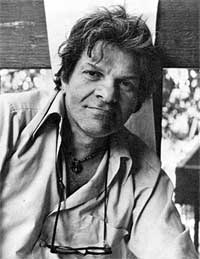 | |
And today is the birthday of Gregory Corso (Gregory Nunzio Corso; New York City; March 26, 1930 – January 17, 2001 Minnesota); poet, youngest of the inner circle of Beat Generation writers (with Jack Kerouac, Allen Ginsberg, and William S. Burroughs).
In 1951, 21-year-old Corso worked in the garment center by day, and at night was a mascot at one of Greenwich Village’s first lesbian bars, the Pony Stable Inn. The women gave Corso a table at which he wrote poetry. One night a Columbia College student, Ginsberg, happened into the Pony Stable and saw Corso… “he was good looking, and wondered if he was gay, or what.” Corso, who was not gay, was not uncomfortable with same sex come-ons, and thought he could score a beer off Ginsberg. He showed Ginsberg some of the poems he was writing and Ginsberg immediately recognized Corso as “spiritually gifted.” One poem described a woman who sunbathed in a window bay across the street from Corso’s room on 12th Street. The woman happened to be Ginsberg’s erstwhile girl friend, with whom he lived in one of his rare forays into heterosexuality. Ginsberg invited Corso back to their apartment and asked the woman if she would satisfy Corso’s sexual curiosity. She agreed, but Corso, still a virgin, got too nervous as she disrobed, and he ran from the apartment, struggling with his pants. Ginsberg and Corso became fast friends. All his life, Ginsberg had a sexual attraction to Corso, which remained unrequited.
During the early 1960s, Corso married Sally November, an English teacher who grew up in Cleveland, Ohio and attended Shaker High School, and graduated from the University of Michigan. At first, Corso mimicked his poem “Marriage” (see below) and moved to Cleveland to work in Sally’s father’s florist shop. Then the couple lived in Manhattan and Sally was known to Ginsberg, Peter Orlovsky, Larry Rivers and others in the beat circle at that time. The marriage, while a failure, did produce a child. Corso married two other times and had other children.
Corso had a cameo appearance in The Godfather III where he plays an outraged stockholder trying to speak at a meeting.
Verse
Marriage
Should I get married? Should I be good?
Astound the girl next door with my velvet suit and faustus hood?
Don’t take her to movies but to cemeteries
tell all about werewolf bathtubs and forked clarinets
then desire her and kiss her and all the preliminaries
and she going just so far and I understanding why
not getting angry saying You must feel! It’s beautiful to feel!
Instead take her in my arms lean against an old crooked tombstone
and woo her the entire night the constellations in the sky—
When she introduces me to her parents
back straightened, hair finally combed, strangled by a tie,
should I sit knees together on their 3rd degree sofa
and not ask Where’s the bathroom?
How else to feel other than I am,
often thinking Flash Gordon soap—
O how terrible it must be for a young man
seated before a family and the family thinking
We never saw him before! He wants our Mary Lou!
After tea and homemade cookies they ask What do you do for a living?
Should I tell them? Would they like me then?
Say All right get married, we’re losing a daughter
but we’re gaining a son—
And should I then ask Where’s the bathroom?
O God, and the wedding! All her family and her friends
and only a handful of mine all scroungy and bearded
just wait to get at the drinks and food—Corso’s sometimes surreal word mash-ups in the poem—”forked clarinets,” “Flash Gordon soap,” “werewolf bathtubs”—caught the attention of many. Ethan Hawke recited the poem in the 1994 film Reality Bites, and Corso later thanked Hawke for the resulting royalty check.
Corso wrote his epitaph;
Spirit
is Life
It flows thru
the death of me
endlessly
like a river
unafraid
of becoming
the sea
thanks for stoppin’ by
Mac Tag
 The Lovers’ Chronicle
Leave a comment