Dear Zazie, Here is today’s Lovers’ Chronicle from Mac Tag dedicated to his muse. Follow us on twitter @cowboycoleridge. Rhett
The Lovers’ Chronicle
Dear Muse,
the dream of…
-Scene: he sits at a table, with two men dressed in late 1700’s attire,
on the patio of a villa in Venice, he is talking and one of the men
is taking notes, while the other man listens and nods approvingly,
they are drinking red wine, a piano can be heard inside the villa,
the beautiful redhead walks up and he rises to greet her;
Hello my love, what brings us back Venice
my new pal Da Ponte and his friend Casanova,
Da Ponte said he was out of ideas for writin’ a new libretto
but after hearin’ about my crash and burn love life
he reckons there is enough material for two or three operas
Oh ok, she says, your romantic life was rather operatic
yes, it had it all, from tragedy to comedy, even
the believe it or not happy endin’
So he will be busy for awhile, she says,
who is playing the piano inside
Mozart of course to write the music
The renewal of a great collaboration
speakin’ of collaboratin’, i better git you
outta here before one of them tries to woo you
Lucky for you my dear, I am immune
to the charms of dead scoundrels


© copyright 2024.2025 mac tag/cowboycoleridge all rights reserved
somethin’ that was sought
after for years and found,
in different ways, first
in 2017, then in 2019
and of course in 2021
“Oh this isn’t about your
subscription to The Paris Review“
ha, no, though that is important
“Nice the way it coincides with spring”
yes, and the way it blooms, the renewal
of feelin’s and words given up for gone, till you
© copyright 2023 mac tag/cowboycoleridge all rights reserved
a thin wet sky, orange at the rim, that meets with sun, the city skyline, a tune, homin’, seeks a shelterin’, where dreams bloom, and feelin’s cling, sailin’ up with the nearin’ night, a spirit, swathed in some soft veil, takes twilight and its shadows o’er, hushed we lie, renewed together
© copyright 2022 mac tag/cowboycoleridge all rights reserved
well that is true
for certain
i find myself, again
writin’, is that not
what life is about
not sure even
readin’ everything
i have written
can convey how numb
my feelin’s, how dead
inside i became
well, a long damn way
come, and with your help
i can see all the way
© copyright 2021 mac tag/cowboy coleridge all rights reserved
Pale Love, Pale Rider
pale light in the room
floatin’ on our cloud
we lay there, my hand
strokin’ the curve
of your thighs
and your back
we slept and woke
entwined together,
touchin’, breathin’
quickly, then
slowly again,
caressin’ and dozin’,
your legs locked
around my leg now
it does, feel good
© copyright 2020 mac tag/cowboy coleridge all rights reserved
all i ask
whatever you have
that is real…
you say you are afraid
it is too much
more and more
belief
that whatever it is
will be just right
if all that separates
is distance
if every other note
is wish you were here
then knowin’
next to you
would feel so good
© copyright 2019 mac tag/cowboy coleridge all rights reserved
if i wrote all night
would you sit with me
while i did…
well, a long damn way
come, since last year
a renewal,
for certain
on two levels,
the one of self
found,
and here to stay
the other, in you…
what else to make dreams
the weather is here
wish you were mine
© copyright 2018 mac tag/cowboy coleridge all rights reserved
Yea, though I ride through the Valley of Shadows y’all……
© copyright 2015 mac tag/cowboy coleridge all rights reserved
Last night watchin’ the moon rise over the hills of Central Nebraska, revel in immense solitude

© copyright 2012 mac tag/cowboy coleridge all rights reserved

Today is the birthday of Lorenzo Da Ponte (Emanuele Conegliano; Republic of Venice (now Vittorio Veneto, Italy) 10 March 1749 – 17 August 1838 New York City); opera librettist, poet and Roman Catholic priest.  He wrote the libretti for 28 operas by 11 composers, including three of Mozart's greatest operas, Don Giovanni, Le nozze di Figaro and Così fan tutte.  He was the first professor of Italian literature at Columbia University, and with Manuel Garcia, the first to introduce Italian opera to America.  Da Ponte was also a close friend of Mozart and Casanova.
In 1773 Da Ponte moved to Venice, where he made a living as a teacher of Latin, Italian and French. Although he was a Catholic priest, the young man led a dissolute life. While priest of the Church of San Luca, he took a mistress, with whom he had two children. In 1777, he met for the first time Giacomo Casanova, who will become a close friend for over 20 years, and be featured in his memoirs.  Both were Venetian adventurers, kindred spirits, and seducers.
At Da Ponte's 1779 trial, where he was charged with "public concubinage" and "abduction of a respectable woman", it was alleged that he had been living in a brothel and organizing the entertainments there. He was found guilty and banished for fifteen years from Venice.
In Trieste he met Nancy Grahl, the English daughter of a Jewish chemist (who he would never marry but eventually have four children with).
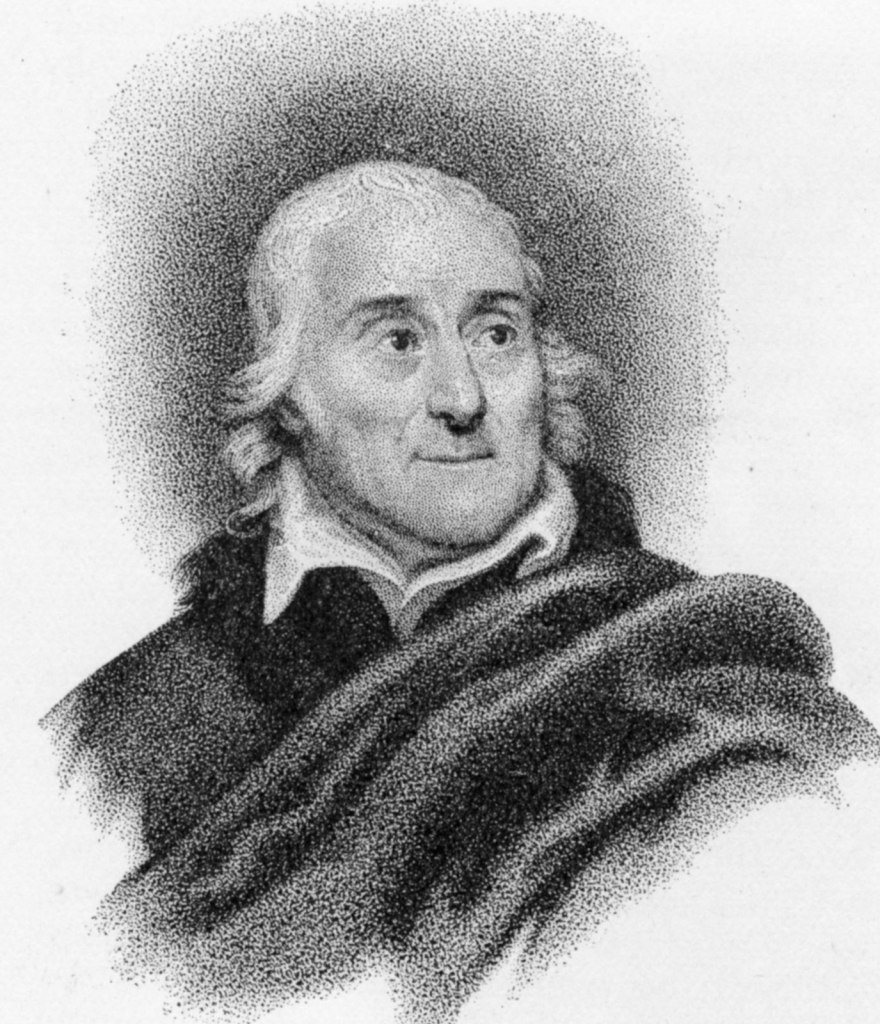
Engraving by Michele Pekenino after Nathaniel Rogers
Libretti
Don Giovanni
- Notte e giorno faticar,
Per chi nulla sa gradir,
Piova e vento sopportar,
Mangiar male e mal dormir.
Voglio far il gentiluomo
E non voglio più servir.- Leporello, Act I, sc. i; translation p. 135.
- Madamina, il catalogo è questo
Delle belle che amò il padron mio;
un catalogo egli è che ho fatt’io;
Osservate, leggete con me.
In Italia seicento e quaranta;
In Almagna duecento e trentuna;
Cento in Francia, in Turchia novantuna;
Ma in Ispagna son già mille e tre.- Leporello, Act I, sc. v; translation p. 145.
- Nella bionda egli ha l’usanza
Di lodar la gentilezza,
Nella bruna la costanza,
Nella bianca la dolcezza.- Leporello, Act I, sc. v; translation p. 147.
- Delle vecchie fa conquista
Pel piacer di porle in lista;
Sua passion predominante
È la giovin principiante.
Non si picca – se sia ricca,
Se sia brutta, se sia bella;
Purché porti la gonnella,
Voi sapete quel che fa.- Leporello, Act I, sc. v; translation p. 147.
- Don Giovanni: Là ci darem la mano,
Là mi dirai di sì.
Vedi, non è lontano;
Partiam, ben mio, da qui.
Zerlina: Vorrei e non vorrei,
Mi trema un poco il cor.
Felice, è ver, sarei,
Ma può burlarmi ancor.- Act I, sc. ix, translation p. 153.
- Ah! la mia lista
Doman mattina
D’una decina
Devi aumentar!- Don Giovanni, Act I, sc. xv, translation pp. 163-5.
- Di rider finirai pria dell’aurora!
- La Statua, Act II, sc. xv, translation p. 203.
- Vivan le femmine,
Viva il buon vino!
Sostegno e gloria
d’umanità!- Don Giovanni, Act II, sc. xviii, translation p. 211.
Le nozze di Figaro
- Non so più cosa son, cosa faccio…
Or di fuoco, ora sono di ghiaccio…
Ogni donna cangiar di colore,
Ogni donna mi fa palpitar.
Solo ai nomi d’amor, di diletto
Mi si turba, mi s’altera il petto,
E a parlare mi sforza d’amore
Un desio ch’io non posso spiegar!- Cherubino, Act I, sc. v
- Così fan tutte le belle!
- All pretty women are like that.
- Basilio, Act I, sc. vii
- Così fan tutte was later used as the title of another opera by Mozart and Da Ponte.
- Non più andrai, farfallone amoroso,
Notte e giorno d’intorno girando,
Delle belle turbando il riposo,
Narcisetto, Adoncino d’amor.- Figaro, Act I, sc. viii
- Ricerco un bene fuori di me,
Non so chi ‘l tiene, non so cos’è.
Sospiro e gemo senza voler,
Palpito e tremo senza saper,
Non trovo pace notte né dì:
Ma pur mi piace languir così.- Cherubino, Act II, sc. iii
- Aprite un po’ quegli occhi
Uomini incauti e sciocchi,
Guardate queste femmine,
Guardate cosa son.
Queste chiamate Dee
Dagli ingannati sensi,
A cui tributa incensi
La debole ragion,
Son streghe che incantano
Per farci penar,
Sirene che cantano
Per farci affogar.
Civette che allettano
Per trarci le piume,
Comete che brillano
Per toglierci il lume.- Figaro, Act IV, sc. viii

Today is the birthday of William Etty (York, England 10 March 1787 – 13 November 1849 York, England); artist perhaps best known for his history paintings containing nude figures. He was the first significant British painter of nudes and still lifes. Born in York, he left school at the age of 12 to become an apprentice printer in Hull. He completed his apprenticeship seven years later and moved to London, where in 1807 he joined the Royal Academy Schools. There he studied under Thomas Lawrence and trained by copying works by other artists. Etty earned respect at the Royal Academy of Arts for his ability to paint realistic flesh tones, but had little commercial or critical success in his first few years in London.
Etty’s Cleopatra’s Arrival in Cilicia, painted in 1821, featured numerous nudes and was exhibited to great acclaim. Its success prompted several further depictions of historical scenes with nudes. All but one of the works he exhibited at the Royal Academy in the 1820s contained at least one nude figure, and he acquired a reputation for indecency. Despite this, he was commercially successful and critically acclaimed, and in 1828 was elected a Royal Academician, at the time the highest honour available to an artist. Although he was one of the most respected artists in the country he continued to study at life classes throughout his life, a practice considered inappropriate by his fellow artists. In the 1830s Etty began to branch out into the more lucrative but less respected field of portraiture, and later became the first English painter to paint significant still lifes. He continued to paint both male and female nudes, which caused severe criticism and condemnation from some elements of the press.
An extremely shy man, Etty rarely socialised and never married. From 1824 until his death he lived with his niece Betsy (Elizabeth Etty). Even in London he retained a keen interest in his native York, and was instrumental in the establishment of the town’s first art school and the campaign to preserve York city walls. While he never formally converted from his Methodist faith, he was deeply attached to the Roman Catholic Church and was one of the few non-Catholics to attend the 1838 opening of Augustus Pugin’s chapel for St Mary’s College, Oscott, at that time England’s most important Roman Catholic building.
Etty was prolific and commercially successful throughout the 1840s, but the quality of his work deteriorated throughout this period. As his health progressively worsened he retired to York in 1848. He died in 1849, shortly after a major retrospective exhibition. In the immediate aftermath of his death his works became highly collectable and sold for large sums. Changing tastes meant his work later fell out of fashion, and imitators soon abandoned his style. By the end of the 19th century the value of all of his works had fallen below their original prices, and outside his native York he remained little known throughout the 20th century. Etty’s inclusion in Tate Britain’s landmark Exposed: The Victorian Nude exhibition in 2001–02, the high-profile restoration of his The Sirens and Ulysses in 2010 and a major retrospective of his work at the York Art Gallery in 2011–12 led to renewed interest in his work.
Gallery


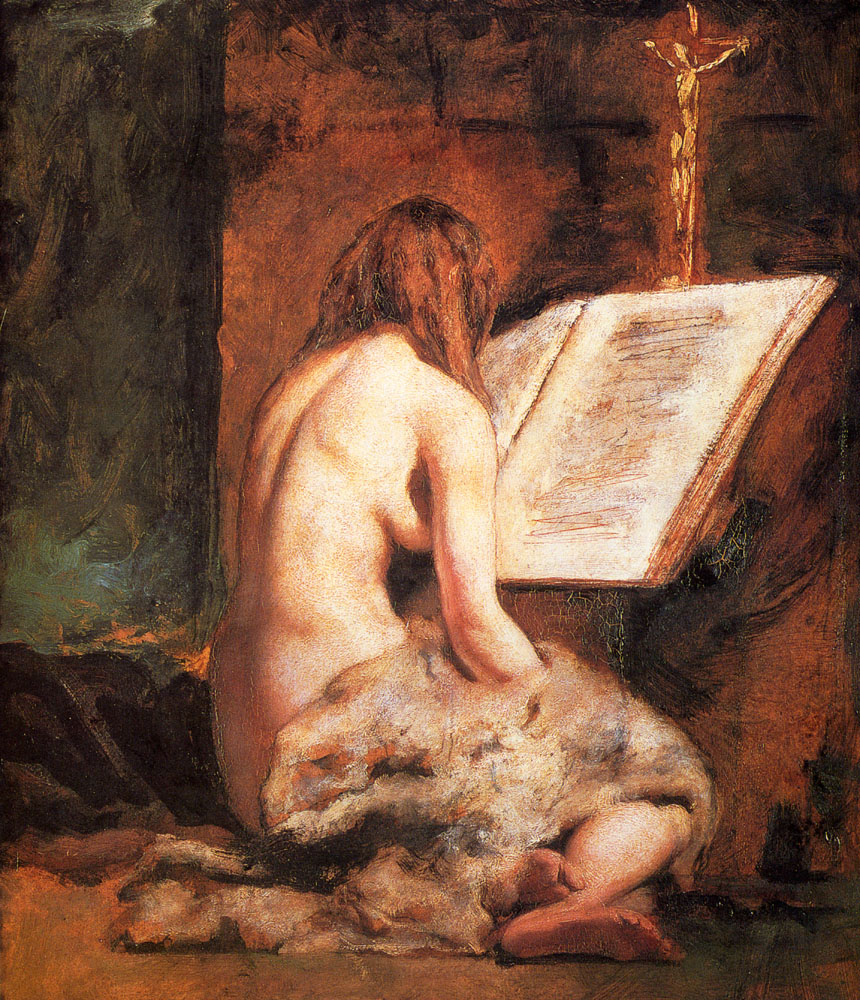
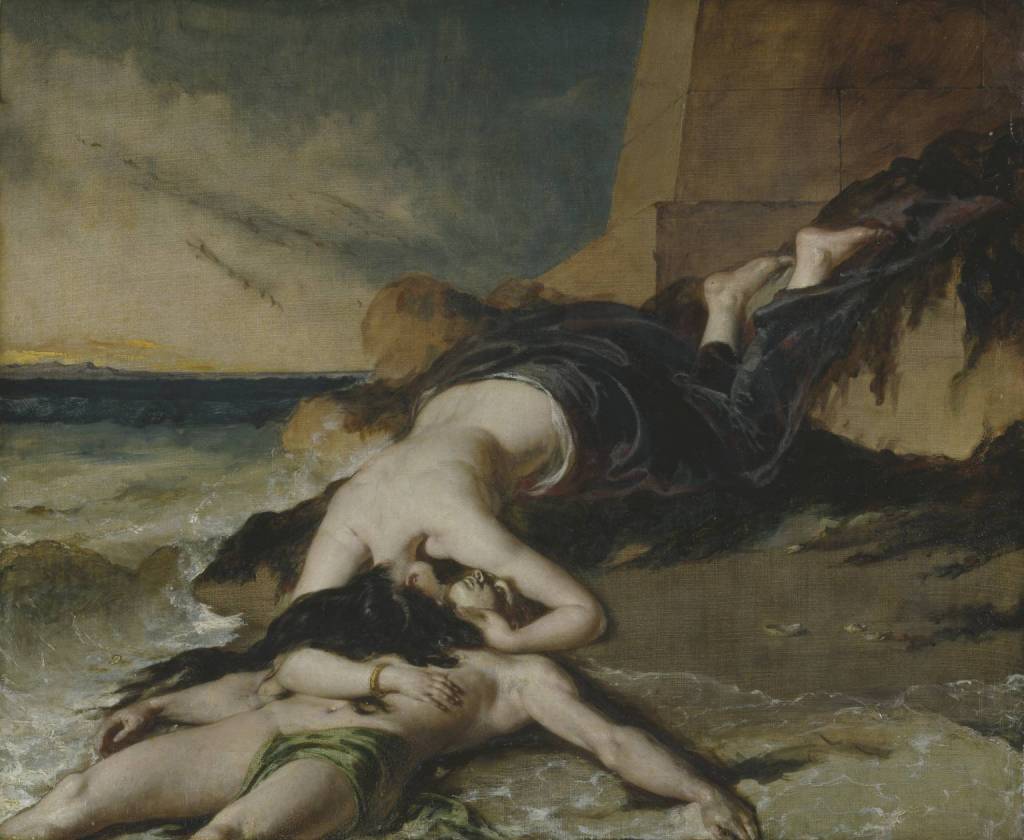
Hero and Leander (1829)
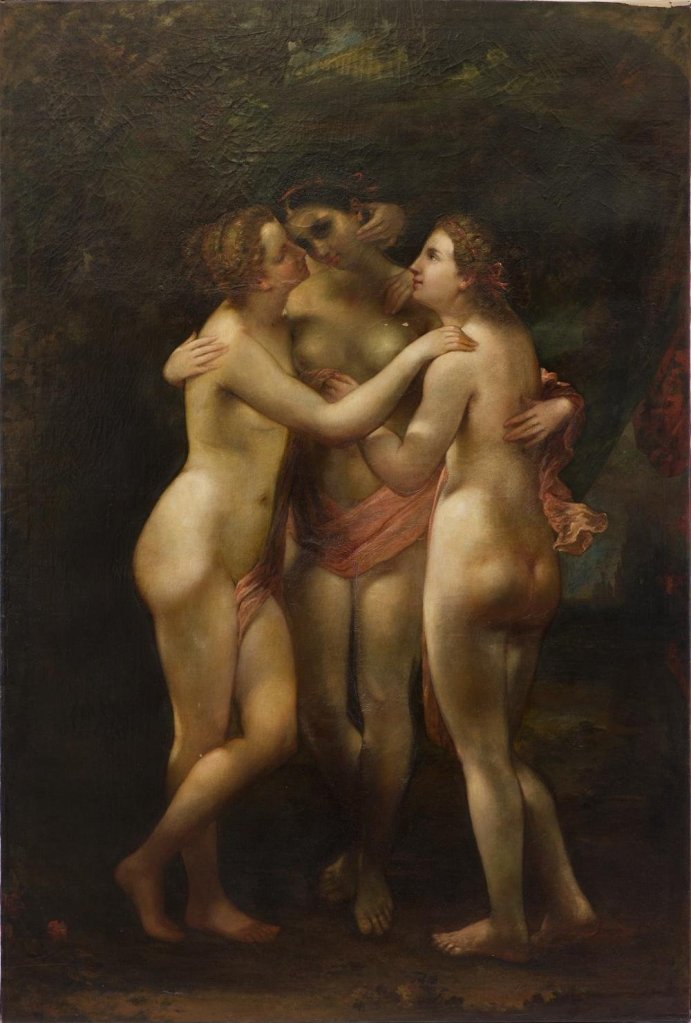

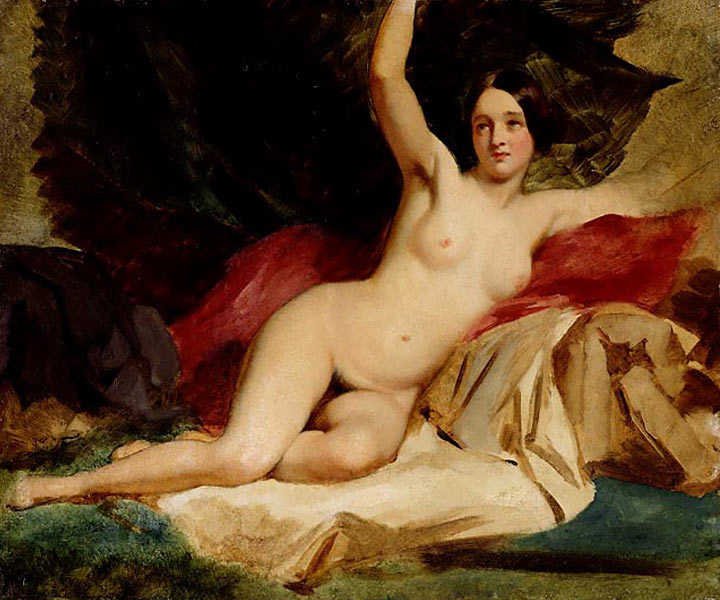
Female Nude in a Landscape, 1820

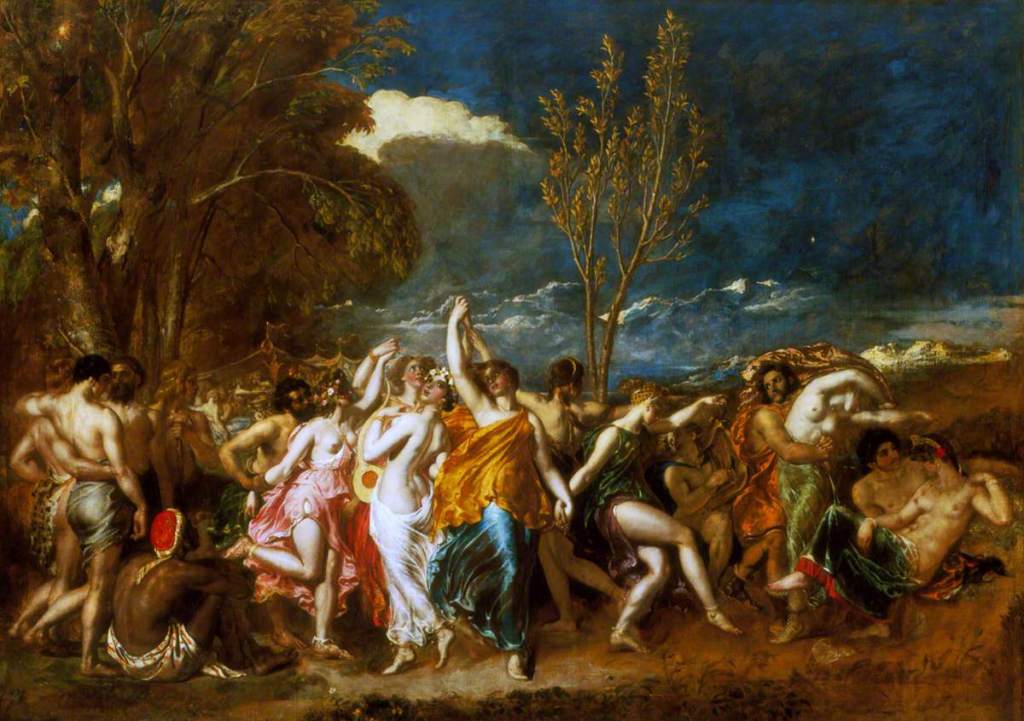
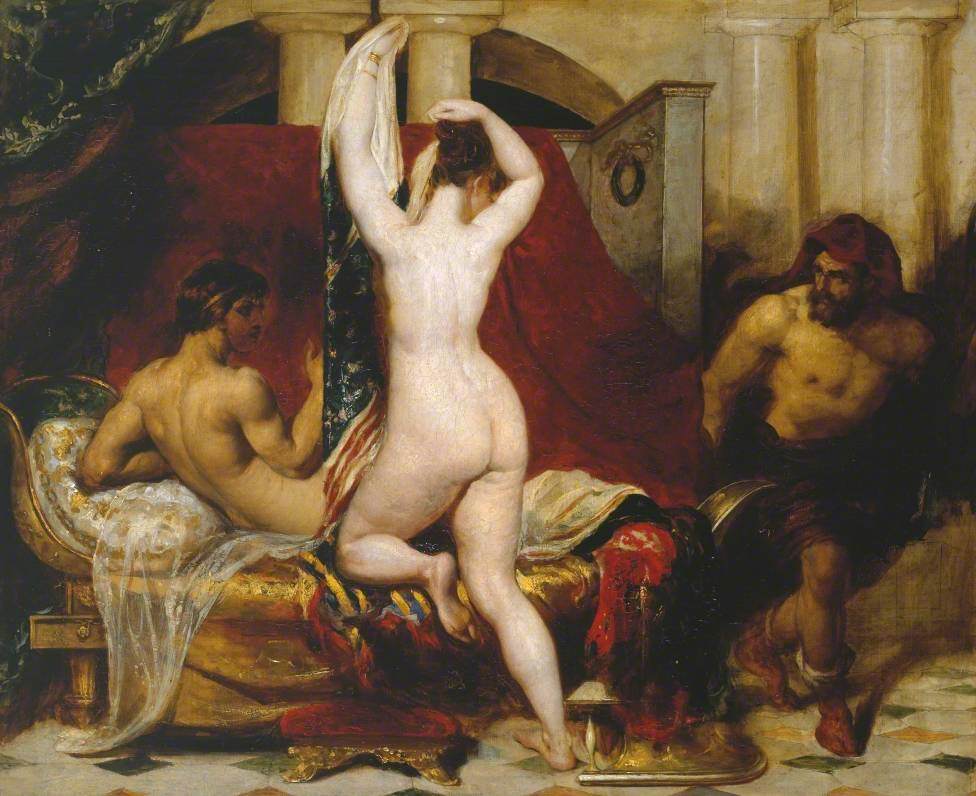

Musidora: The Bather ‘At the Doubtful Breeze Alarmed’ (1843
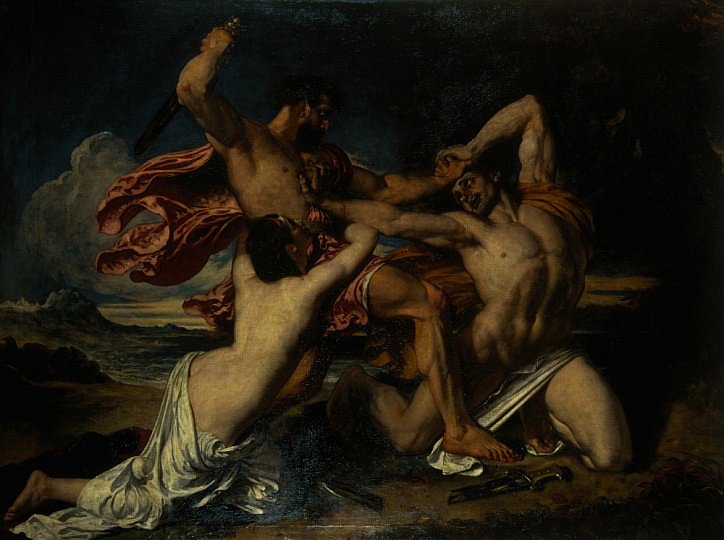
The Combat: Woman Pleading for the Vanquished, William Etty (1825)
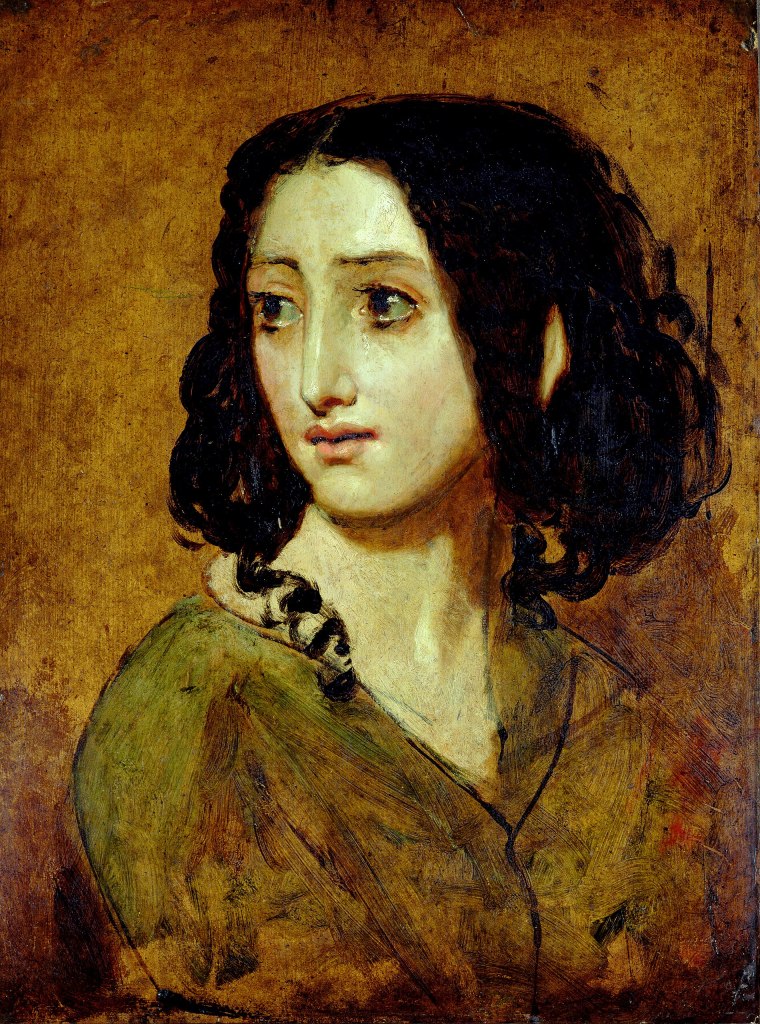
Portrait of Mlle Rachel (c. 1841)

Preparing for a Fancy Dress Ball (1835)
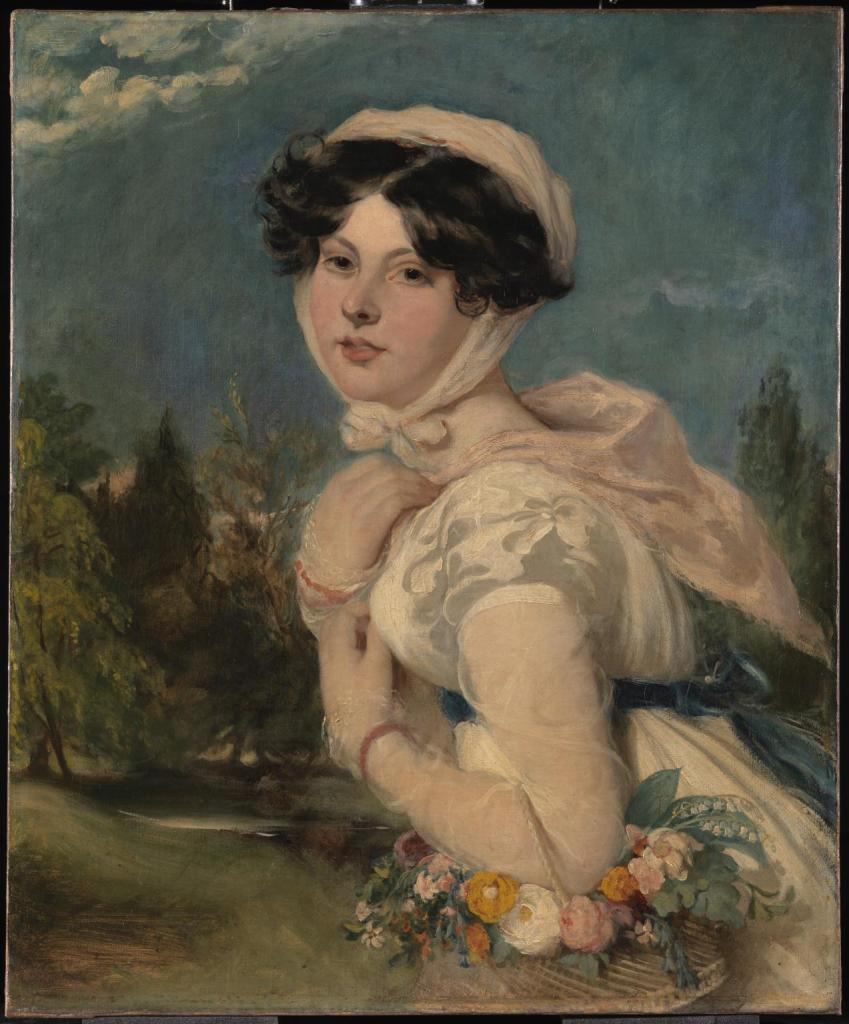
Miss Mary Arabella Jay(1819), one of the earliest paintings exhibited by Etty at the Summer Exhibition to survive
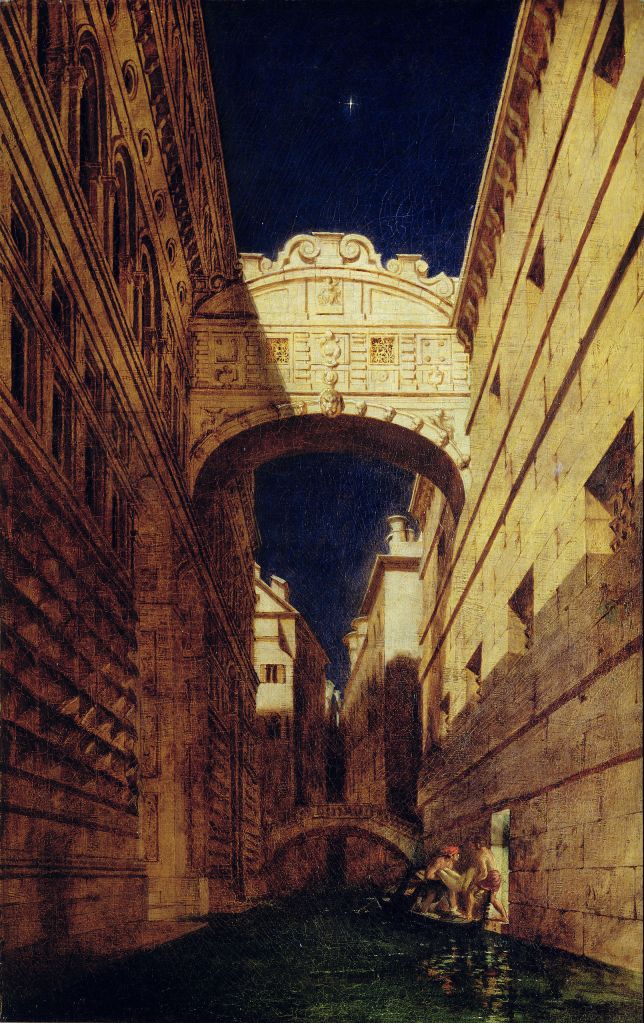
The Bridge of Sighs, Venice (1835) was painted from pencil sketches made by Etty during his 1822 visit
 Venus Reclining Holding A Full Moon
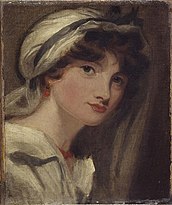
Mary, Lady Templeton, after Thomas Lawrence, William Etty, 1807–08
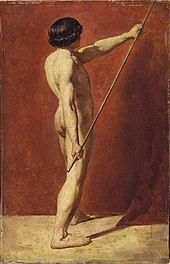
Male Nude with Staff(1814–16)
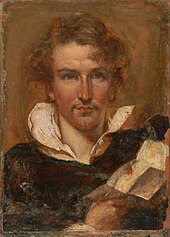
Self-portrait, 1823

Self-portrait, 1825.

Betsy (left), Charles (centre) and William (right), October 1844
And today is the birthday of Nancy Cunard (Nancy Clara Cunard; London; 10 March 1896 – 17 March 1965 Paris); writer, heiress and political activist. She was born into the British upper class, and devoted much of her life to fighting racism and fascism. She became a muse to some of the 20th century’s most distinguished writers and artists, including Wyndham Lewis, Aldous Huxley, Tristan Tzara, Ezra Pound and Louis Aragon—who were among her lovers—as well as Ernest Hemingway, James Joyce, Constantin Brâncuși, Langston Hughes, Man Ray and William Carlos Williams. MI5 documents reveal that she was involved with Indian socialist leader V. K. Krishna Menon.

On 15 November 1916 she married Sydney Fairbairn, a cricketer and army officer who had been wounded at Gallipoli. After a honeymoon in Devon and Cornwall, they lived in London in a house given to them by Nancy’s mother as a wedding present. The couple separated in 1919 and divorced in 1925.

Cunard’s lover Peter Broughton-Adderley was killed in action in France less than a month before Armistice Day. Many who knew her claimed that she never fully recovered from Adderley’s loss.
Cunard moved to Paris in 1920. There, she became involved with literary Modernism, Surrealists and Dada. Much of her published poetry dates from this period. During her early years in Paris, she was close to Michael Arlen.
In 1920 she had a near-fatal hysterectomy, for reasons that are not entirely clear. She was however sadly unable to carry a pregnancy as a result of the hysterectomy.
A brief relationship with Huxley influenced several of his novels. She was the model for Myra Viveash in Antic Hay (1923) and for Lucy Tantamount in Point Counter Point (1928).
In Paris, Cunard spent much time with Eugene McCown, an American artist from the hard-drinking set whom she made her protégé. It has been suggested that she became dependent on alcohol at this time, and may have used other drugs.
In 1928, the year she founded her publishing company, Hours Press, she met Henry Crowder, with whom she lived until 1933.
In later years she suffered from mental illness, and her physical health deteriorated. When she died in the Hôpital Cochin, she weighed only 26 kg (57 pounds / 4 stone, 1lb).
thanks for stoppin’ by y’all
Mac Tag
 The Lovers’ Chronicle
Leave a comment