Dear Zazie, Here is today’s Lovers’ Chronicle from Mac Tag dedicated to his muse. Follow us on twitter @cowboycoleridge. What leaps have you taken? Rhett
The Lovers’ Chronicle
Dear Muse,
might as well dream…
driftin’ in and out of sleep, chilly in the room but the covers are pulled up, this must be total comfort he thinks, the jukebox in his head kicks in, oh nice, perfect song for today as he fades into a dream…
that synth line, one of the great song openin’s, the lyrics open to wide interpretation as are most of Roth’s, not even gonna ask Eddie, just want to enjoy his playin’, ah might as well…
Hey baby, says the lovely redhead
oh glad you are here, just in time for the solo
So a leap dream for leap day
and a leap song, a call to action, to love
To have this life, without leaving our feet
git ready here it comes
“Go ahead and jump”

© copyright 2024 mac tag/cowboycoleridge all rights reserved
Pale Love, Pale Rider
any leaps we should take today
not that i can think of
’member that time we went
to bungee jump but it was closed
yes, with friends from work so
woulda done it if they had been open
might have saved our life
there is an analogy here
to our love life leaps of faith
right, we jumped more than once
only to have the cord snap
every damn time
well now we know, no more leaps
without tyin’ off a rope
how ‘bout leapin’ into some queso
with a movie and mezcal
now that is a leap worth takin’

© copyright 2020.2024 mac tag/cowboycoleridge all rights reserved
doomed; i know that now
ended so quickly. hardly
remember that summer…
except for her. everything
else was just scenery
© copyright 2016 mac tag/cowboycoleridge all rights reserved
Today is the birthday of Gioachino Rossini (Gioachino Antonio Rossini; Pesaro, Papal States, now Italy 29 February 1792 – 13 November 1868 Passy, France); composer who gained fame for his 39 operas, although he also wrote many songs, some chamber music and piano pieces and some sacred music. He set new standards for both comic and serious opera before retiring from large-scale composition while still in his thirties, at the height of his popularity.
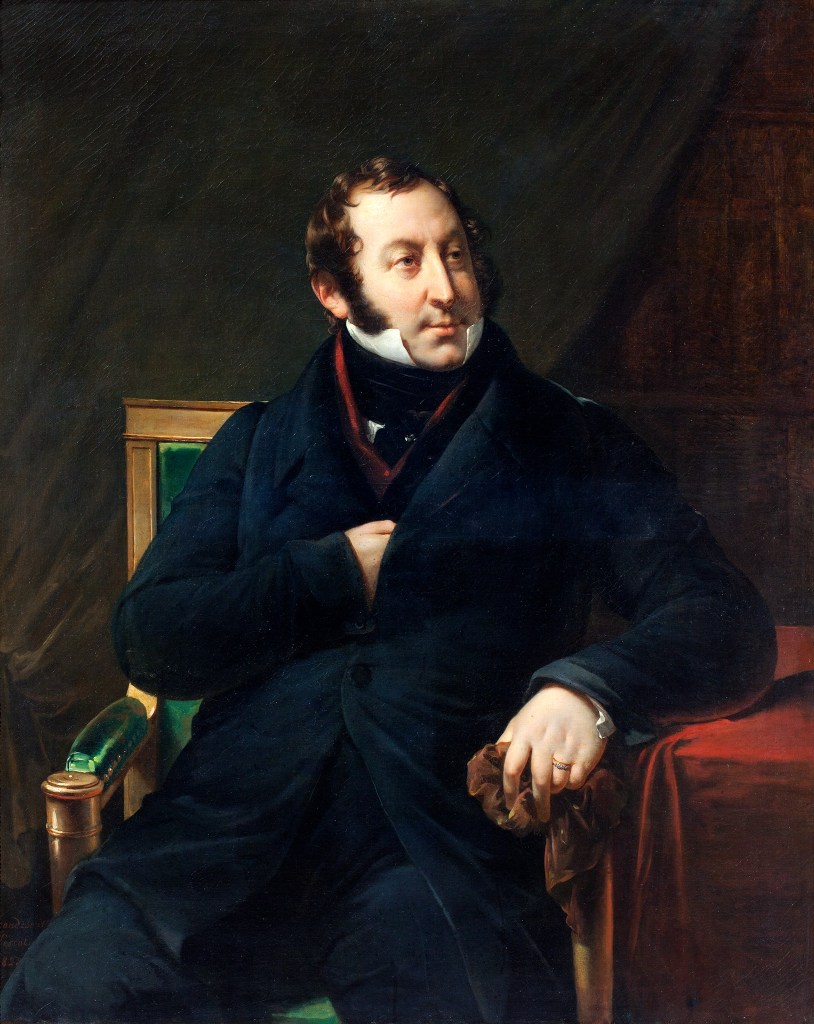
painted in Paris in 1828 by Hortense Haudebourt-Lescot
Born to parents who were both musicians (his father a trumpeter, his mother a singer), Rossini began to compose by the age of twelve and was educated at music school in Bologna. His first opera was performed in Venice in 1810 when he was 18 years old. In 1815 he was engaged to write operas and manage theatres in Naples. In the period 1810–1823, he wrote 34 operas for the Italian stage that were performed in Venice, Milan, Ferrara, Naples and elsewhere; this productivity necessitated an almost formulaic approach for some components (such as overtures) and a certain amount of self-borrowing. During this period he produced his most popular works, including the comic operas L’italiana in Algeri, Il barbiere di Siviglia (known in English as The Barber of Seville) and La Cenerentola, which brought to a peak the opera buffa tradition he inherited from masters such as Domenico Cimarosa and Giovanni Paisiello. He also composed opera seria works such as Tancredi, Otello and Semiramide. All of these attracted admiration for their innovation in melody, harmonic and instrumental colour, and dramatic form. In 1824 he was contracted by the Opéra in Paris, for which he produced an opera to celebrate the coronation of Charles X, Il viaggio a Reims (later cannibalised for his first opera in French, Le comte Ory), revisions of two of his Italian operas, Le siège de Corinthe and Moïse, and in 1829 his last opera, Guillaume Tell.
Rossini’s withdrawal from opera for the last 40 years of his life has never been fully explained; contributory factors may have been ill-health, the wealth his success had brought him, and the rise of spectacular grand opera. From the early 1830s to 1855, when he left Paris and was based in Bologna, Rossini wrote relatively little.

Colbran painted by Heinrich Schmidt
In 1815, while in Naples, Rossini met opera soprano and composer Isabella Colbran and she became his muse. He was contacted to write an opera by Domenico Barbaia about Queen Elizabeth of England, eventually writing the opera Elisabetta, regina d’Inghilterra, specifically writing the main voice part for Colbran. After many years of dating, they wed on 16 March 1822 at the church of Beata Vergine del Pilar in Castenaso, near Bologna. After their marriage, Rossini took control of all her jobs, money, inherited land, and everything she owned, calling her his property in letters. The couple then traveled to Vienna and London to tour Rossini’s operas. She was called his protectress by Rossini’s close friends. When Colbran’s father died in 1820, Rossini bought him a tomb for him on his family’s cemetery plot, officially making it the Colbran-Rossini plot. While they had very successful careers working with each other, their marriage was not a very happy one. Rossini cheated on Colbran with many different women while he would tour after she retired as a singer. Rossini left her sometime between 1829 and 1837, some sources saying they were divorced in 1837. He courted many women during this time, eventually dating Olympe Pélissier in 1830. Rossini continued to financially support Colbran until her death. When word got back to Rossini in August 1845 how ill she truly was, he left to visit her. What was said in the room is not known, but he left the room with tears streaming down his face. He instructed those in charge of the villa where she was staying to do everything possible to meet her needs and wishes. People close to her said there was no doubt she loved him until her death. Her last words were Rossini’s name. When she died, he paid for a marble statue-like headstone to be put up in her memory and buried her next to her father’s tomb in his family’s plot. He sold the villa she died in, too heartbroken to even enter the house after her death.

Study of Pélissier by Horace Vernet for his Judith and Holofernes
Pélissier (Paris 9 May 1799 – 22 March 1878 Paris) was an artists’ model and courtesan. Honoré de Balzac described her as “the most beautiful courtesan in Paris”.
Rossini and Pélissier lived in his house in Paris until a cholera epidemic forced them to leave the city in favour of Italy. At the end of 1836, they moved to Bologna, where for etiquette’s sake they lived under separate roofs. Pélissier felt suffocated in Bologna and pressured Rossini to move. In November 1837 they moved to Milan where they held musical evenings every Friday night. Among the regular guests was Franz Liszt. However, she held the social position of the courtesan, a companion, but not a future bride to the composer. Even Marie d’Agoult, who had abandoned her husband to follow the musician Liszt, was sceptical: “Rossini spent the winter in Milan with Mademoiselle Pélissier and tried to introduce her into society, but no lady of class ever visited her”.
After Isabella’s death, Rossini and Pélissier married in August 1846. Bologna was being affected by uprisings as part of the 1848 Revolution, so the couple moved to Florence. They stayed for seven years, during which time Rossini’s health declined. He suffered from depression, caused by the effects of gonorrhea. Pélissier missed Paris, and wished to return there to seek medical help for Rossini, so in May 1855 they returned there, taking a large apartment on the Rue de la Chaussée-d’Antin.
In Paris they restarted their musical evenings, samedi soir, which became legendary within Paris society. Guests included Alexandre Dumas fils, Eugène Delacroix, Liszt, Giacomo Meyerbeer, and Giuseppe Verdi. The couple had a new villa constructed in the Passy suburb of Paris in 1859.
Rossini’s last major composition was his Petite messe solennelle (1863). At the end of the manuscript, the composer wrote:
Dear God, here it is finished, this poor little Mass. Is it sacred music I have written, or damned music? I was born for opera buffa, as you know well. A little technique, a little heart, that’s all. Be blessed then, and grant me Paradise.
After a short illness, and an unsuccessful operation to treat colorectal cancer, Rossini died at the age of seventy-six. He left Olympe a life interest in his estate, which after her death, ten years later, passed to the Commune of Pesaro for the establishment of a Liceo Musicale, and funded a home for retired opera singers in Paris. After a funeral service attended by more than four thousand people at the church of Sainte-Trinité, Paris, Rossini’s body was interred at the Père Lachaise Cemetery. In 1887 his remains were moved to the basilica of Santa Croce, Florence.
Today is the birthday of Augusta Savage (born Augusta Christine Fells; Green Cove Springs, Florida; February 29, 1892 – March 27, 1962 New York City); sculptor associated with the Harlem Renaissance. She was also a teacher whose studio was important to the careers of a generation of artists who would become nationally known. She worked for equal rights for African Americans in the arts.
In 1907, at the age of 15, Augusta Fells married John T. Moore; the two had a daughter, Irene Connie Moore, who was born the following year. John died shortly thereafter. In 1915, after moving to West Palm Beach, she met and married James Savage; she retained the name Savage throughout her life, even after the two divorced in the early 1920s. In 1923, Savage married Robert Lincoln Poston, a protégé of Marcus Garvey. Poston died of pneumonia aboard a ship while returning from Liberia as part of a Universal Negro Improvement Association and African Communities League delegation in 1924.
Gallery


with her sculpture Realization, 1938

Gwendolyn knight
And today is the birthday of Balthus (Balthasar Klossowski de Rola; Paris; February 29 1908 – February 18, 2001 Rossinière, Switzerland); artist. Perhaps best known for his erotically charged images of pubescent girls, but also for the refined, dreamlike quality of his imagery.
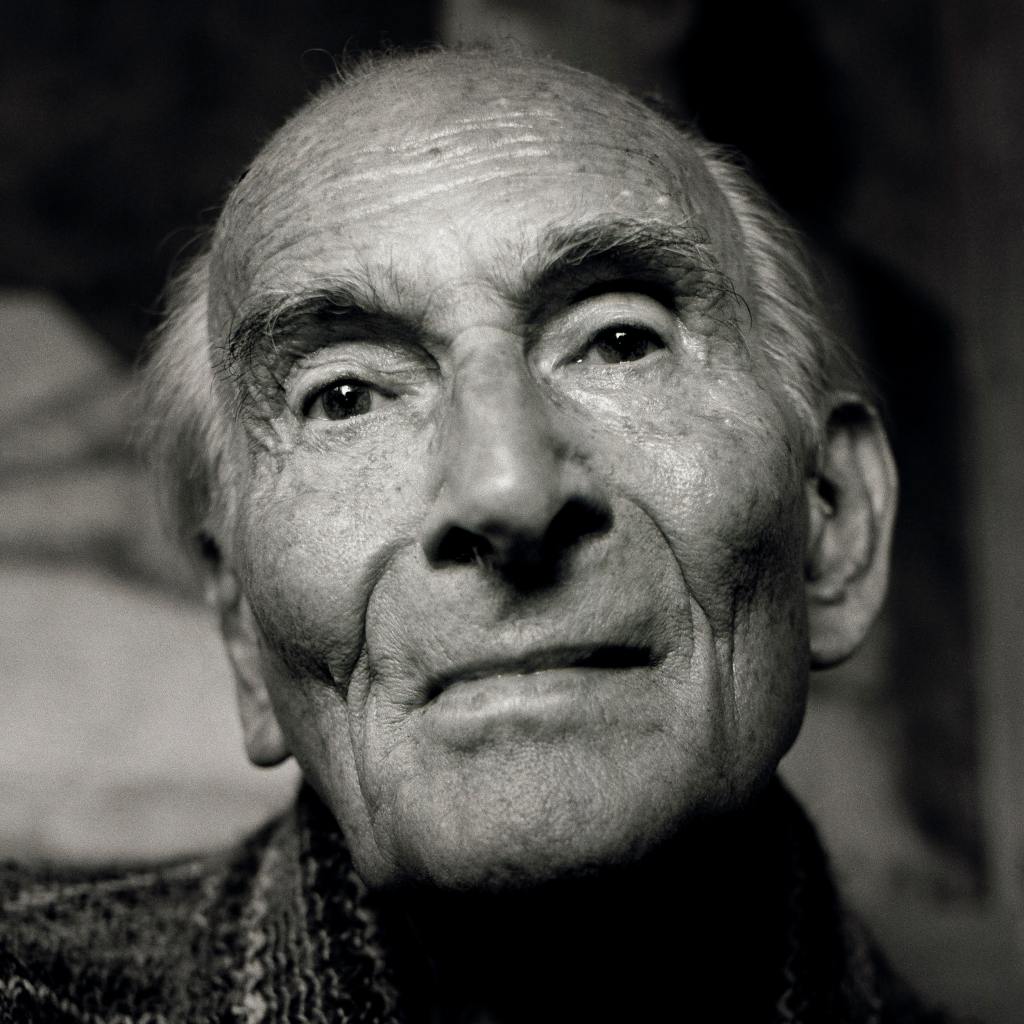
Oliver Mark – Balthus, Rossinière 2000
Throughout his career, Balthus rejected the usual conventions of the art world. He insisted that his paintings should be seen and not read about, and he resisted attempts to build a biographical profile. Nevertheless, towards the end of his life he took part in a series of dialogues with the neurobiologist Semir Zeki, conducted at his chalet at Rossinière, Switzerland and at the Palazzo Farnese (French Embassy) in Rome. They were published in 1995 under the title La Qûete de l’essentiel.
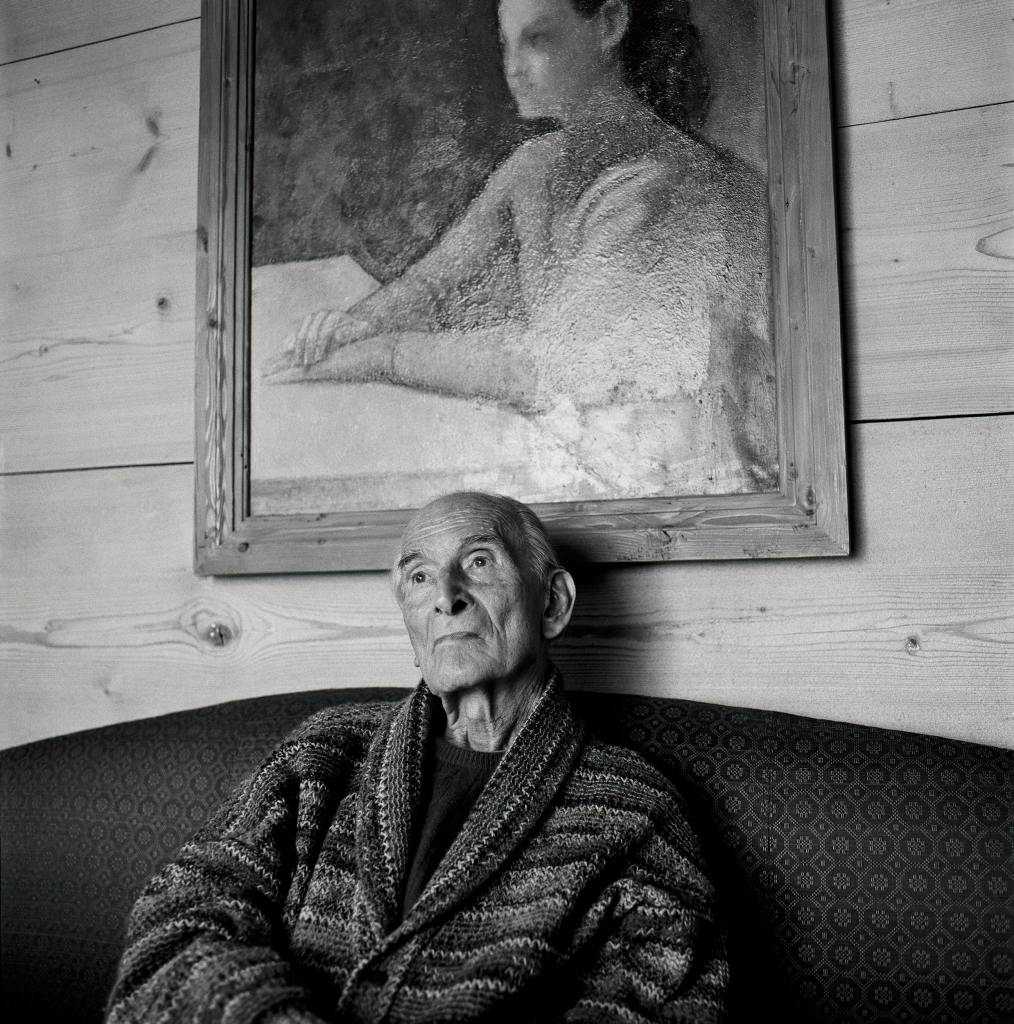
Oliver Mark – Balthus, Rossinière 2000
In 1937 he married Antoinette de Watteville, who was from an influential aristocratic family from Bern. He had met her as early as 1924, and she was the model for La Toilette de Cathy (see below) and for a series of portraits.
As international fame grew with exhibitions in the gallery of Pierre Matisse (1938) and the Museum of Modern Art (1956) in New York City, he cultivated the image of himself as an enigma. In 1964, he moved to Rome where he presided over the Villa de Medici as director (appointed by the French Minister of Culture André Malraux) of the French Academy in Rome. He became a friend of the filmmaker Federico Fellini and the painter Renato Guttuso.
In 1977, he moved to Rossinière, Switzerland. That he had a second, Japanese wife Setsuko Ideta whom he married in 1967 and was thirty-five years his junior, simply added to the air of mystery around him (he met her in Japan, during a diplomatic mission also initiated by Malraux).
Gallery

La robe blanche

La Toilette de Cathy
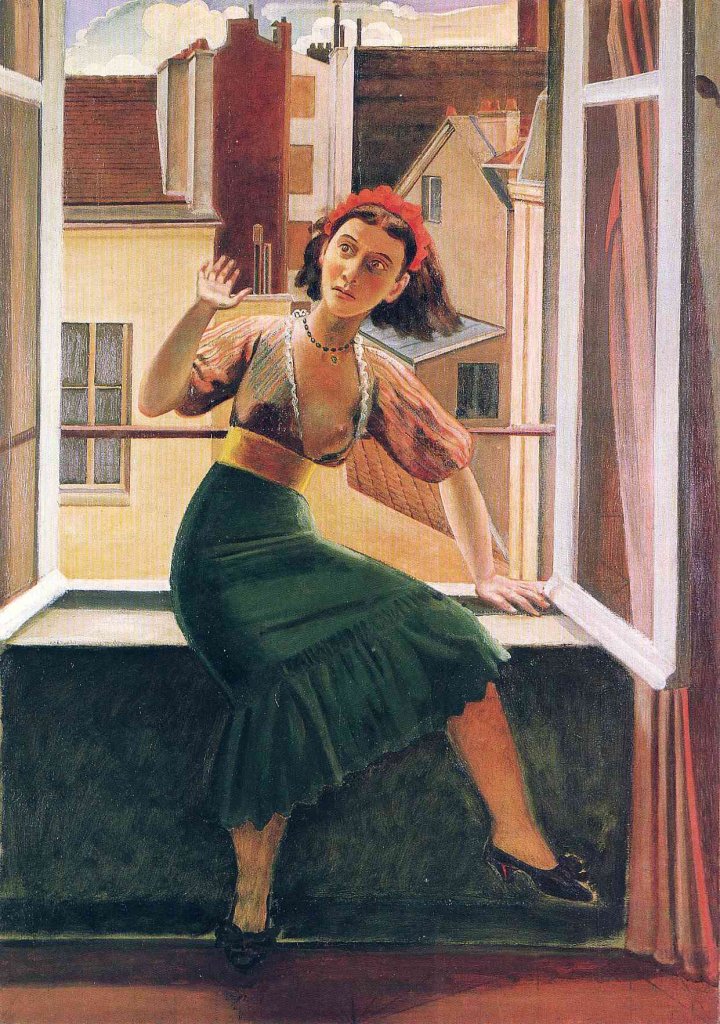
La peur des fantômes
thanks for stoppin’ by y’all
mac tag
 The Lovers’ Chronicle
Leave a comment