Dear Zazie, Here is today’s Lovers’ Chronicle from Mac Tag. Follow us on twitter @cowboycoleridge. As Valentine’s day approaches, who are you without? Rhett
The Lovers’ Chronicle
Dear Muse,
dream with…
a cafe in Paris about 1920, he sits at a table with a man and a woman, young, beautiful, stylishly dressed, when the très belle redhead approches the table, she notices that he is drunk, she announces herself
Hello my dear
he looks up, smiles and spills his drink as he rises to greet her
hey mon cheri, say hello to my new friends Zelda and Scott
Oh my, have you been trying to keep up with them, you know no one can
Come on let’s go get you some coffee, we do not want to be late for Marie’s party for Braque, Max and Pablo will be there, but I heard she did not invite Amedeo, but he will surely crash the party, we do not want to miss that
dreams with you are so much better than ones without you
Darling, everything with me is better
© copyright 2024 mac tag/cowboy coleridge all rights reserved
“A recurring theme over the years”
yes, went there several times
“Could be the reason you write,
this tug of war”
absolutely, the wonder,
the source of la joie,
the fount of agony
“Limitless inspiration”
ah, there is the word
the lifeblood
to keep the verse
flowin’ with you
© copyright 2023 mac tag/cowboy coleridge all rights reserved
took awhile to wrestle this one to the ground, a bit slow to grasp what matters most, but i suppose some never do, believe it had to be so, first to enable creatin’ a room of my own, then to provide plenty of fuel for the fire, siftin’ through the wreckages sharpened the words, plus it was necessary to be able to understand and appreciate bein’ with you
© copyright 2022.2024 mac tag/cowboy coleridge all rights reserved
lonesome nights in the rear view
such sadness so easily written
now turnin’ the page
and it writes itself
the thrill of it all
that i can tell you
purpose,
just bein’
for you
to help
to be there
to know
you look forward
to my return
can you see me
hurryin’ to be
with you
© copyright 2021 mac tag/cowboy coleridge all rights reserved
Pale Love, Pale Rider
this one is not about us
no we are never apart
a blessin’ and curse
which also describes both sides
of this situation in the past
ha, right, it was danged either way
a consequence of startin’ somethin’
that could not be finished
perhaps past that now
this pandemic thing could change
the current status
oh i do not think so
hold on big fella, either way
you gotta roll with or without
© copyright 2020.2024 mac tag/cowboy coleridge all rights reserved
more and more
so were it with me
after the coals fade
in the grate
pale lies the shadow
lastin’ is this song
stand wakened
shiver from the dream
therein the answers
the clarity sought
limitations known
so this we get
an utterance
thunderin’ without
© copyright 2019 mac tag/cowboy coleridge all rights reserved
forever nights
hardest to write
cannot force the words
through the ache of it all
without
purpose
want
need
to know
without
everywhere
without
time
beauty
without you
© copyright 2018 mac tag/cowboy coleridge all rights reserved
that feelin’ part…
down in some dark cave,
hidden away. perhaps
dreamin’; perhaps
completely reposin’
perhaps… evanesced
© copyright 2016 mac tag/cowboy coleridge all rights reserved
A love letter from the literary world, another inspiration for a poem on one of our favorite topics.
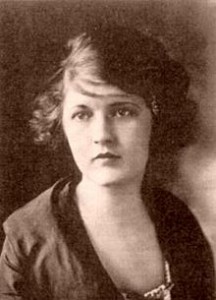
Zelda Fitzgerald, née Sayre, was F. Scott Fitzgerald‘s great muse and more. He modeled characters after her, and he included lines in his books that were from letters that Zelda had written him.
The two went on their first date on her 18th birthday. Her family was wary of him, and she would not marry him until his first novel was actually published. Zelda was still 18 when she wrote this letter to Scott in the spring of 1919:
Sweetheart,
Please, please don’t be so depressed — We’ll be married soon, and then these lonesome nights will be over forever — Maybe you won’t understand this, but sometimes when I miss you most, it’s hardest to write — and you always know when I make myself — Just the ache of it all — and I can’t tell you.
How can you think deliberately of life without me — If you should die — O Darling — darling Scott — It’d be like going blind. I know I would, too, — I’d have no purpose in life — just a pretty — decoration. Don’t you think I was made for you? I feel like you had me ordered — and I was delivered to you — to be worn — I want you to wear me, like a watch-charm or a buttonhole bouquet — to the world. And then, when we’re alone, I want to help — to know that you can’t do anything without me.
One week after This Side of Paradise appeared in print, Zelda and Scott got married at St. Patrick’s Cathedral in New York City. They became known as the quintessential Jazz Age couple; beautiful, flashy, with money, and often drunk in public. The year they married, Zelda wrote to Scott:
I look down the tracks and see you coming — and out of every haze & mist your darling rumpled trouser are hurrying to me — Without you, dearest dearest, I couldn’t see or hear or feel or think — or live — I love you so and I’m never in all our lives going to let us be apart another night. It’s like begging for mercy of a storm or killing Beauty or growing old, without you.
Lover, Lover, Darling — Your Wife
So this inspired the followin’. It goes somethin’ kinda like this:
Without You (Reprise No.2)
These lonesome nights last forever
When I miss you most, it is hardest to write
And you can tell when I force the words
The ache of it all and I cannot tell you
Cannot think of life
Without you
Like goin’ blind
No purpose, just bein’
Made for you
Ordered, delivered
To help you
To be there for you
All I want
All I need
To know
You cannot be
Without me
See you comin’
Out of every shadow
Everywhere
You hurryin’ to me
Without you; cannot
Live or laugh or love
To be apart,
It is like
Beggin’ for mercy
From a storm or Time
Or killin’ Beauty
Or growin’ old
Without you
The Song of the Day is “Without You” by David Bowie. We do not own the rights to this song. All rights reserved by the rightful owner. No copyright infringement intended.
Today is the birthday of George Meredith (Portsouth, Hampshire, England 12 February 1828 – 18 May 1909 Box Hill, Surrey, England ); novelist and poet of the Victorian era.
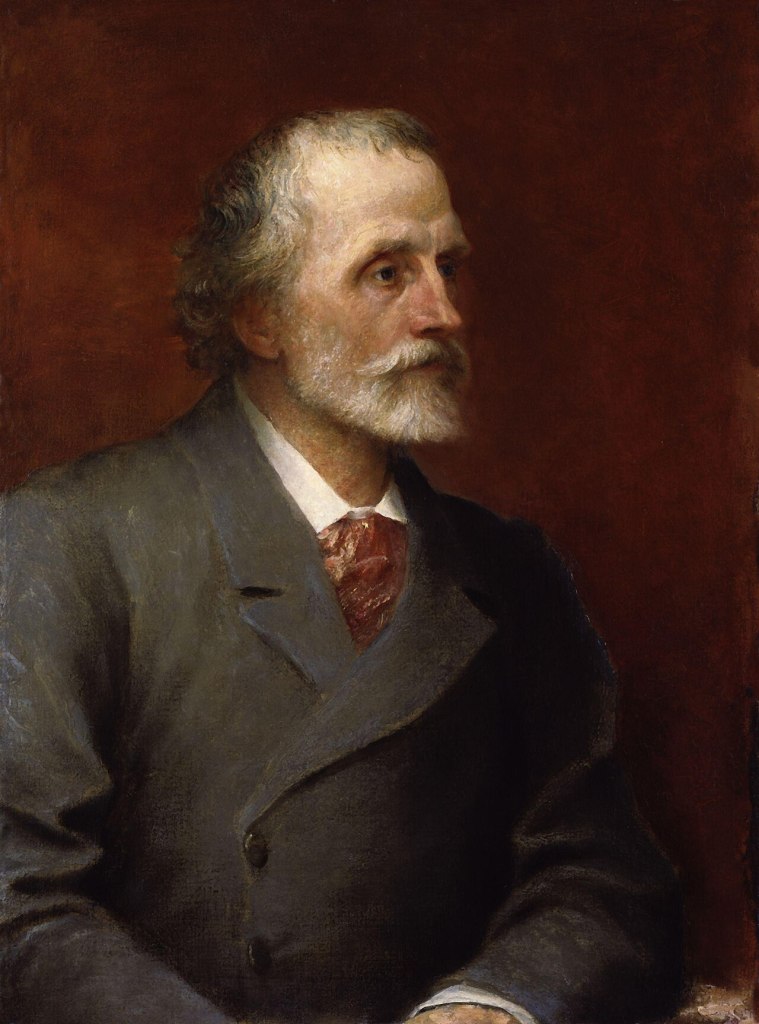
in 1893 by George Frederic watts
On 9 August 1849, Meredith married Mary Ellen Nicolls (née Peacock), a beautiful widow with a daughter. In 1858 she ran off with the painter Henry Wallis, shortly before giving birth to a child assumed to be Wallis’. Mary Ellen died in 1861.
On 20 September 1864, Meredith married Marie Vulliamy. She died of cancer in 1886.
Verse
- Darker grows the valley, more and more forgetting:
So were it with me if forgetting could be willed.
Tell the grassy hollow that holds the bubbling well-spring,
Tell it to forget the source that keeps it filled.- Love in the Valley, st. 5.
- Civil limitation daunts
His utterance never; the nymphs blush, not he.- An Orson of the Muse (1883).
- With patient inattention hear him prate.
- Bellerophon, st. 4 (1887).
- Full lasting is the song, though he,
The singer, passes- The Thrush in February, st. 17 (1888).
- Behold the life at ease; it drifts,
The sharpened life commands its course.- Hard Weather, l. 71 (1888).
- All wisdom’s armoury this man could wield
- The Sage Enamoured (1892).
Modern Love (1862)
- Not till the fire is dying in the grate,
Look we for any kinship with the stars.
Oh, wisdom never comes when it is gold,
And the great price we pay for it full worth:
We have it only when we are half earth.- St. 4.
- And if I drink oblivion of a day,
So shorten I the stature of my soul.- St. 12.
- The actors are, it seems, the usual three:
Husband and wife and lover.- St. 25.
- What are we first? First, animals; and next
Intelligences at a leap; on whom
Pale lies the distant shadow of the tomb,
And all that draweth on the tomb for text.
Into which state comes Love, the crowning sun:
Beneath whose light the shadow loses form.
We are the lords of life, and life is warm.
Intelligence and instinct now are one.
But nature says: ‘My children most they seem
When they least know me: therefore I decree
That they shall suffer.’ Swift doth young Love flee,
And we stand wakened, shivering from our dream.
Then if we study Nature we are wise.- St. 30.
- How many a thing which we cast to the ground,
When others pick it up, becomes a gem!- St. 41..
- In tragic life, God wot,
No villain need be! Passions spin the plot:
We are betrayed by what is false within.- St. 43.
- More brain, O Lord, more brain! or we shall mar
Utterly this fair garden we might win.- St. 48.
- Ah, what a dusty answer gets the soul
When hot for certainties in this our life! –
In tragic hints here see what evermore
Moves dark as yonder midnight ocean’s force,
Thundering like ramping hosts of warrior horse,
To throw that faint thin fine upon the shore!- St. 50.
Today is the birthday of Eugène Atget (Libourne, Gironde, Aquitaine, France; 12 February 1857 – 4 August 1927 Paris); flâneur and a pioneer of documentary photography, noted for his determination to document all of the architecture and street scenes of Paris before their disappearance to modernization. Most of his photographs were first published by fellow photographer Berenice Abbott after his death. An inspiration for the surrealists and other artists, his genius was only recognized by a handful of young artists in the last two years of his life, and he did not live to see the wide acclaim his work would eventually receive.
Gallery
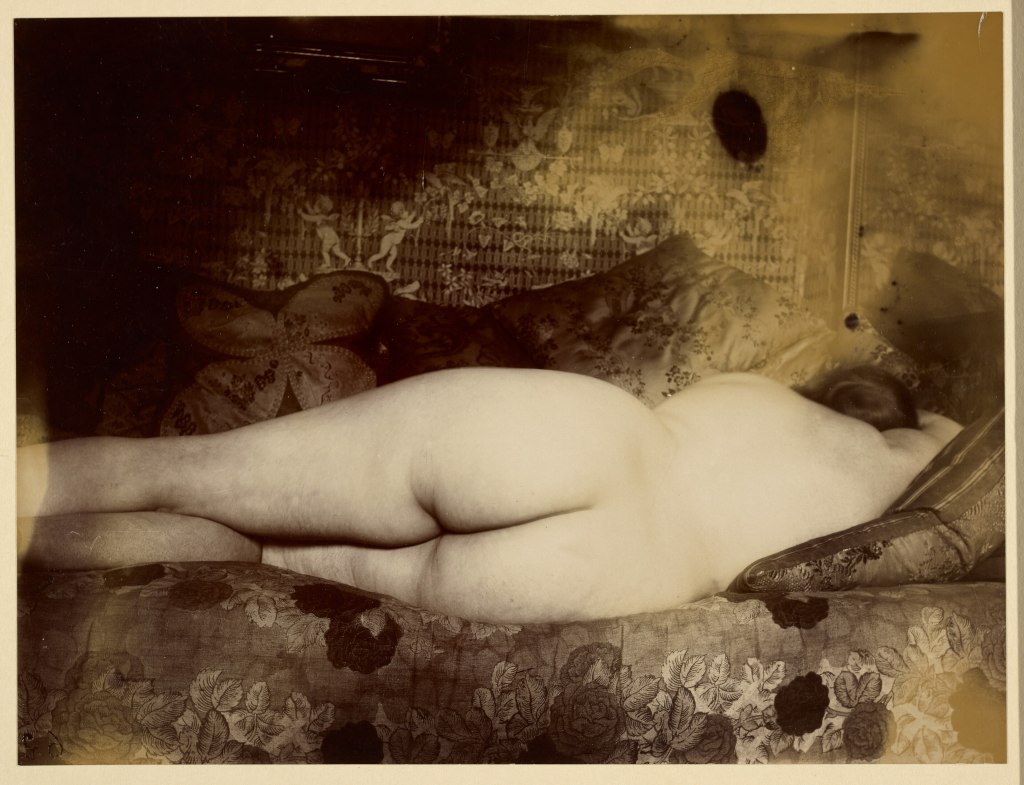
femme 1925
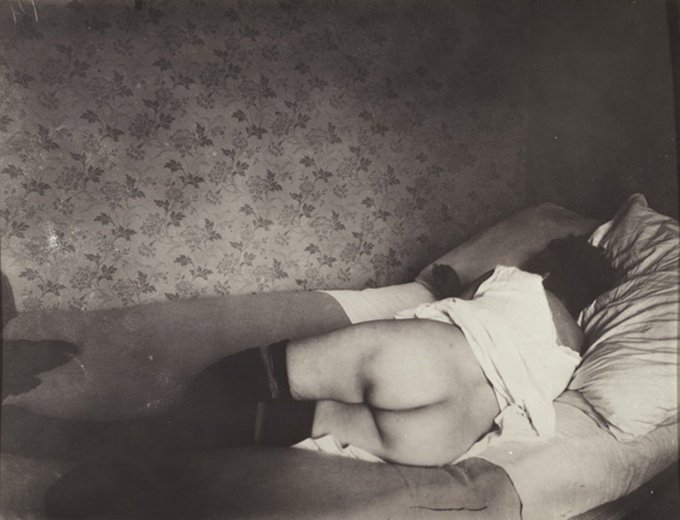
Fille publique de la Rue Asselin
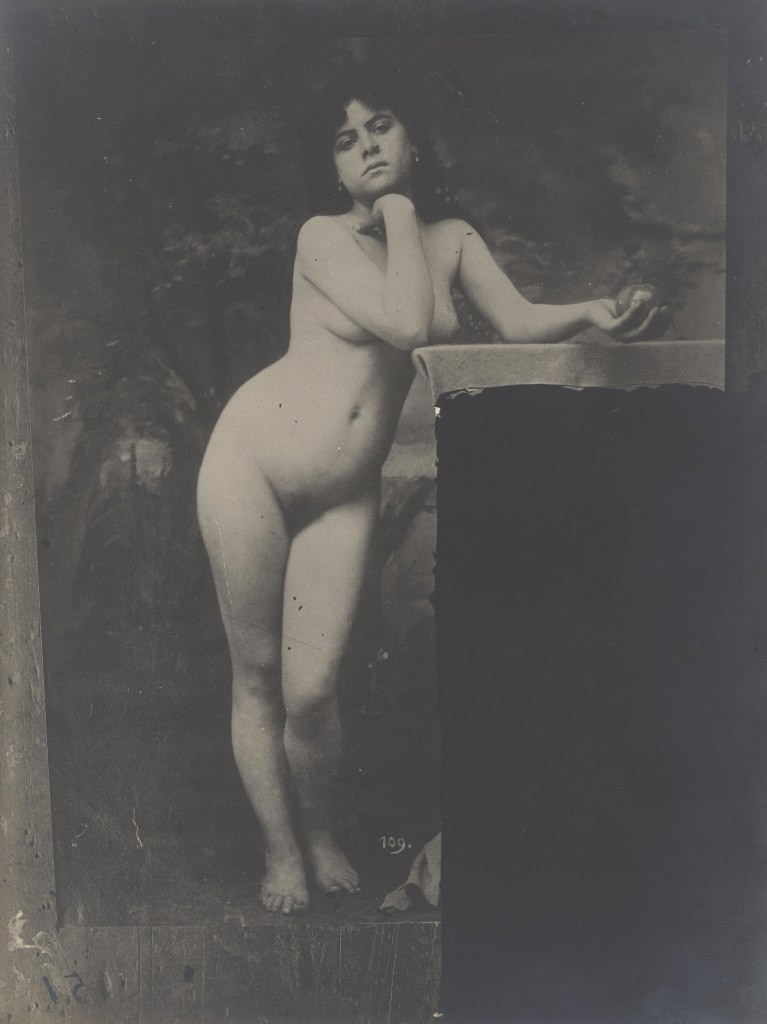
female nude
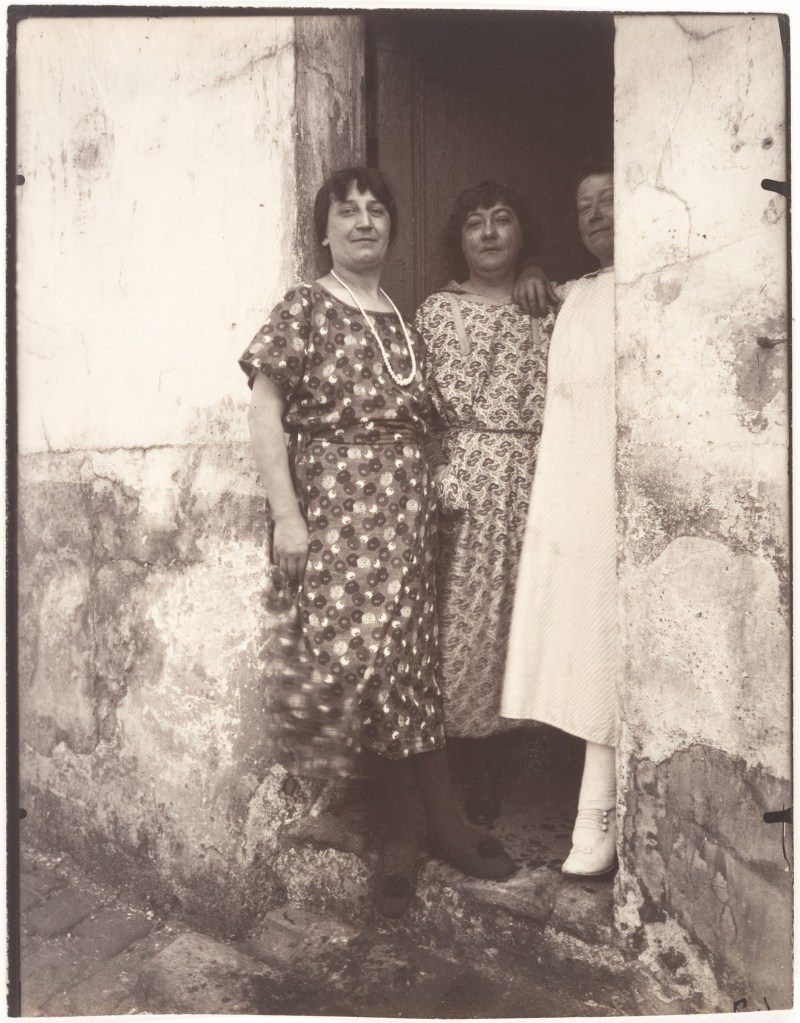
Trois femmes sur le seuil d’une porte rue Asselin. Metropolitan Museum of Art. [La rue Asselin, disparue, donnait sur le Boulevard de la Villette, à hauteur de l’actuelle rue Henri Turot, à Paris, XIXe arrondissement.]
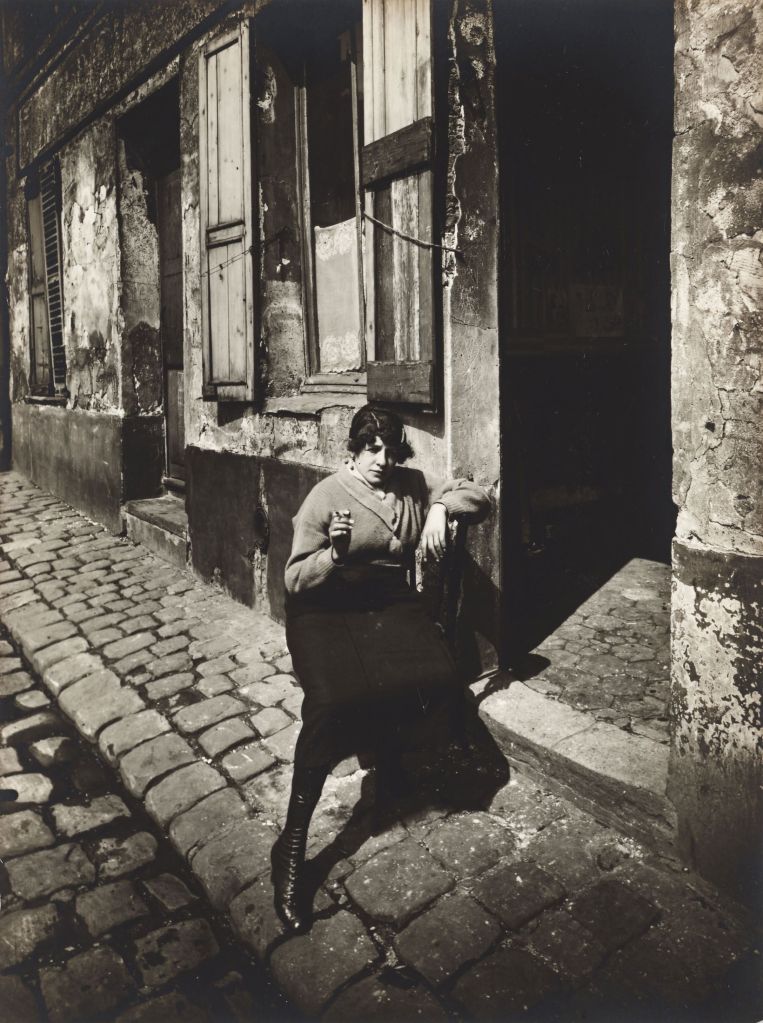
Prostitute waiting in front of her door, 1921
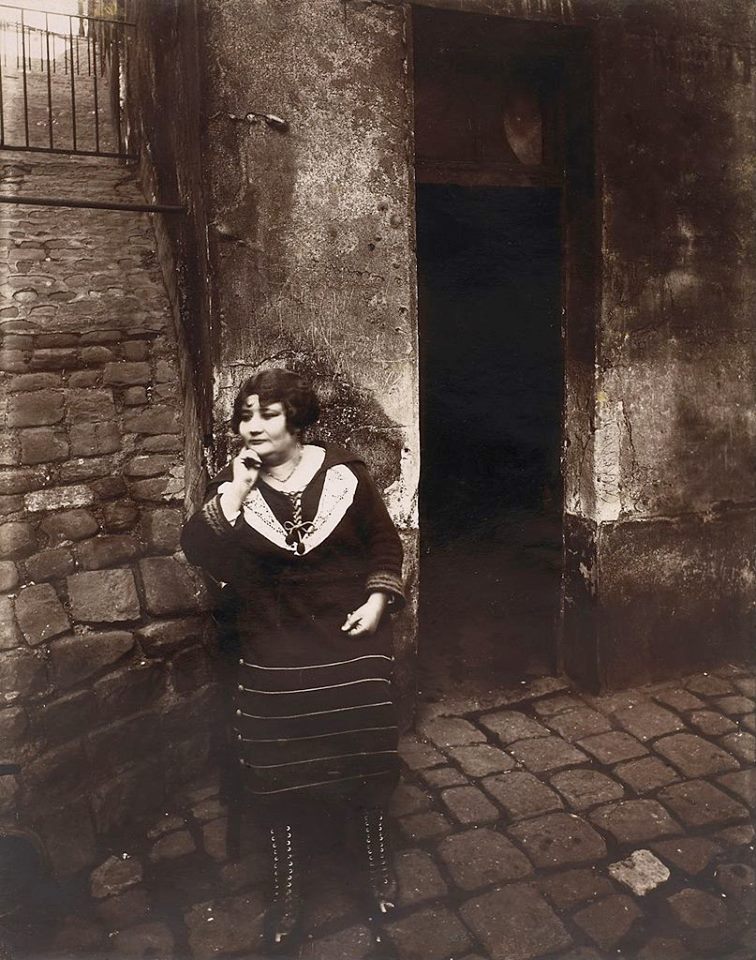
La Villette. Rue Asselin, prostitute waiting in front of her door — 1921
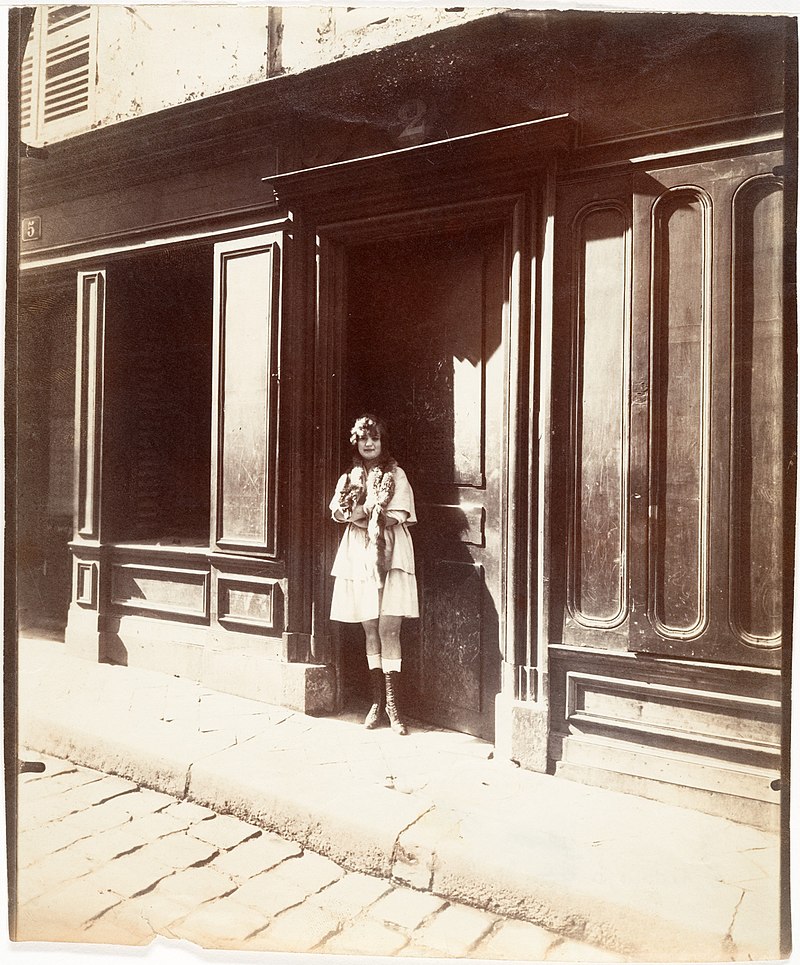
Maison Close, Versailles
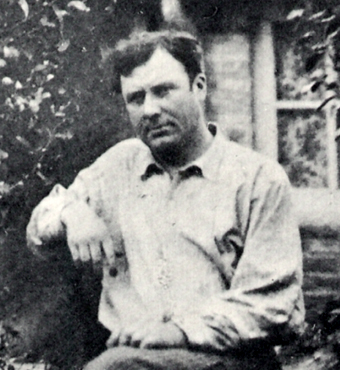
Today is the birthday of Frank Rinehart (Frank Albert Rinehart; Lodi, Illinois; February 12, 1861 – December 17, 1928 Omaha, Nebraska); photographer who captured Native American personalities and scenes, especially portrait settings of leaders and members of the delegations who attended the 1898 Indian Congress in Omaha.
Rinehart married Anna Ransom Johnson (daughter of Willard Bemis Johnson and Phebe Jane Carpenter) on September 5, 1885, in Denver County, Colorado. They had two daughters, Ruth and Helen, both born in Nebraska.
The collection of Rinehart Indian Photographs is currently preserved at Haskell Indian Nations University. Since 1994, the collection has been organized, preserved, copied, and cataloged in a computer database, funded by the Bureau of Indian Affairs and the Hallmark Foundation. It includes images from the 1898 Exposition, the 1899 Greater America Exposition, studio portraits from 1900, and photographs by Rinehart taken at the Crow Agency in Montana also in 1900.
Gallery
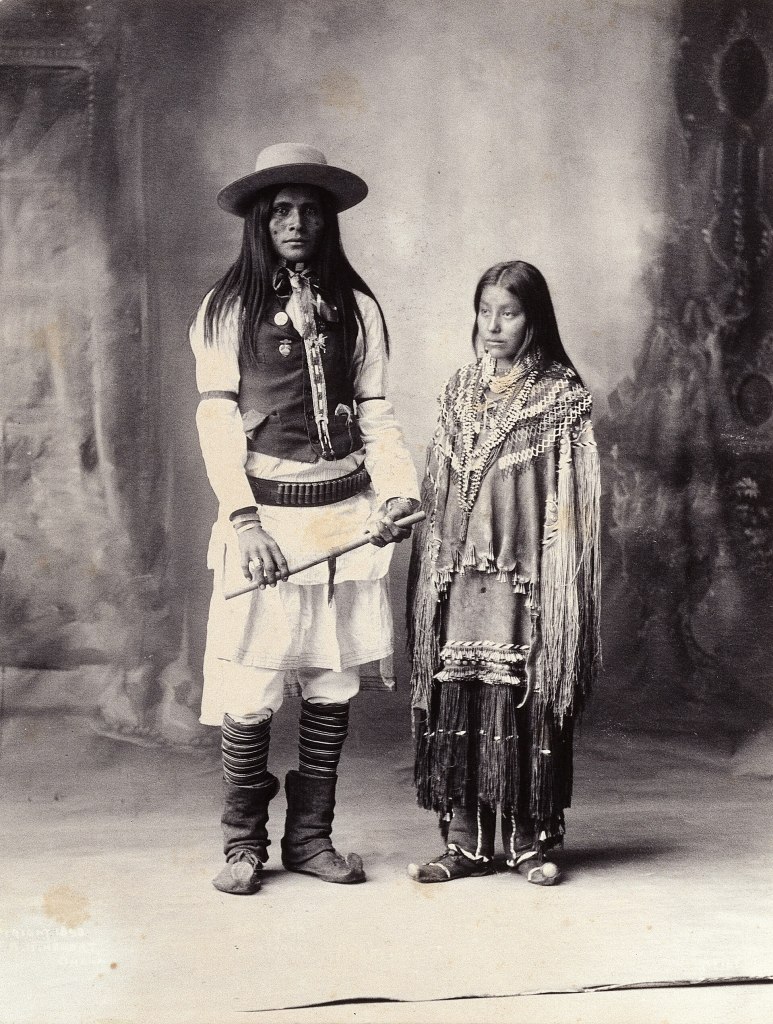
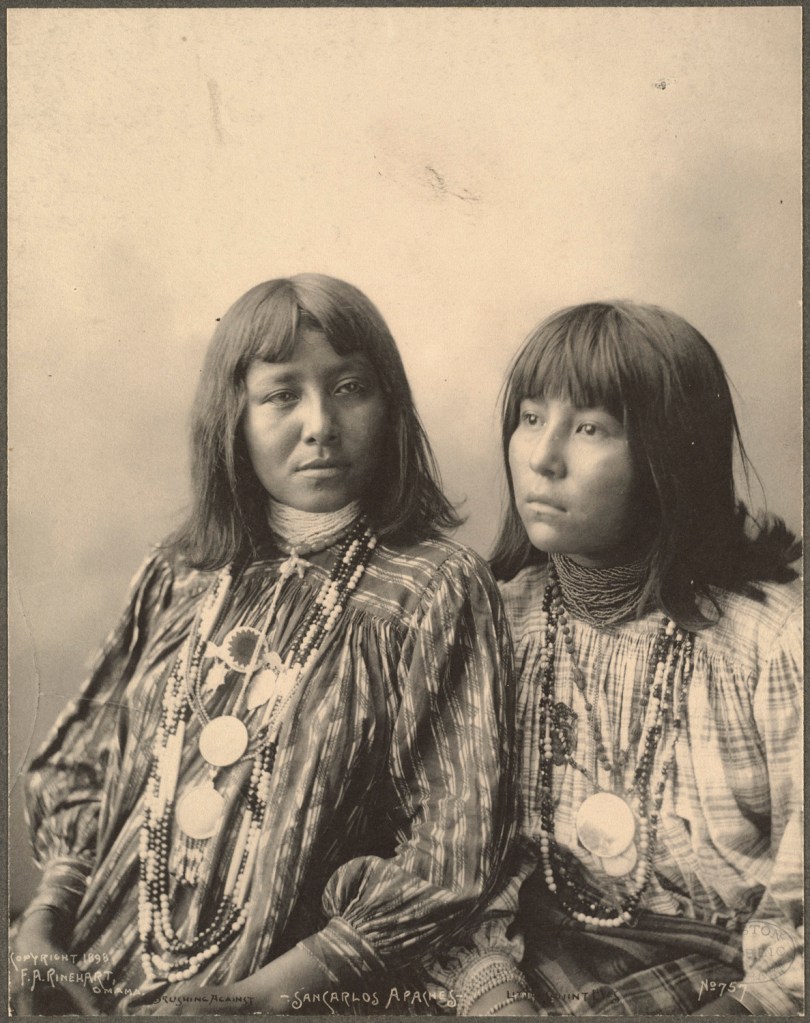
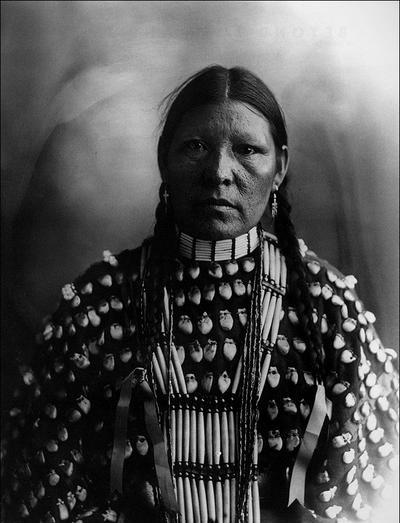
Freckle Face, Arapahoe woman
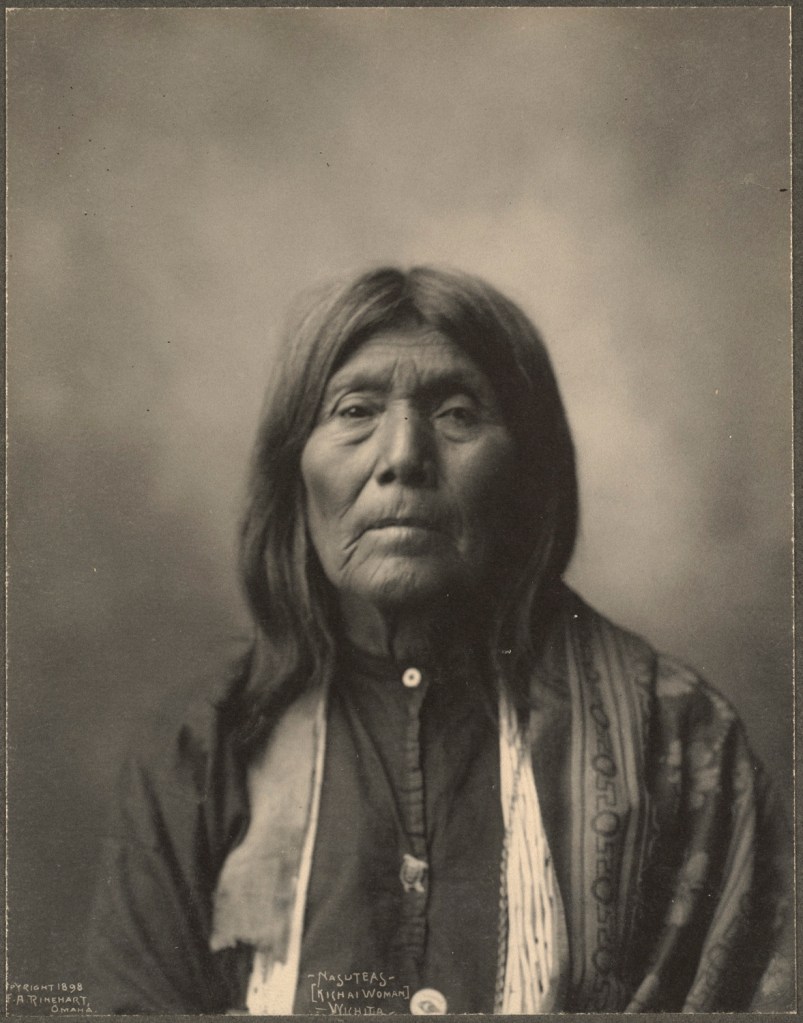
Nasuteas (Kichai woman), Wichita
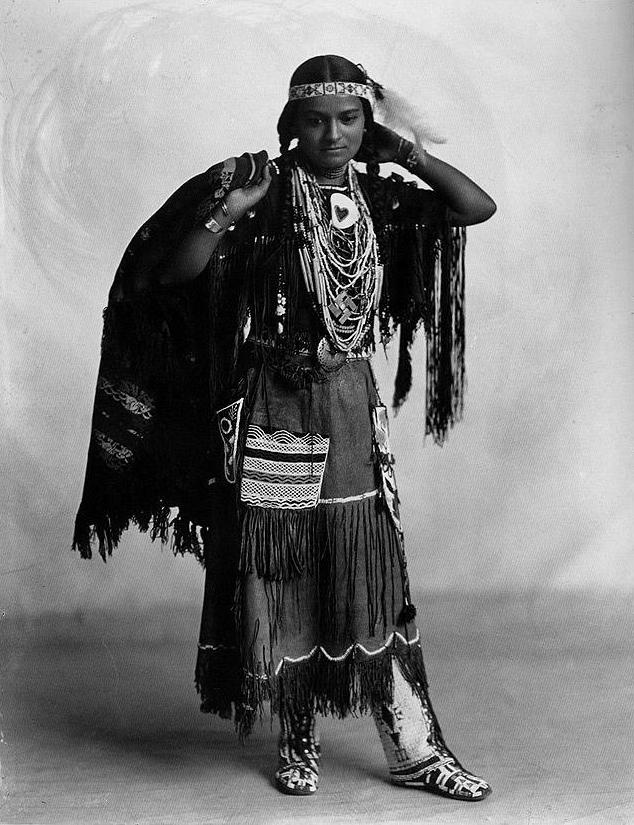
Wah-Ta-Waso, Iroquois woman
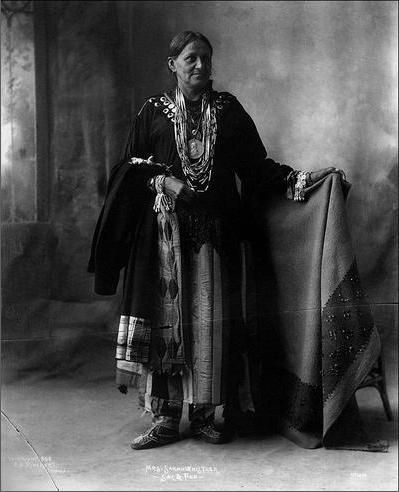
Sarah Whislter, Sauk and Fox woman
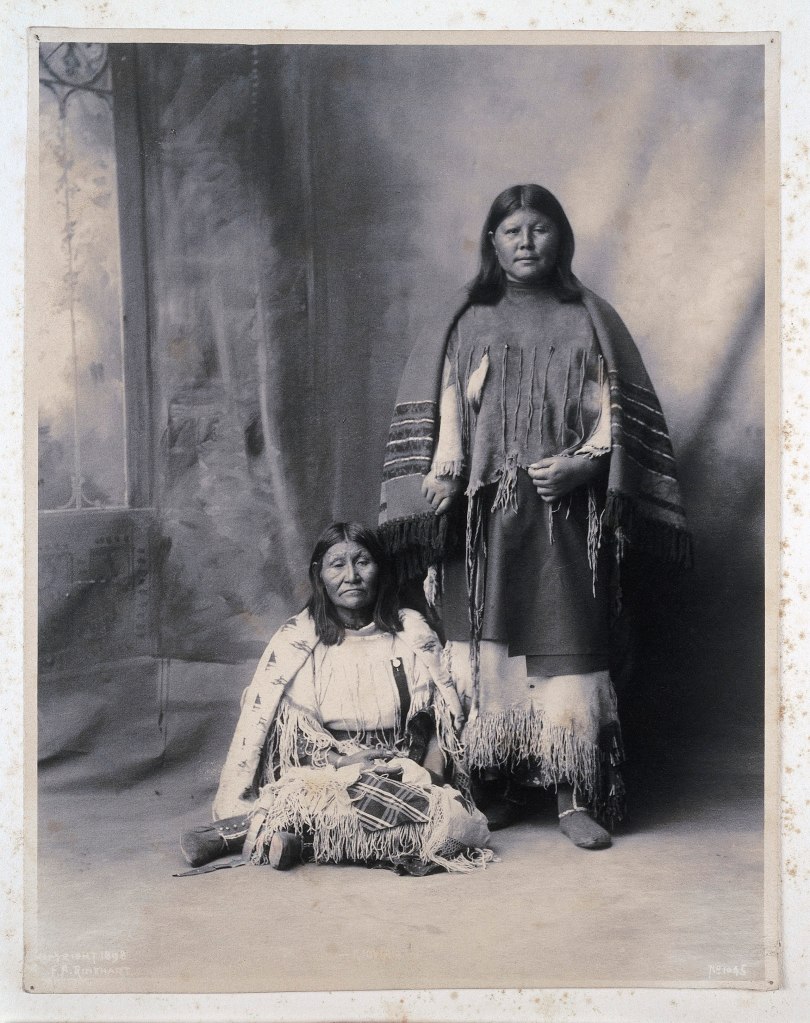
two Kiowa women
Today is the birthday of Max Beckmann (Max Carl Friedrich Beckmann; Leipzig, Germany; February 12, 1884 – December 27, 1950 Manhattan); painter, draftsman, printmaker, sculptor, and writer. Although he is classified as an Expressionist artist, he rejected both the term and the movement. In the 1920s, he was associated with the New Objectivity (Neue Sachlichkeit), an outgrowth of Expressionism that opposed its introverted emotionalism. Even when dealing with light subject matter like circus performers, Beckmann often had an undercurrent of moodiness or unease in his works. By the 1930s, his work became more explicit in its horrifying imagery and distorted forms with combination of brutal realism and social criticism, coinciding with the rise of nazism in Germany.
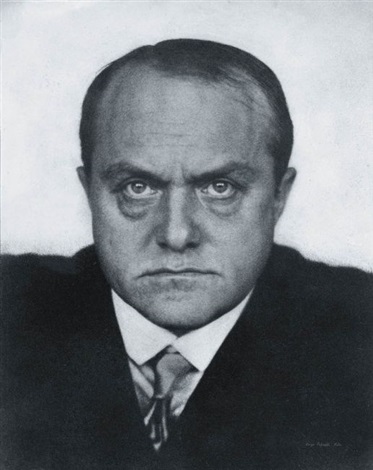
He is known for the self-portraits painted throughout his life, their number and intensity rivaled only by those of Rembrandt and Picasso. Well-read in philosophy and literature, Beckmann also contemplated mysticism and theosophy in search of the “Self”. As a true painter-thinker, he strove to find the hidden spiritual dimension in his subjects (Beckmann’s 1948 Letters to a Woman Painter provides a statement of his approach to art).
Gallery
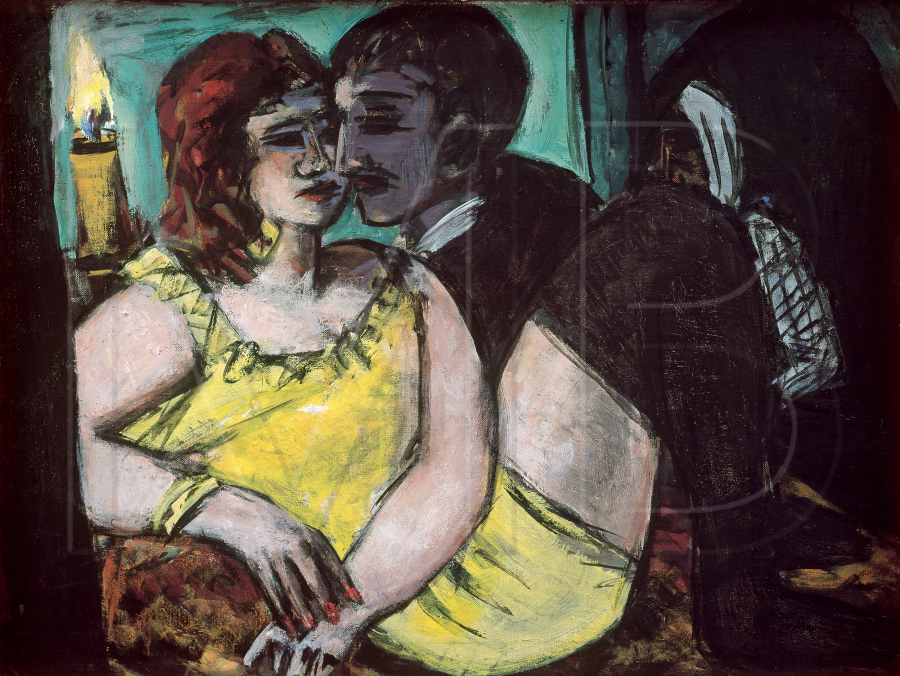
Lovers (Green and Yellow
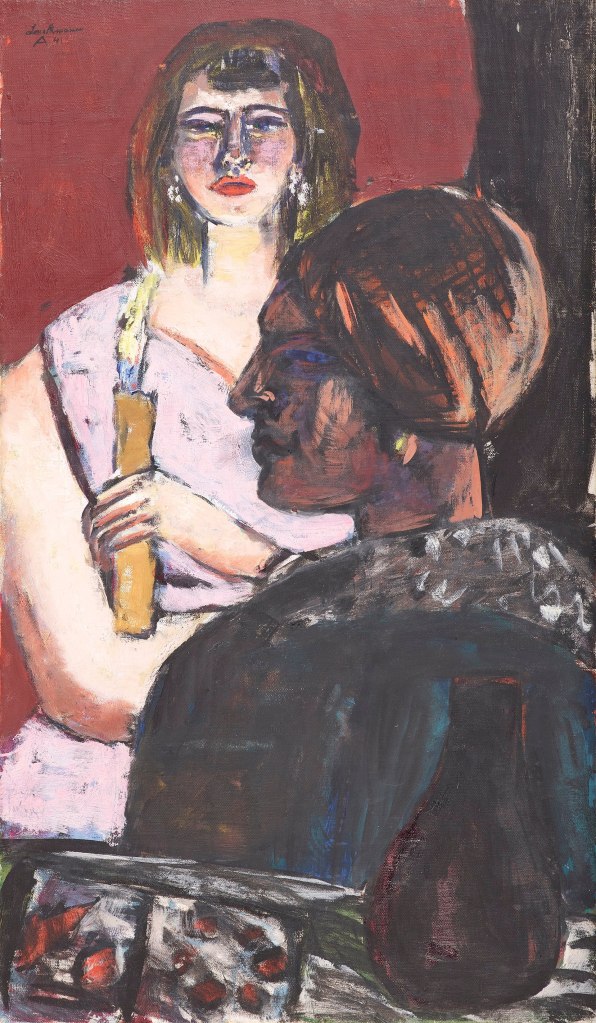
Quappi and Indian
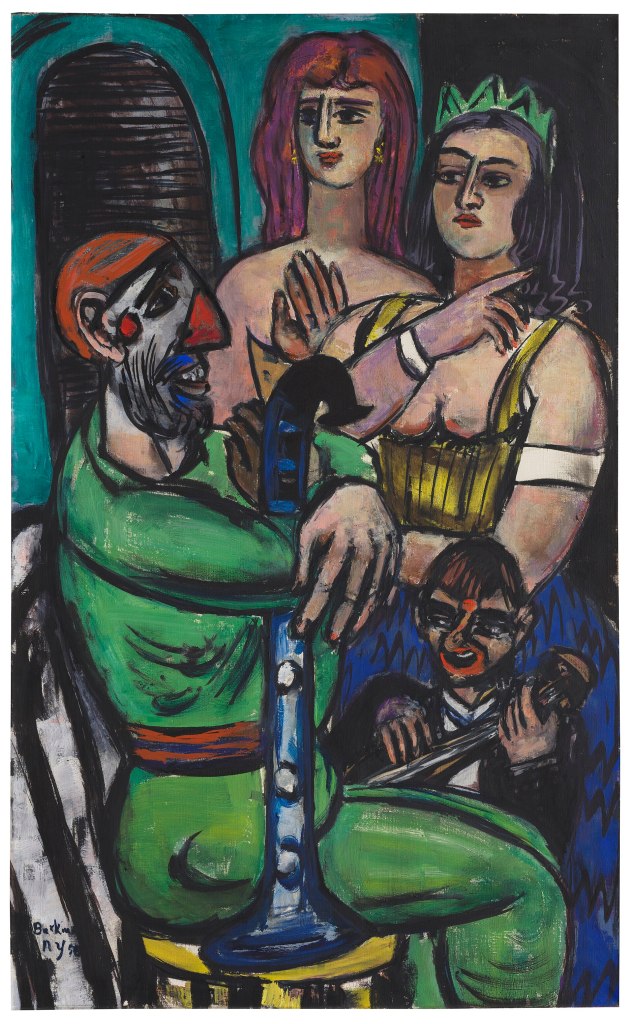
Großer Clown mit Frauen und kleiner Clown. 1950
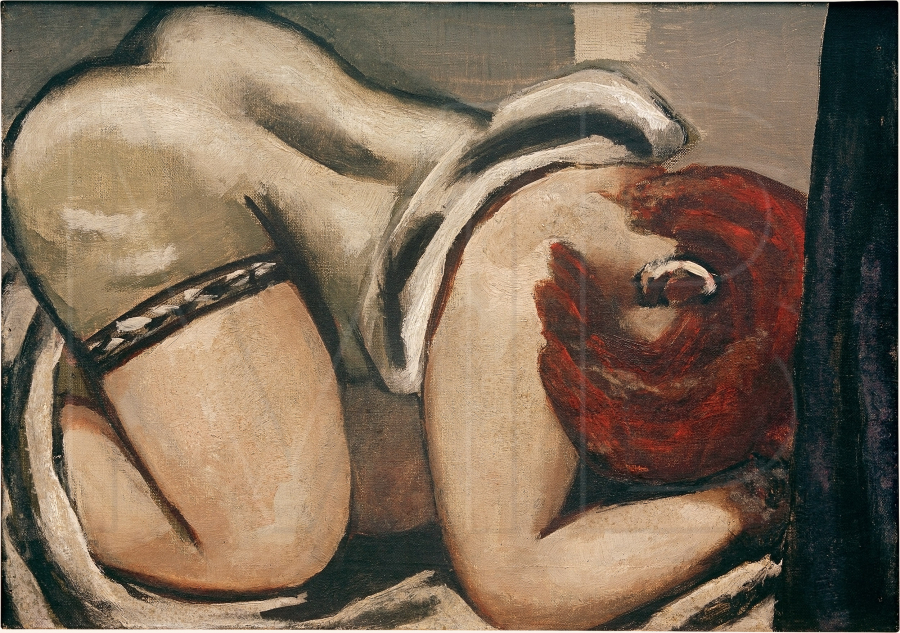
creeping woman 1930

woman with mandolin
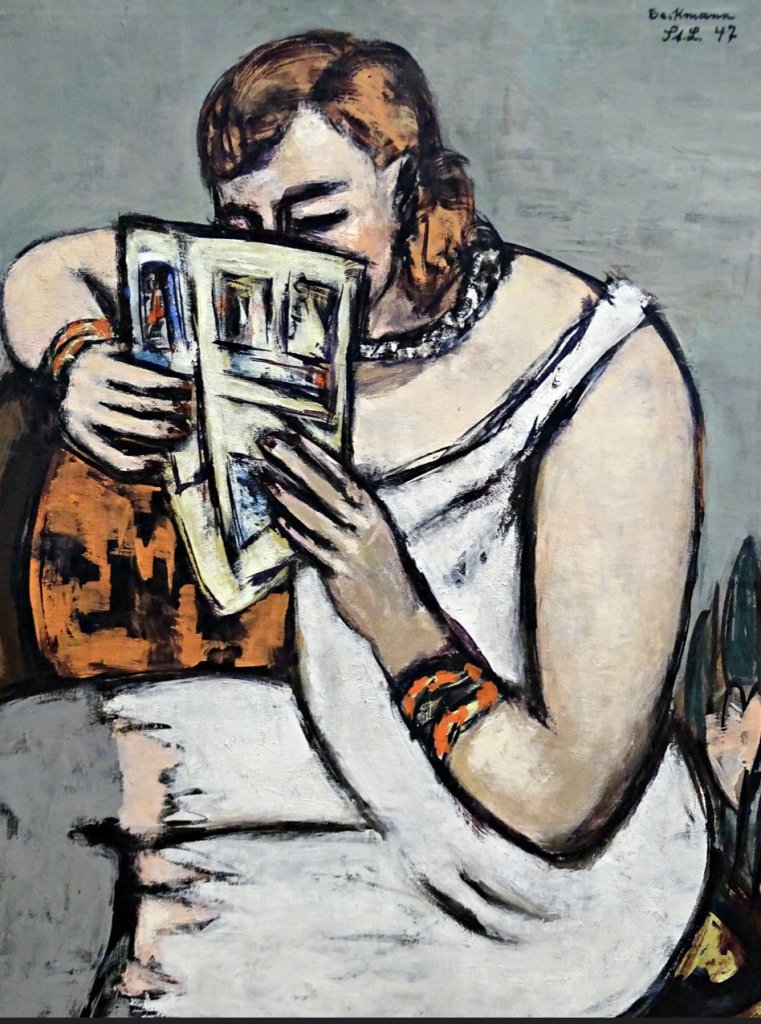
Frau in weissem Hemd (lesend)
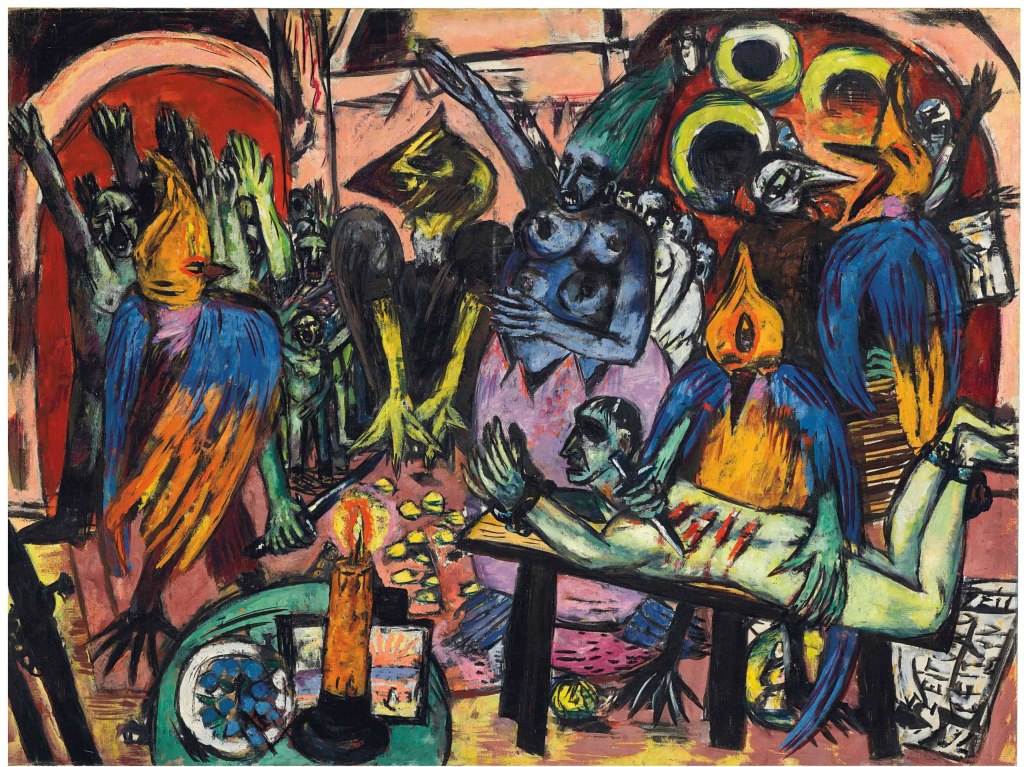
Birds’ Hell, 1937–1938
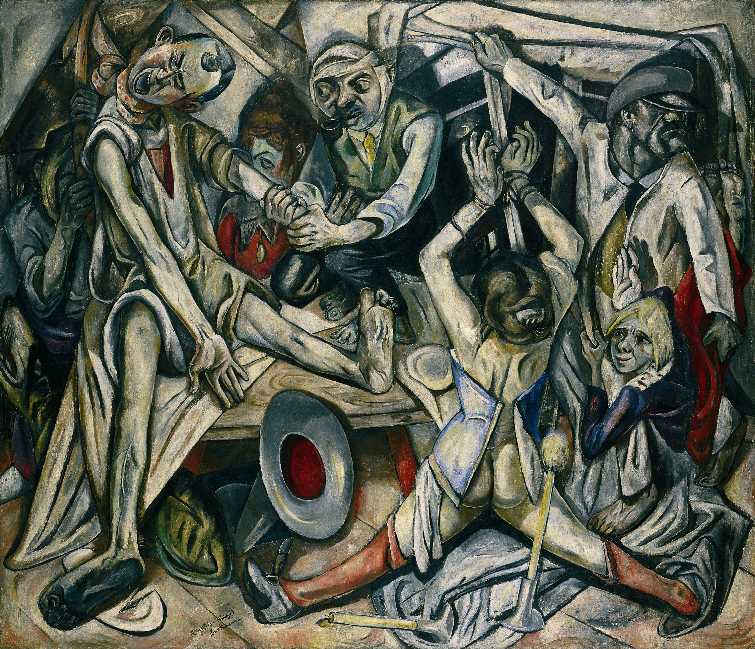
The Night (Die Nacht), 1918–1919, oil on canvas, 133 × 154 cm, Kunstsammlung Nordrhein-Westfalen, Düsseldorf
And today is the birthday of Marie Vassilieff (Mariya Ivanovna Vassiliéva; Smolensk, Russia 12 February 1884 – 14 May 1957 Nogent-sur-Marne, Île-de-France, France); painter.
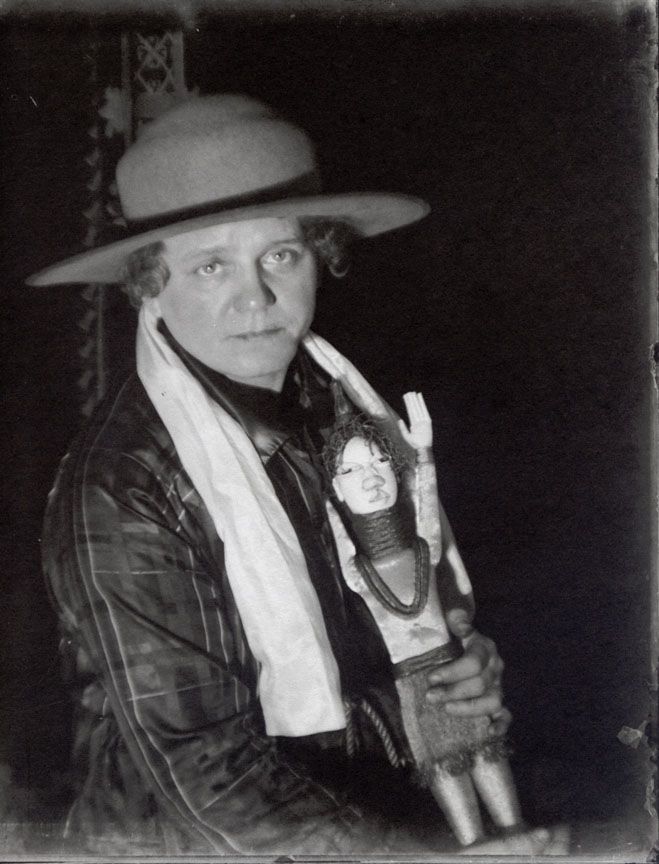
In 1907, Marie moved to Paris to take a job as a correspondent for several Russian newspapers while studying painting under Henri Matisse and attending classes at the École nationale supérieure des Beaux-Arts.
In 1908 she founded the Académie Russe (Russian Academy), which was renamed the following year as, the Académie Vassilieff.
In 1912 she opened her own atelier in Montparnasse. It became the nexus for those at the cutting–edge of art at the time, when Erik Satie, Henri Matisse, Nina Hamnett, Amedeo Modigliani, Ossip Zadkine, Olga Sacharoff, Juan Gris, and Chaïm Soutine started dropping by in the evenings for conversation and occasionally to draw.
Vassilieff is also remembered for her canteen that operated before and during World War I. She volunteered as a nurse in the French Red Cross and saw how badly the financial situation had become for many of the artists of Paris who were already struggling. Because many of her artist acquaintances frequently had little or nothing to eat, in 1915, she opened the canteen that provided a full meal and a glass of wine for only a few centimes.
While her canteen provided a valuable service, during the war it became a popular gathering place for the artistic community. During the war a government curfew was put into place. The restaurants and cafés of Paris all were obliged to close early, however, Marie Vassilieff’s canteen was licensed as a private club and, therefore, not subject to the curfew. As a result, soon her place became crowded and at night, filled with music and dancing.
In January 1917, Georges Braque, who had been wounded fighting in World War I, was released from military service. Vassilieff and Max Jacob decided to organize a dinner for Braque and his wife, Marcelle. Among the guests was Alfredo Pina with his new companion, Beatrice Hastings, who had recently ended her two-year relationship with Modigliani. Knowing Modigliani’s penchant for causing a disturbance when he drank, and that he drank often, Vassilieff did not invite Modigliani to Braque’s party. The art community was small, and word of the get-together reached Modigliani. A very drunk Modigliani showed up, looking for a fight. A scuffle ensued, a pistol appeared, and Vassilieff, all five feet of her, pushed Modigliani downstairs while Pablo Picasso and Manuel Ortiz de Zarate locked the door. Vassilieff made a drawing depicting the events of the evening.
Gallery
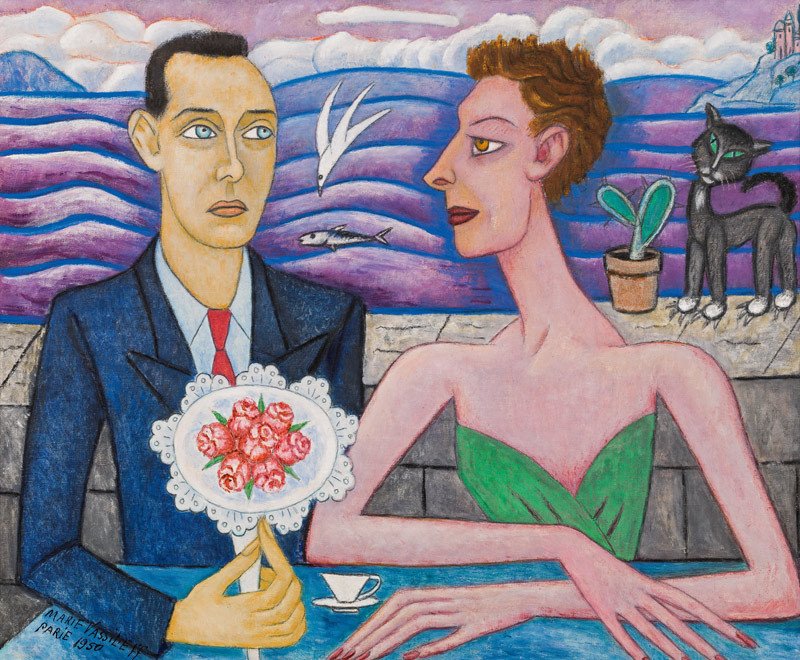
lovers
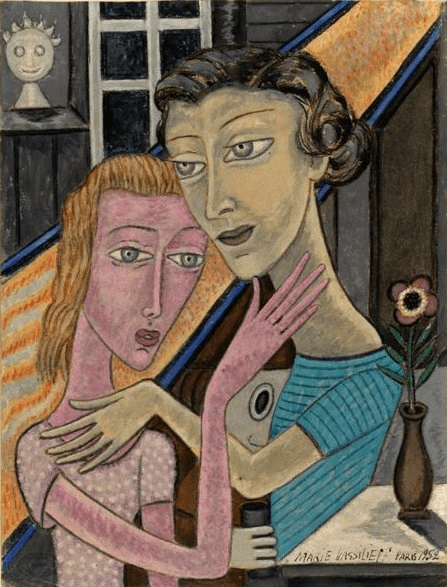
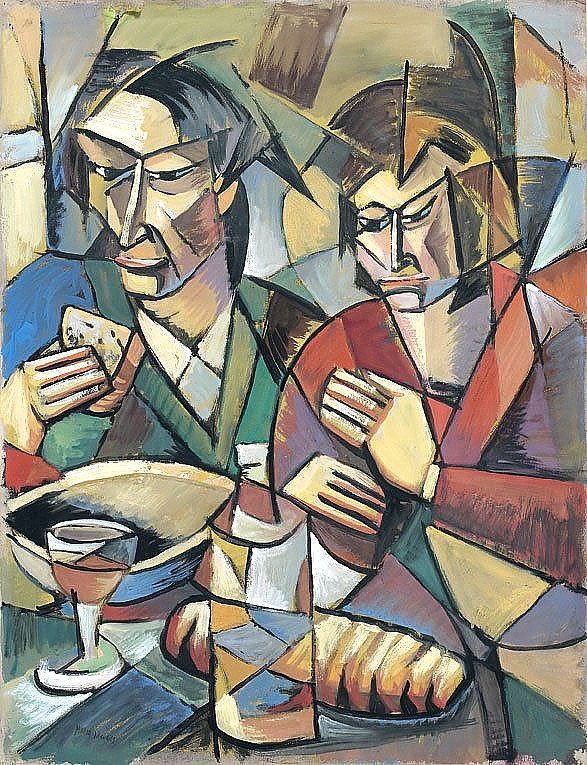
in a cafe
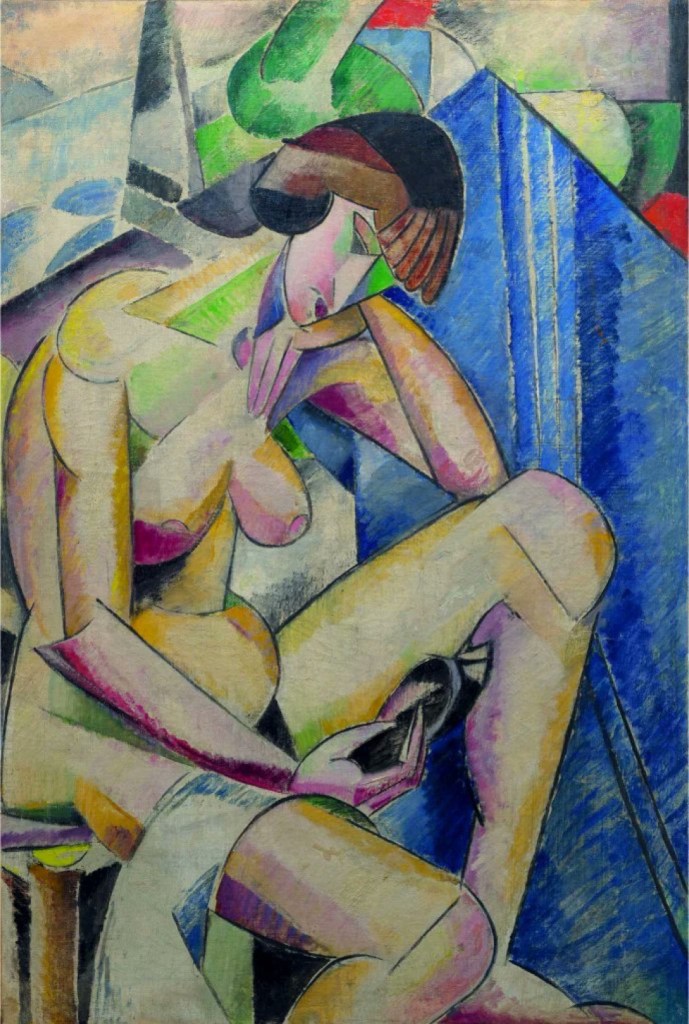
nu 1915
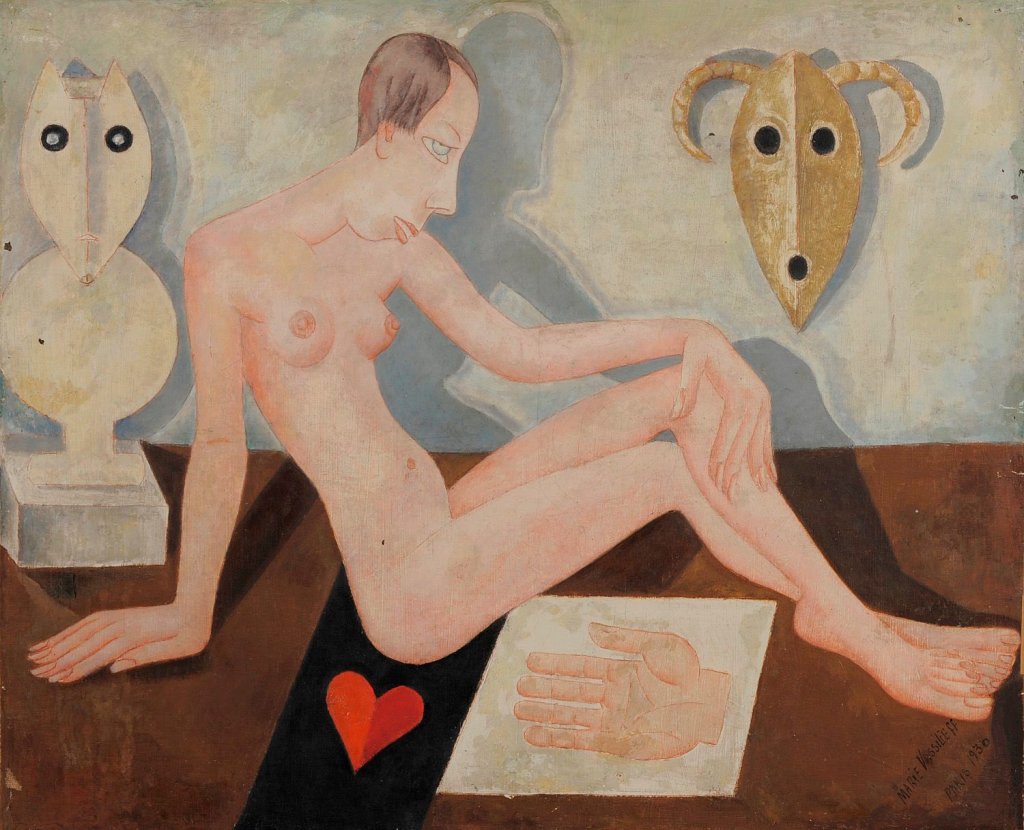
Woman with cards, 1930
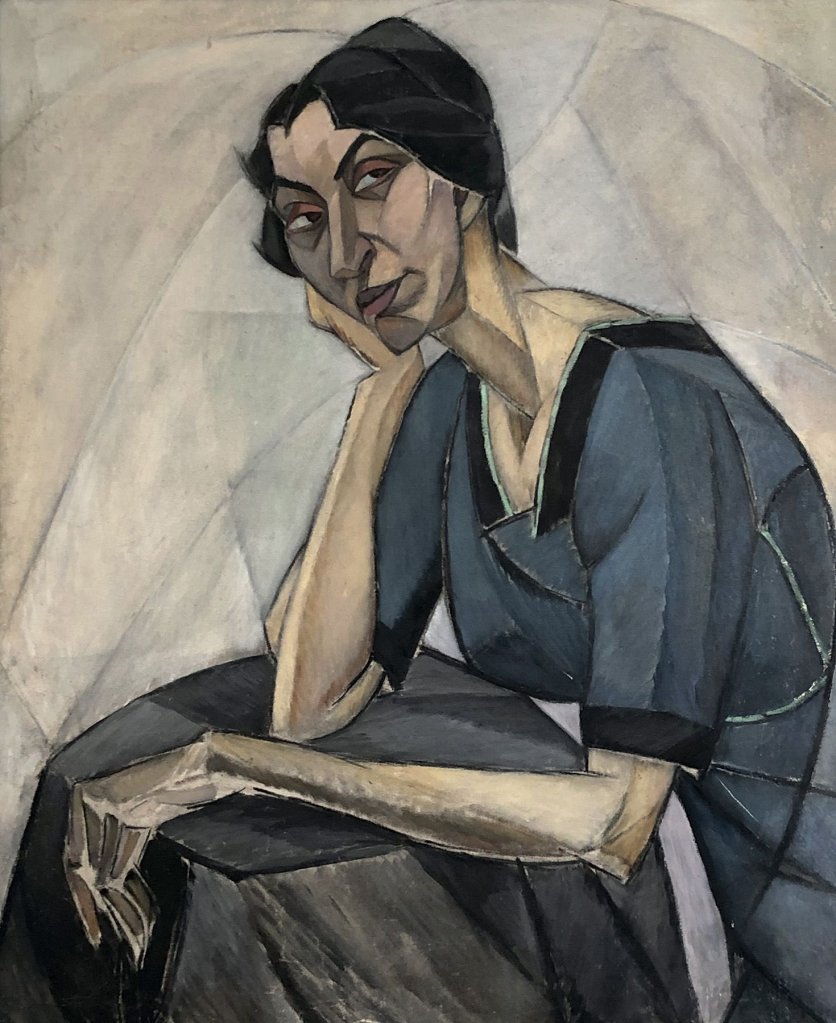
thanks for stoppin’ by y’all
mac tag
 The Lovers’ Chronicle
Leave a comment