
Dear Zazie, Here is today’s Lovers’ Chronicle from Mac Tag dedicated to his muse. Rhett
The Lovers’ Chronicle
Dear Muse,
there is a song for this one, sorta
“Ok curious to hear what and how”
there is a line in the Italian song
“Per Amore” most notably sung
by Andrea Bocelli;
“per amore,
hai mai speso tutto quanto, la ragione
il tuo orgoglio fino al pianto?”
which translates as
for love,
have you ever spent it all, the reason
your pride to the point of tears?
“Oh that is lovely”
and it feels like where we are
© copyright 2023 mac tag/cowboy coleridge all rights reserved
never stops tickin’, focused on not wastin’ any of it, every day with intent on gittin’ done what has to be, and creatin’ what needs to be, which happens to align with want, very important, and the understandin’ that each moment matters so we can spend as much with each other as possible
© copyright 2022.2023 mac tag/cowboy coleridge all rights reserved
it took a long time evidently
because the fates took one look
and said, this guy needs a lot of work
or perhaps cupid said, c’mon man
we gotta put this guy out of our misery
whichever, it takes what it takes
on the way from without to with
and the time spent searchin’
was worth every second
© copyright 2021.2023 mac tag/cowboy coleridge all rights reserved
Pale Love, Pale Rider

the sense that after all
the broken trails and verse,
that this, here with you
is…
suddenly,
i find myself uncertain
of how to write this
without soundin’ trite,
or please save me,
maudlin
all i have ever wanted
was to find someone
to accompany me
is that why you were sent
© copyright 2020 mac tag/cowboy coleridge all rights reserved
amid the ruins of the past
bear unfalterin’, the structure
of recollection, and once again
recognizin’ the taste of the long
denied soaked in decoction of feelin’s
(how much longer must the discovery
be postponed) of why, immediately
rises up and how the hell to go on
© copyright 2019 mac tag/cowboy coleridge all rights reserved
always about time, hear it tickin’,
at least finally put a halt to the futile
never shoulda been searches
the only lookin’ goin’ on here,
the right words in the right order
the only pursuit that will not fail,
that will never lead astray
now time can be spent
where it should
© copyright 2018.2023 mac tag/cowboy Coleridge all rights reserved
there was a time
when that woulda played
i mean, i still feel it
i am not dead
just numb
incredibly numb
so much time spent chasin’
what was supposed to be
without ever knowin’
it could never be
© copyright 2017 mac tag/cowboy Coleridge all rights reserved
Came out to the
Dakotas, to
The solitude,
The faraway
Came out here with
Not much more than
A song of you
To sustain me
On my journey
un sogno:
una donna nuda
seducente, bella
qui, ma non qui
reale o non reale
baci, passione
il mio cuore
la mia anima
si prega di rimanere
a dream:
a naked woman
seductive, beautiful
here, but not here
real or not real
kisses, passion
my heart
my soul
please stay

It is November so; cue Elton John; The Bitch Is Back... no, no, not one of my exes, c'mon people focus!
© copyright 2014 mac tag/cowboy Coleridge all rights reserved
Today is the birthday of Bronzino (Agnolo di Cosimo 17 November 1503 Florence – 23 November 1572 Florence); Mannerist painter. His sobriquet, Bronzino, may refer to his relatively dark skin or reddish hair.

portrait
He lived all his life in Florence, and from his late 30s was kept busy as the court painter of Cosimo I de’ Medici, Grand Duke of Tuscany. He was mainly a portraitist but also painted many religious subjects, and a few allegorical subjects, which include what is probably his best-known work, Venus, Cupid, Folly and Time, c. 1544–45, now in London. Many portraits of the Medicis exist in several versions with varying degrees of participation by Bronzino himself, as Cosimo was a pioneer of the copied portrait sent as a diplomatic gift.
He trained with Pontormo, the leading Florentine painter of the first generation of Mannerism, and his style was greatly influenced by him, but his elegant and somewhat elongated figures always appear calm and somewhat reserved, lacking the agitation and emotion of those by his teacher. They have often been found cold and artificial, and his reputation suffered from the general critical disfavour attached to Mannerism in the 19th and early 20th centuries. Recent decades have been more appreciative of his art.
In addition to being a painter, Bronzino was also a poet, and his most personal portraits are perhaps those of other literary figures such as that of his friend the poet Laura Battiferri. The eroticized nature of these virile nude male portraits, as well as homoerotic references in his poetry, have led scholars to believe that Bronzino was homosexual.
Gallery

Detail, Venus, Cupid, Folly and Time 1545

Lucrezia Panciatichi

Portrait of Eleonora of Toledo, c. 1539

Portrait of Laura Battiferri, c. 1560; Oil on canvas; Palazzo Vecchio, Florence

Eleonora di Toledo col figlio Giovanni, 1544–45, oil on wood, Uffizi Gallery, Florence

portrait of an unknown woman and boy, c. 1540
Today is the birthday of Charles Lock Eastlake (Plymouth, Devon, England 17 November 1793 – 24 December 1865 Pisa, Italy); painter, gallery director, collector and writer of the 19th century. After a period as keeper, he was the first director of the National Gallery.
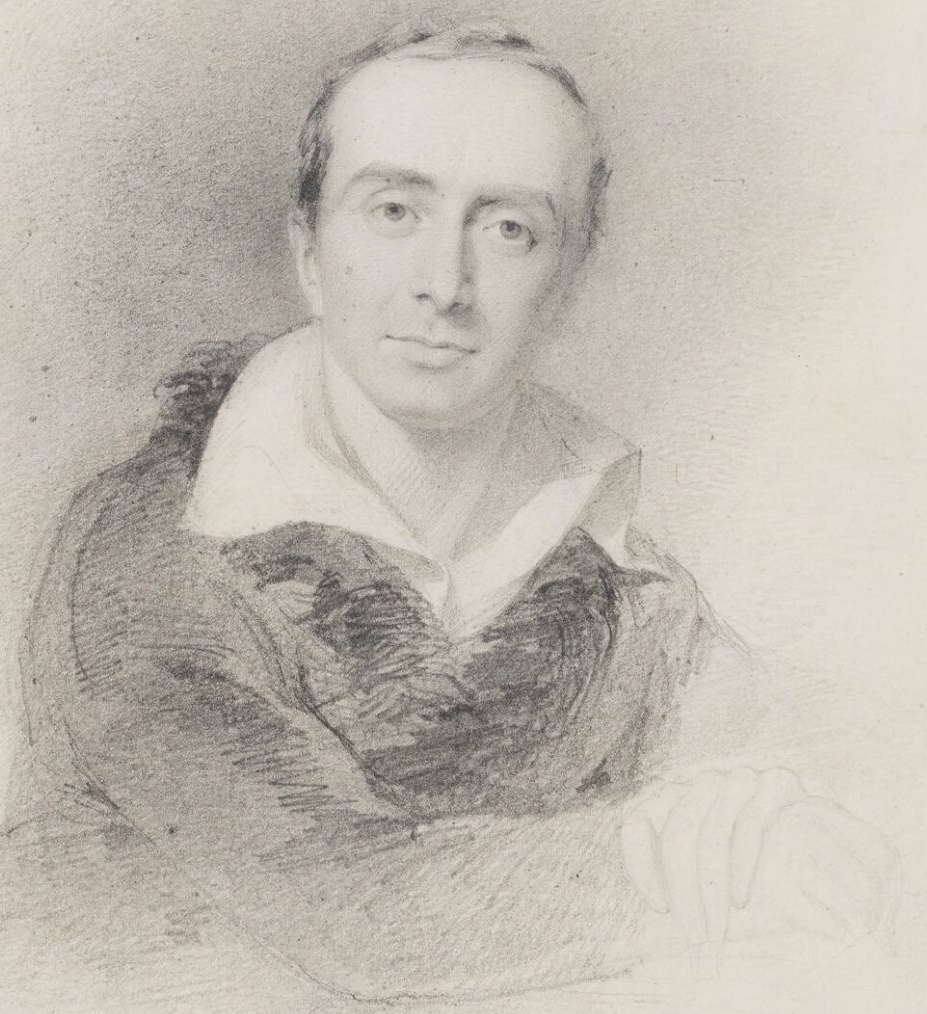
portrait
In 1849 he married Elizabeth Rigby, an art historian and translator of German art histories, forming a formidable art history writing partnership.
In 1845, he was elected into the National Academy of Design as an Honorary Academician. From 1850 to 1865, he was the second president of the Birmingham Society of Artists. Elected President of the Royal Academy and knighted in 1850, he became a notable figure in the British art establishment, being appointed the first President of the Photographic Society in 1853 and, in 1855, the first Director of the National Gallery.
Gallery

Haidée, a Greek Girl

the sisters

Mrs Charles H. Bellenden Ker
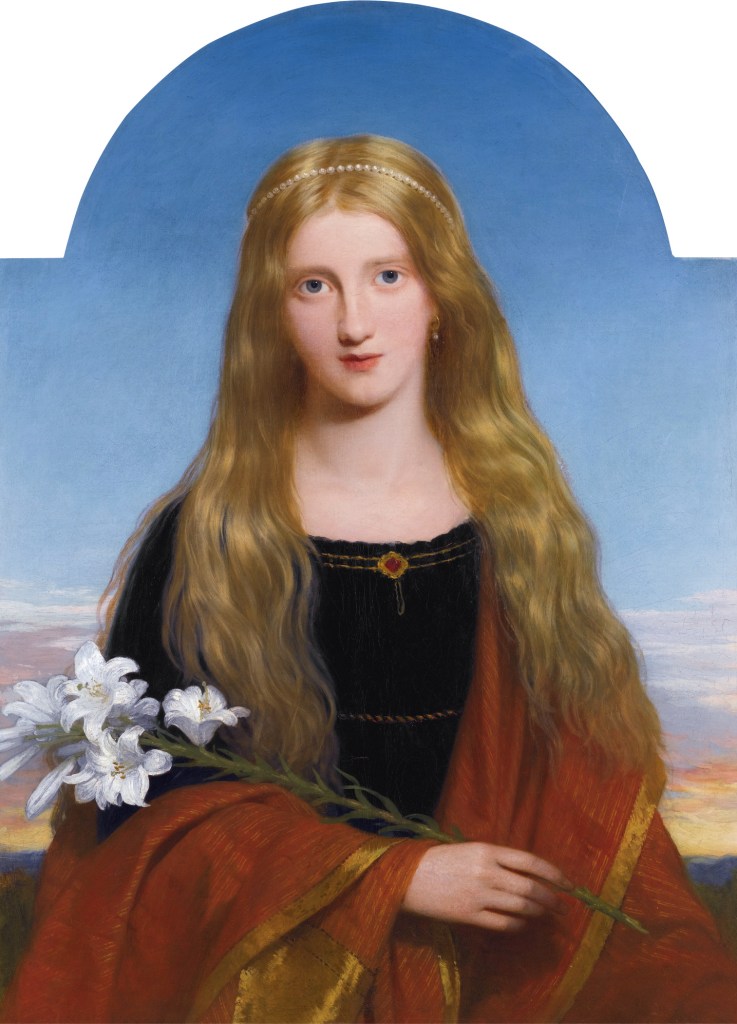
The Lily – portrait of miss Bury, daughter of Lady Charlotte Bury and her second husband, the Rev. John Bury, rector of Litchfield in Hampstead

The Champion, 1824

Pilgrims arriving in sight of Rome, 1827
And on this day in 1839 – Oberto, Giuseppe Verdi’s first opera, opens at the Teatro alla Scala in Milan, Italy.
 | |
Oberto, Conte di San Bonifacio is an opera in two acts by Verdi to an Italian libretto by Temistocle Solera, based on an existing libretto by Antonio Piazza probably called Rocester. It was written over a period of four years and was first performed at the Teatro alla Scala, Milan. The La Scala production enjoyed success and the theatre’s impresario commissioned more operas from Verdi.
Synopsis

Time: 1228 Place: Northern Italy, Bassano, at Ezzelino da Romano’s castle and nearby
Before the action takes place, a battle has been fought between Oberto, Count of San Boniface, and the Salinguerra, led by Ezzelino da Romano. Oberto has lost and has retreated to Mantua. Meanwhile, his daughter Leonora has been seduced and abandoned by Riccardo, Count of Salinguerra, and Riccardo is about to marry Cuniza, Ezzelino’s sister. Leonora makes her way to Bassano on Riccardo’s wedding day, intent on confronting him.

thanks for stoppin’ by y’all
Mac Tag
 The Lovers’ Chronicle
Leave a comment