Dear Zazie, Howzit goin’ Z? Hope all in your world is as you would have it. Here is today’s Lovers’ Chronicle from Mac Tag to his muse. Visit us on twitter @cowboycoleridge. Rhett
The Lovers’ Chronicle
Dear Muse,
have to go with the jazz standard, ‘’All of Me’’
written by Gerald Marks and Seymour Simons
and performed by Willie of course
’’Though neither of us is leaving’’
no we are just gittin’ started,
the conductor has raised his hands
the pitcher has completed his warmup
the poet picks up his pin, the artist her brush
are you ready my dear
‘’Ready my love’’
it is all there in front of us
we might as well take it

© copyright 2023.2024 mac tag/cowboy coleridge all rights reserved
in matters of romance, givin’ everything is an overused sayin’, not sure it is possible, a distinction can be made between those who never gave enough and those who gave a lot, i am a flag bearer of the never gave enough crew, at the time of the sinkin’ of (fill in the blank) relationship i would have said i had given enough, but that was selfish delusion, so i do not believe in givin’ your all to anyone, but i do believe in givin’ us what we need to flourish

© copyright 2022.2024 mac tag/cowboy coleridge all rights reserved
or just a few words
beauty, your heart
that which will be
thus it is to me,
and to you
with this vision
share with you
my thoughts
touchin’
close together,
we have this
full of many things
for each other
to say
and do
for us
remain my all
what for us shall be
© copyright 2021.2023 mac tag/cowboy coleridge all rights reserved
Pale Love, Pale Rider
my very self
the usual words today
beauty, comfort, your heart
with that which must be
everything and justly
thus to me with you,
and to you with me
if not for sharin’ with you,
so full of these thoughts
touchin’ me,
i would have nothin’
what for us must and shall be
© copyright 2020 mac tag/cowboy coleridge all rights reserved
“What turns you on?”
inspiration
is that an answer
no rules but one
the most beautiful one
not tryin’ to be vague
dang sure not starry-eyed
say that with a kiss,
without sayin’ that
a symbol of adoration
that and delight
comes round
to save us
until you
have called
i will not
© copyright 2019 mac tag/cowboy coleridge all rights reserved
road trippin’
Friday y’all
see ya
on the other side
***
il mio tutto,
only a few words
beauty, your heart
that which must be
demands everything
thus it is to me with you,
and to you with me
share with you
my thoughts
touchin’
always close together,
we would have this
full of so many things
for each other
to say
and do
to you
remain my all
as i am yours
what for us must
and shall be
© copyright 2018 mac tag/cowboy coleridge all rights reserved
A twenty-five hundred mile
Love affair with the open road
With the roof open
With the sun, the wind
The music. With bein’ me
***
yes i believe
comin’ into this
function follows routine
when i show everything
will you shy away
when i tell the tales
will you turn
the only way to do this
unflinchin’, head on
through this verse
wherever it leads
a dam of pent up words
i feel hardly in control
it will all come out
© copyright 2017.2023 mac tag/cowboy coleridge all rights reserved
Today muse, another one of my favorite day in history love stories:
On this day in 1812, Ludwig van Beethoven wrote a passionate letter to an unknown woman. Beethoven had gone to the Czech resort town of Teplitz for his health. And over the course of two days, he wrote a letter, in three installments, to a mysterious woman who has come to be known as “the Immortal Beloved.”
July 6, in the morning
My angel, my all, my very self — Only a few words today and at that with pencil (with yours) … Oh God, look out into the beauties of nature and comfort your heart with that which must be — Love demands everything and that very justly — thus it is to me with you, and to your with me. … We shall surely see each other soon; moreover, today I cannot share with you the thoughts I have had during these last few days touching my own life — If our hearts were always close together, I would have none of these. My heart is full of so many things to say to you — ah — there are moments when I feel that speech amounts to nothing at all — Cheer up — remain my true, my only treasure, my all as I am yours. The gods must send us the rest, what for us must and shall be —
Your faithful LUDWIG
Evening, Monday, July 6
… Wherever I am, there you are also — I will arrange it with you and me that I can live with you. What a life!!! thus!!! without you — pursued by the goodness of mankind hither and thither — which I as little want to deserve as I deserve it — Humility of man towards man — it pains me — and when I consider myself in relation to the universe, what am I and what is He — whom we call the greatest — and yet — herein lies the divine in man — I weep when I reflect that you will probably not receive the first report from me until Saturday – Much as you love me — I love you more — But do not ever conceal yourself from me — good night — As I am taking the baths I must go to bed — Oh God — so near! so far! Is not our love truly a heavenly structure, and also as firm as the vault of heaven?
Good morning, on July 7
Oh God, why must one be parted from one whom one so loves. And yet my life in V is now a wretched life — Your love makes me at once the happiest and the unhappiest of men — At my age I need a steady, quiet life — can that be so in our connection? Be calm — love me — today — yesterday — what tearful longings for you — you — you — my life — my all — farewell. Oh continue to love me — never misjudge the most faithful heart of your beloved.
ever thine
ever mine
ever ours
Ever since, scholars have been arguin’ over the identity of the Immortal Beloved. One candidate is Bettina von Arnim, a writer, singer, composer, and a friend of the poet Goethe. Another is Josephine von Brunswick: Beethoven was very much in love with her at one point, and wrote her several passionate letters. Then there is Antonie Brentano, who was unhappily married and met Beethoven in Vienna. She became ill there, and Beethoven played piano for her while she was sick. He wrote the letters shortly before she moved away, and he never saw her again.

Antonie Brentano, portrait by Joseph Karl Stieler, 1808
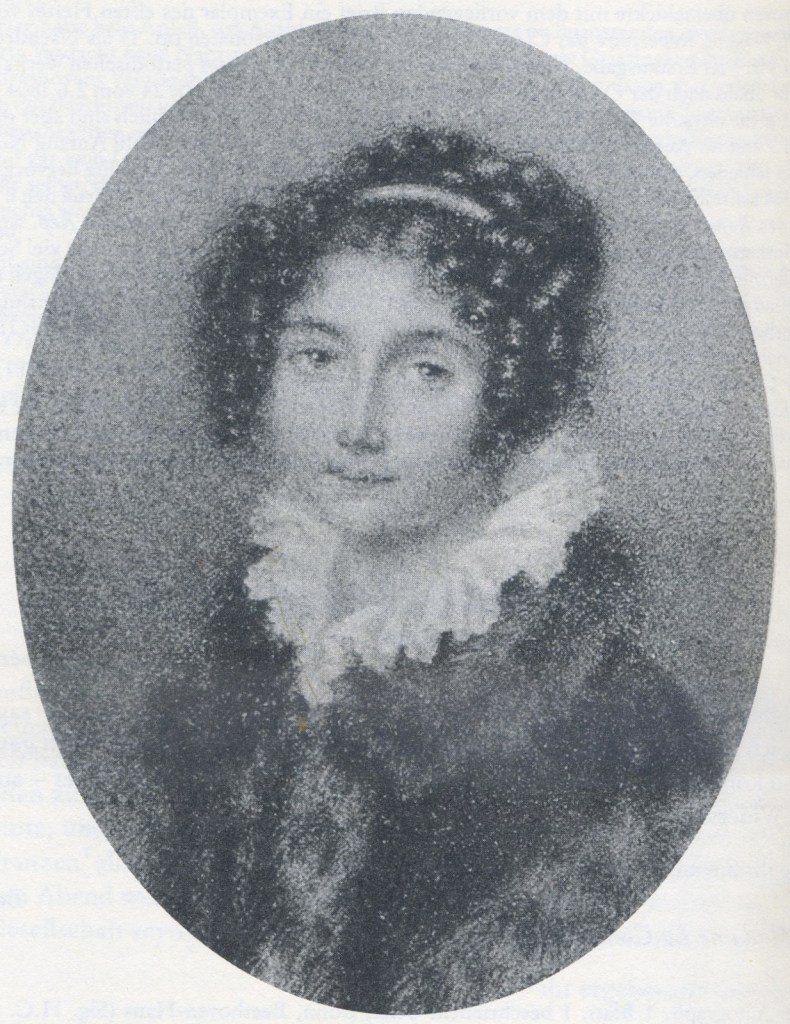
Josephine Brunsvik, miniature drawn by pencil, before 1804.
So Beethoven was a genius with notes and words. I aspire to write letters to you as movin’ as these letters. The never saw her again part, chills me.
Today is the birthday of Marc Chagall (Marc Zakharovich Chagall; Liozna, near Vitebsk, Russian Empire (present-day Belarus) 6 July [O.S. 24 June] 1887 – 28 March 1985 Saint-Paul-de-Vence, France); artist. An early modernist, he was associated with several major artistic styles and created works in virtually every artistic medium, including painting, book illustrations, stained glass, stage sets, ceramic, tapestries and fine art prints. Using the medium of stained glass, he produced windows for the cathedrals of Reims and Metz, windows for the UN, and the Jerusalem Windows in Israel. He also did large-scale paintings, including part of the ceiling of the Paris Opéra. “When Matisse dies,” Pablo Picasso remarked in the 1950s, “Chagall will be the only painter left who understands what colour really is”.

c.1920 (by Pierre Choumoff)

Portrait of Chagall by Yehuda (Yuri) Pen, his first art teacher in Vitebsk
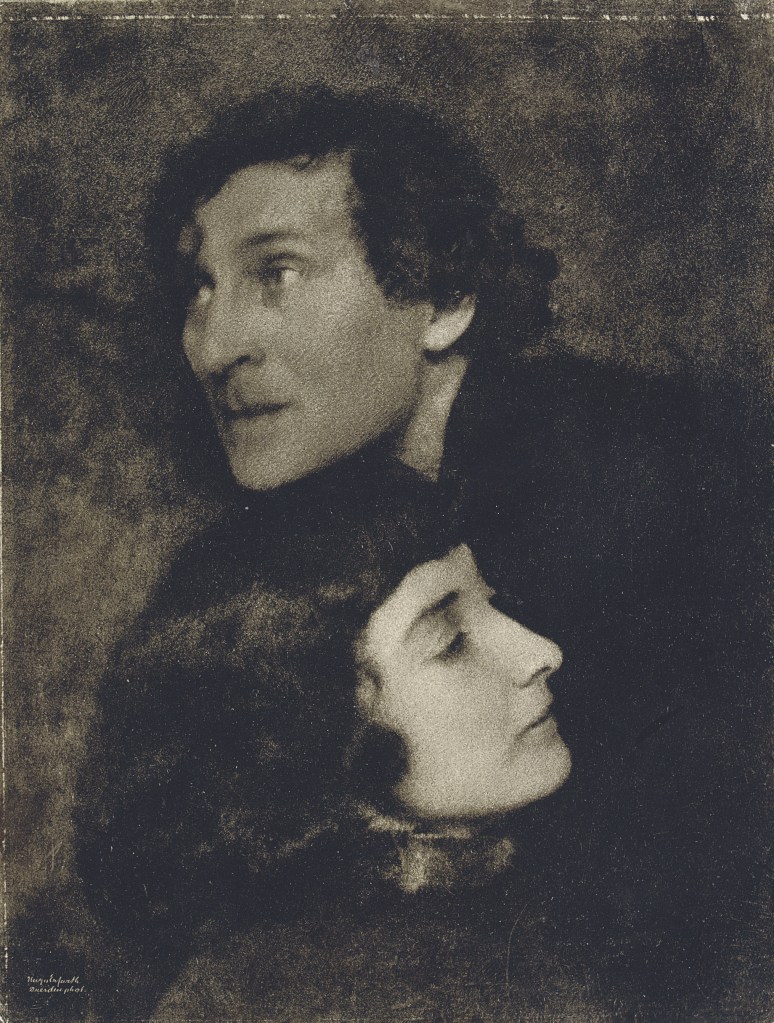
Marc and Bella Chagall by Hugo Erfurth, 1923
Chagall married Bella Rosenfeld. Before the marriage, Chagall had difficulty convincing Bella’s parents that he would be a suitable husband for their daughter. They were worried about her marrying a painter from a poor family and wondered how he would support her. Becoming a successful artist now became a goal and inspiration. According to once critic, “[T]he euphoric paintings of this time, which show the young couple floating balloon-like over Vitebsk—its wooden buildings faceted in the Delaunay manner—are the most lighthearted of his career”. His wedding pictures were also a subject he would return to in later years as he thought about this period of his life. On 2 September 1944, Bella died suddenly due to a virus infection, which was not treated due to the wartime shortage of medicine. As a result, he stopped all work for many months, and when he did resume painting his first pictures were concerned with preserving Bella’s memory. After a year of living with his daughter Ida and her husband Michel Gordey, he entered into a romance with Virginia Haggard, daughter of diplomat Sir Godfrey Digby Napier Haggard and great-niece of the author Sir Henry Rider Haggard; their relationship endured seven years. They had a child together, David McNeil, born 22 June 1946. Haggard recalled her “seven years of plenty” with Chagall in her book, My Life with Chagall (Robert Hale, 1986). In April 1952, Haggard left Chagall for the photographer Charles Leirens; she went on to become a professional photographer herself. Chagall’s daughter, introduced him to Valentina (Vava) Brodsky, a woman from a similar Russian Jewish background, who had run a successful millinery business in London. She became his secretary, and after a few months agreed to stay only if Chagall married her. The marriage took place in July 1952—though six years later, when there was conflict between Ida and Vava, “Marc and Vava divorced and immediately remarried under an agreement more favourable to Vava” (Jean-Paul Crespelle, author of Chagall, l’Amour le Reve et la Vie, quoted in Haggard: My Life with Chagall).

Vava Brodsky and Chagall in 1967
Gallery
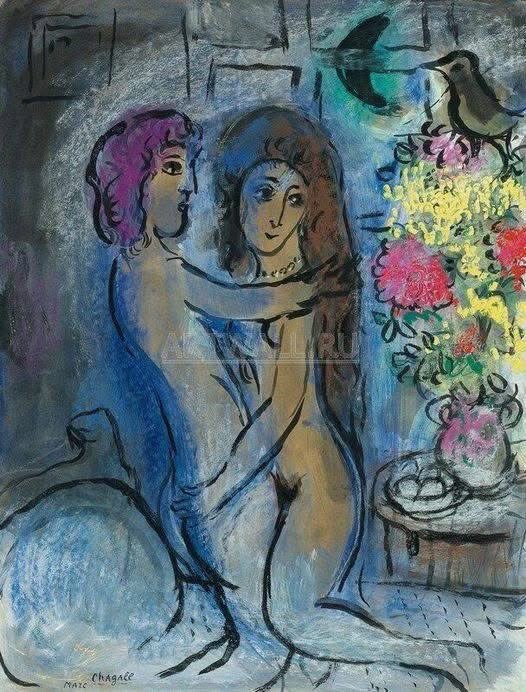
Couple dans un paysage bleu | 1969-1971

“L’Ecuyère ou danseuse au cirque”, 1920
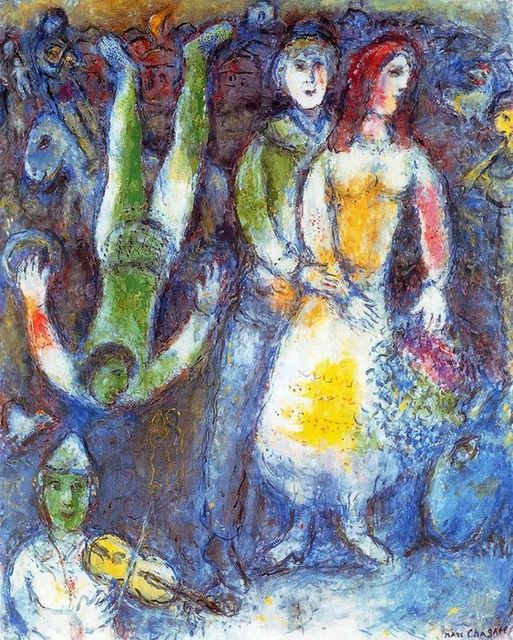
the flying clown 1981

Le somnambule

“Gli innamorati”
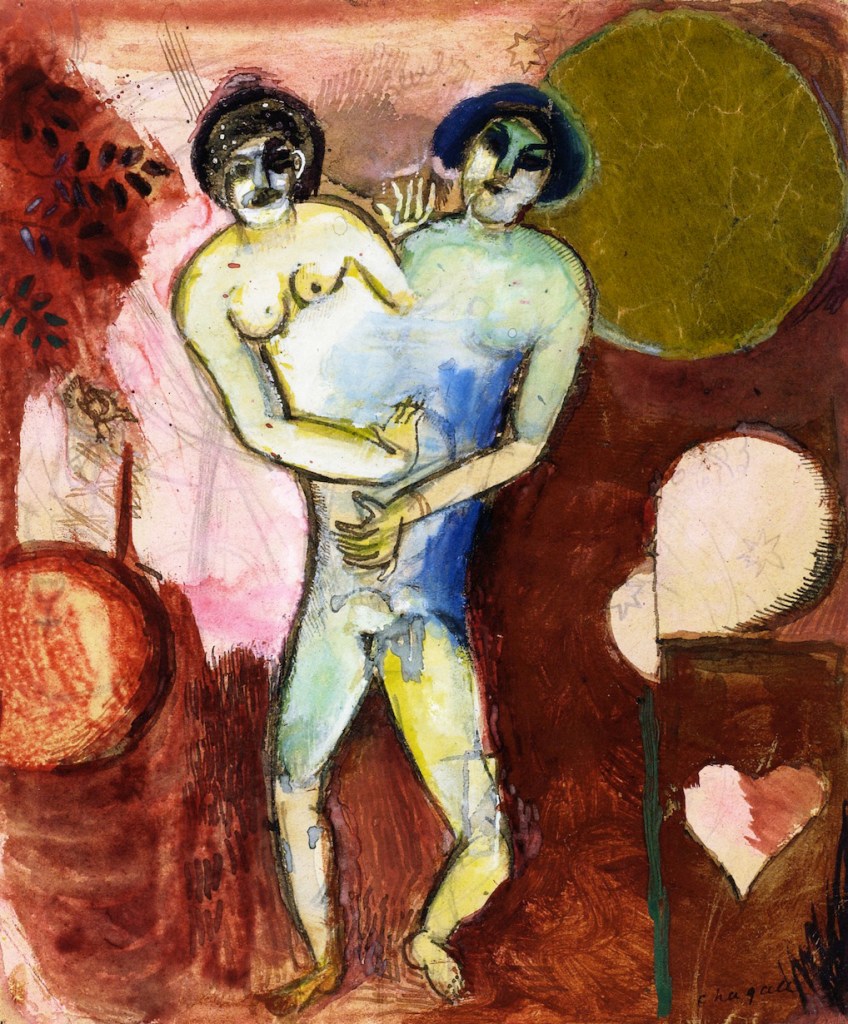


semi-lying nude

“Femme dormant avec fleurs”
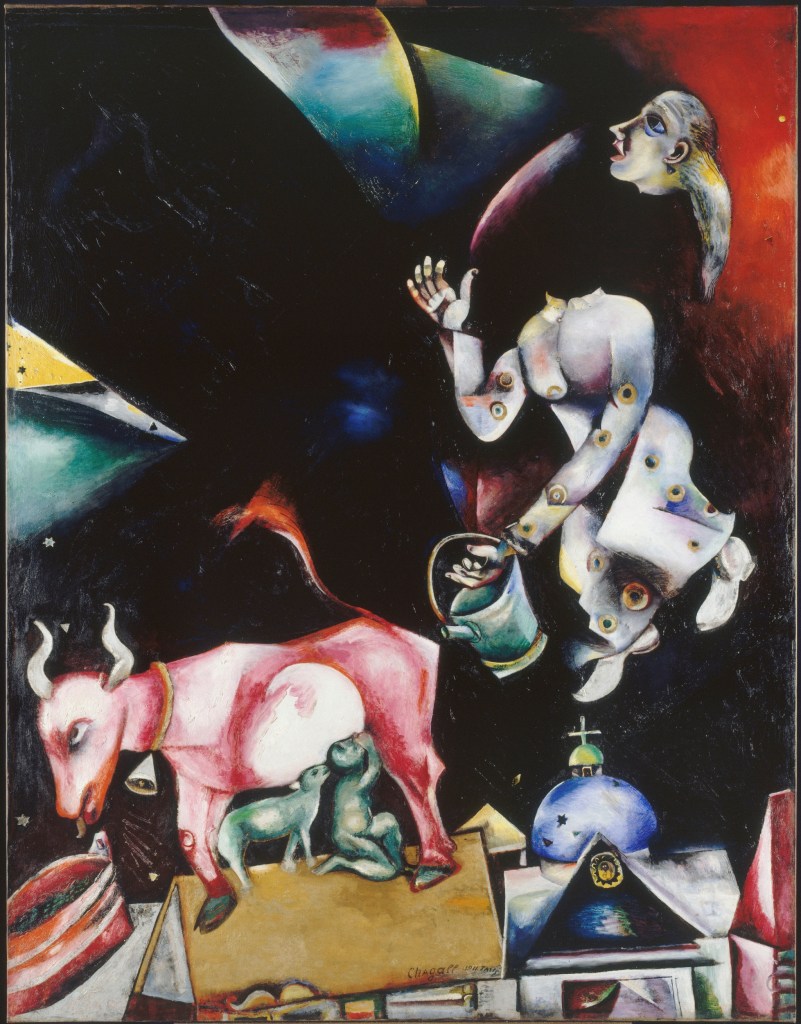
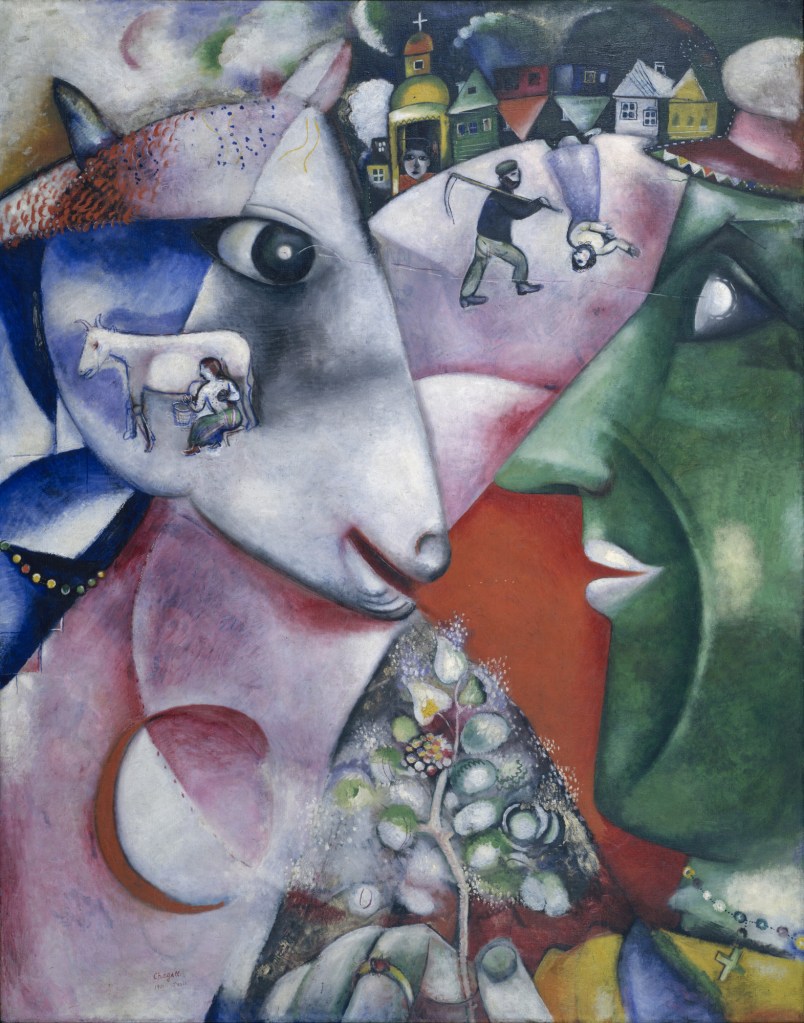
1911, I and the Village, oil on canvas, 192.1 × 151.4 cm, Museum of Modern Art, New York

And today is the birthday of Frida Kahlo (Magdalena Carmen Frieda Kahlo y Calderon; Coyoacán, Mexico City; July 6, 1907 – July 13, 1954 Coyoacán, Mexico City,); painter perhaps best known for her self-portraits. Kahlo’s life began and ended in Mexico City, in her home, which is known as “La Casa Azul,” the Blue House. Her work has been celebrated internationally as emblematic of Mexican national and indigenous traditions, and by feminists for its uncompromising depiction of the female experience and form. Mexican culture and tradition are important in her work, which has been sometimes characterized as naïve art or folk art. Her work has also been described as surrealist, and in 1938 André Breton, principal initiator of the surrealist movement, described Kahlo’s art as a “ribbon around a bomb”. Frida rejected the “surrealist” label imposed by Breton, as she argued that her work reflected more of her reality than her dreams. Kahlo had a volatile marriage with Mexican artist Diego Rivera. Kahlo suggested, “I paint myself because I am so often alone and because I am the subject I know best.”

in 1932, photographed by her father Guillermo Kahlo
Kahlo had always admired Rivera and his work. She first approached him in the Ministry of Public Education, where he had been working on a mural in 1927. She showed him four of her paintings, and asked whether he considered her gifted. Rivera was impressed. After that, he became a frequent welcomed guest at Kahlo’s house. He gave her many insights about her artwork while still leaving her space to explore herself. They began an intimate relationship and were married in 1929, despite the disapproval of Kahlo’s mother. Their marriage was often troubled. Kahlo and Rivera both had irritable temperaments and numerous extramarital affairs. The bisexual Kahlo had affairs with both men and women, including artist and landscape architect Isamu Noguchi and Josephine Baker; Rivera knew of and tolerated her relationships with women, but her relationships with men made him jealous. For her part, Kahlo was furious when she learned that Rivera had an affair with her younger sister, Cristina. The couple divorced in November 1939, but remarried in December 1940. Their second marriage was as troubled as the first. Their living quarters were often separate, although sometimes adjacent.

1937 photograph by Toni Frissell, from a fashion shoot for Vogue
Kahlo died soon after turning 47, and was cremated according to her wishes. A few days before her death, she wrote in her diary: “I hope the exit is joyful — and I hope never to return — Frida”. The official cause of death was given as a pulmonary embolism, although some suspected that she died from an overdose that may or may not have been accidental. No autopsy was performed. In his autobiography, Rivera wrote that the day Kahlo died was the most tragic day of his life, and that, too late, he had realized that the most wonderful part of his life had been his love for her. A pre-Columbian urn holding her ashes is on display in her former home, La Casa Azul (The Blue House), in Coyoacán, which since 1958 has been maintained as a museum housing a number of her works of art and numerous mementos and artifacts from her personal life.
Gallery

“La Columna Rota”

“What the Water Gave Me” (1938)
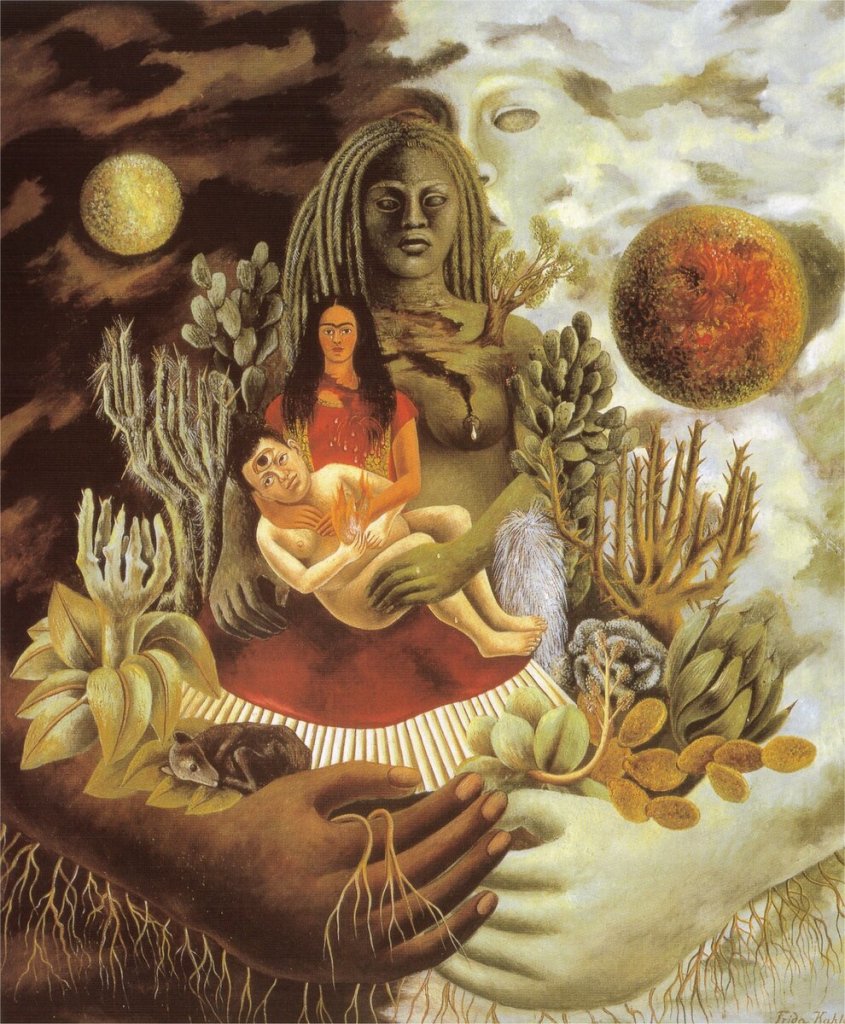
El abrazo de amor de el universo, la tierra (México), yo, Diego, y el Señor Xolotl

The Suicide of Dorothy Hale, 1939, Oil on masonite, 60.4 × 48.6 cm. – The Phoenix Art Museum, Phoenix, Arizona, USA. The legend translated: “In the city of New York on the twenty-first day of the month of October, 1938, at six o’clock in the morning, Mrs. Dorothy Hale committed suicide by throwing herself out of a very high window of the Hampshire House building. In her memory Mrs. Clare Boothe Luce commissioned this retablo, executed by Frida Kahlo.”
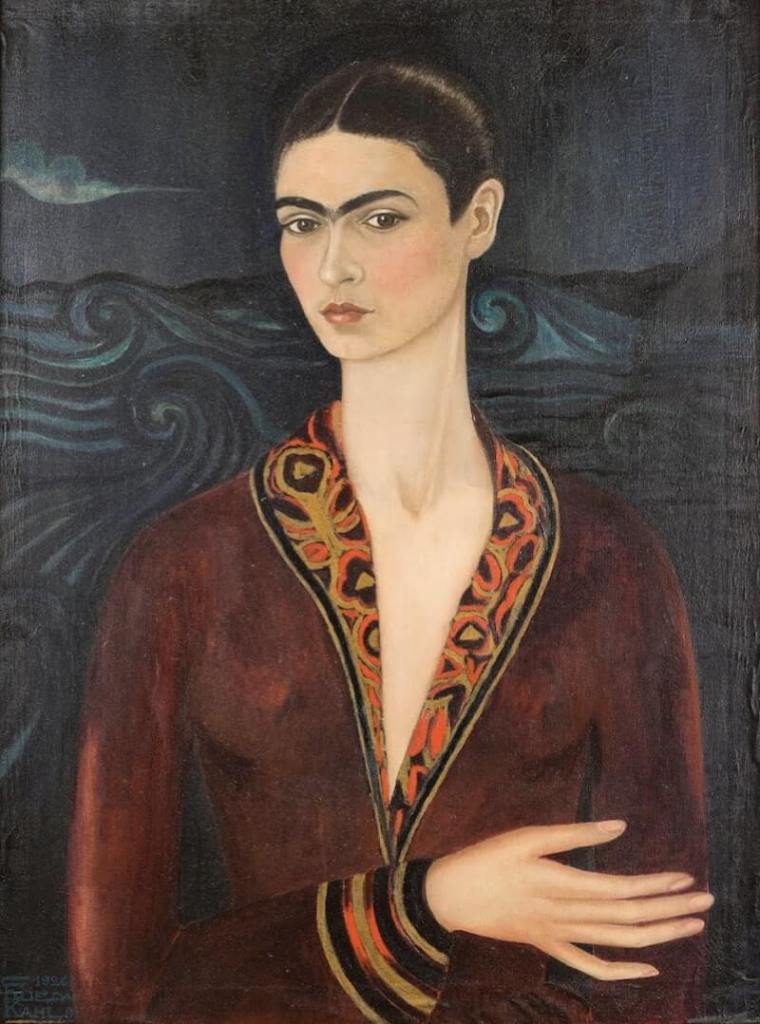
Self-portrait in a Velvet Dress, 1926

“the two fridas”

El tiempo vuela, 1929

Self-Portrait with Thorn Necklace and Hummingbird, Nickolas Muray Collection, Harry Ransom Center, University of Texas at Austin

“Dos Mujeres (Salvadora y Herminia)
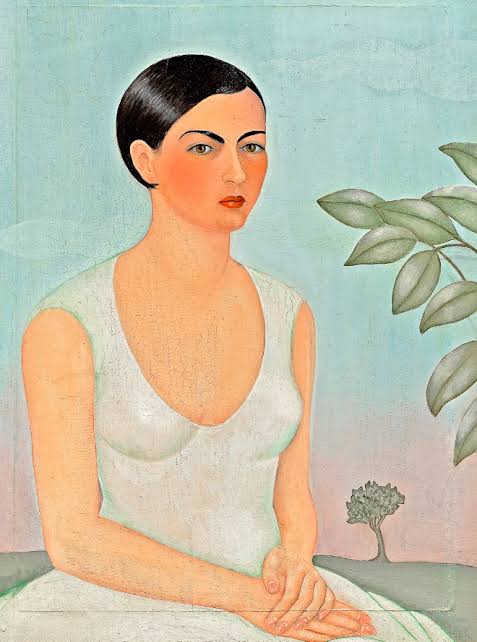
Retrato de Cristina, mi hermana, 1928
Your faithful
Mac Tag
thanks for stoppin’ by y’all
The song of the day is Beethoven‘s “Für Elise” (For Elise). Another mystery as the identity of Elise is unknown. – http://www.youtube.com/watch?v=_mVW8tgGY_w
Without being vague and star-eyed, I may say that a kiss may be a physical symbol of a mental adoration. That, and a delight. Sylvia Plath
Until your lips / Have called me their beloved, I’ll not kiss them. W.B Yeats
O trabalho poupa-nos de três grandes males: tédio, vício e necessidade. (Work saves us from three great evils: boredom, Vice, and need.) Voltaire
 The Lovers’ Chronicle
Leave a comment